






I played Phantom Blade Zero at Gamescom in Cologne, Germany, back in August, which, at the speed of the internet, means it feels like I had my hands on the controller about five years ago. The memory is vague and dreamlike, but it’s a strong one that left an undeniable impression. I also made sure to take thorough notes because I knew it would be some time before I could write about it.
For my Phantom Blade Zero play session two months ago, developer S-Game Studio offered up the opportunity to basically play from the beginning of the game, encouraging a long play session. I played through the intro and initial tutorials, meeting protagonist Soul, and learned his backstory as it relates to training with his brother, Zuoshang, as a young man. Once I had the basics squared away, however, the game fast-forwarded to a balletic clash between Soul and Zuoshang without much context as to why they were now fighting as adults, beyond my basic understanding that they now fundamentally disagree on something.
A major selling point for Phantom Blade Zero since its reveal has been its use of motion capture for its animation. When our own Wesley LeBlanc visited the studio in China last year, they put him in the motion capture rig to showcase how important the motion capture process was to the game’s development. My admittedly dismissive reaction to this selling point has always been… all modern triple-A games use motion capture for gameplay and cutscenes. I have seen video game performers like Troy Baker dressed in grey leotards more than I have seen him dressed in clothes whenever behind-the-scenes footage of game development is shared. What’s the big deal?
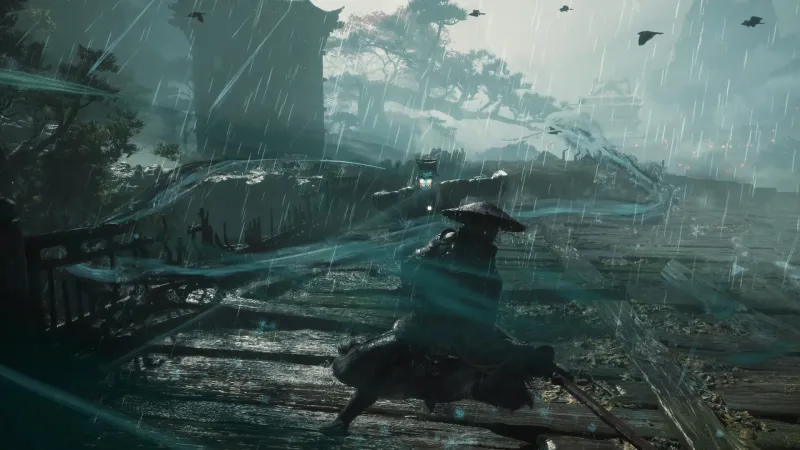
I am not fully removed from that camp, if I am being honest, but I admit that getting my hands on Phantom Blade Zero and controlling the movement and action did highlight the overall smoothness of playing what is essentially a Chinese martial arts film. It really does feel like you’re playing a game that borrows the beauty of human movement showcased in movies like Ang Lee’s Crouching Tiger, Hidden Dragon. Acrobatic dance applied to the art of swinging a sword.
After completing that opening combat encounter, it is revealed that Soul suffered a heart wound and a healer cryptically named The Flesh Sculptor gave him a replacement: a tainted heart that will only let him live for 66 days. And then I am whisked away to a high-speed carriage ride where the charismatic old man driver warns me that no one visits my destination because of a plague.
Enemies with chain and claw weapons ambush the carriage and Soul ejects the driver from the cart before things get too dangerous, as the driver’s yell of, “You still owe me for the ride!” echoes in the distance. This whole sequence is very “style over substance.” Pulling off counters and delivering sword slices to enemies as they leap from the nearby cliff face walls isn’t particularly challenging, but it looks impressive while feeling closer to a series of QTE moments. There is no QTE, however, to save the horses as the carriage careens off a cliff and crashes in a valley. When Soul comes to following the crash, I am surprised to see the dead horses hanging from the trees. A gruesome image now etched onto the map screen presumably serves as a memorable visual reminder of this location, but I can’t help but feel bad for the poor animals.
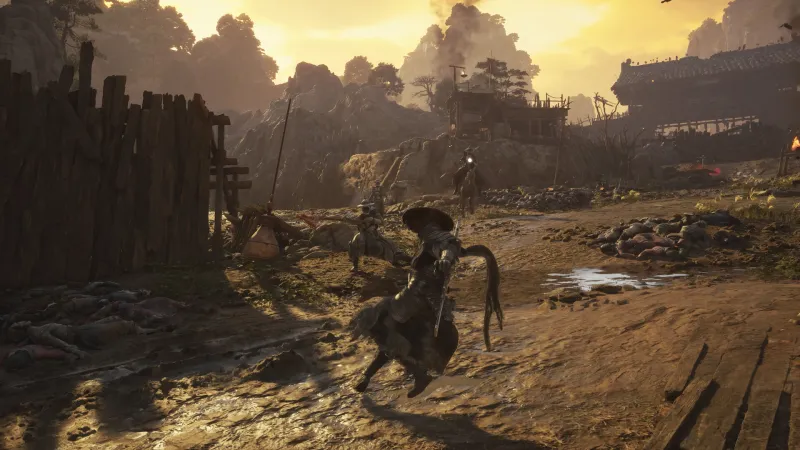
The whole sequence impressively sets up a chance to finally explore without training wheels, and I am happy to report that the level design is interesting and circuitous. With such a focus on combat and combat choreography, I was worried the action would be a series of arena fights. But Soul can sneak up on enemies, open shortcuts, and find characters that need help and offer missions. I hesitate to place the game in the Souls-like genre – it seems generally more forgiving – but the level layout recalls that structure in a way I like.
Soul may also be the fastest ladder climber I have ever controlled in a video game. Ladder climbing may be an odd mechanic to highlight, but I have climbed up and down thousands of ladders in my video game career and they always bring pacing to a standstill. You push up on the control stick and wait. If you’re lucky, sometimes you can press the sprint button to make your character climb a little faster, or slide down. That’s been the best-case scenario for decades. Soul, however, bounds up ladders like Spider-Man sprinting up the side of a building. Much like the player eager to get to the next memorable moment, Soul doesn’t have time to gingerly step on or grab each rung one by one. The UI loudly proclaimed that Soul officially only has 65 days to live once he woke up from the crash. There is no time.
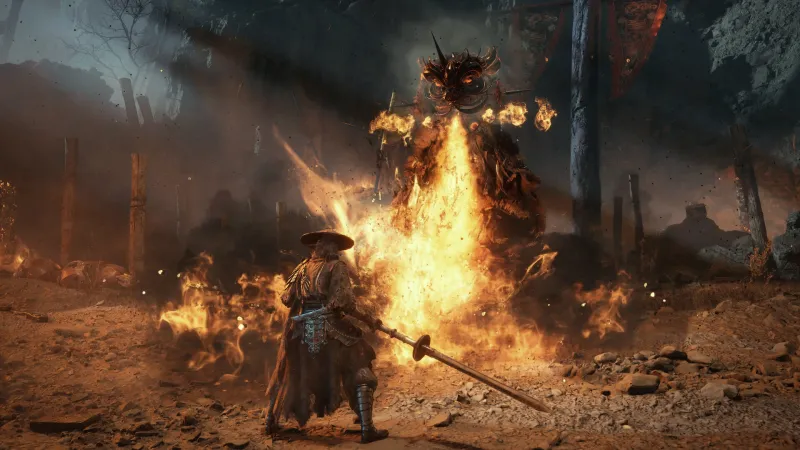
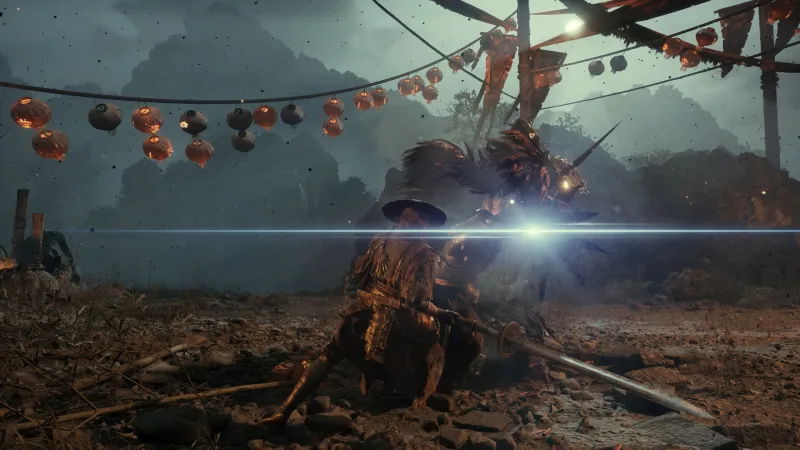
And speaking of no time, mine was also literally limited during my Gamescom appointment, so S-Game Studio fast-forwarded me to the incredibly impressive Lion Dance boss. The Lion Dance is a traditional Chinese dance where two performers wear a joined lion costume and perform acrobatic feats often on high pillars. Here’s a good example. Seeing the real-world version of the dance is entrancing, and for Phantom Blade Zero’s Lion Dance boss, the team motion-captured real performers.
Just seeing the technically-two characters move around in the boss arena is impressive, but the second stage of the boss fight (which you jump to if you die – no need to replay the first stage of the boss fight) is where it gets really impressive. Pillars appear from the ground and the Lion dances among the tops of them while shooting fireballs at you. And while that is happening, small lion head minions appear to distract you. However, defeating the last minion means you can grab a lion mask, jump on the pillars yourself, and shoot your own fireballs at the boss.
The reports from everyone who has had a chance to play Phantom Blade Zero have basically been universally positive, but I still went into the demo expecting a potentially forgettable, but well-executed action game. It ended up being one of my favorite hands-on experiences at Gamescom, despite the long wait to talk about it. The game feels great to play; I am eager to explore the levels; and the Lion Dance boss, in particular, showed me that the boss encounters (unless the Lion Dance is the notable exception) will be full of unexpected surprises and impressive animation.