






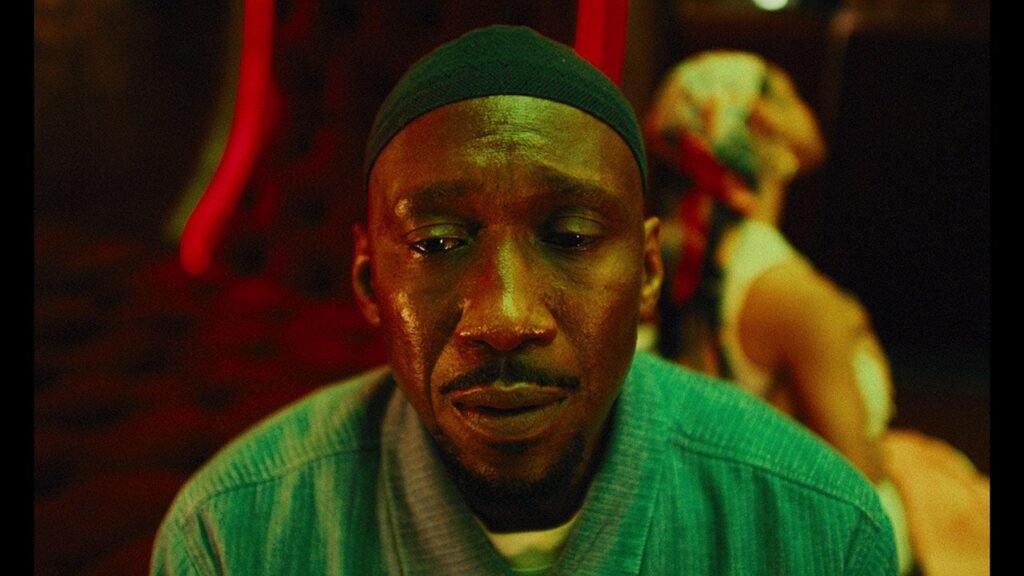
Your Mother Your Mother Your Mother is the intense story of a hitman Latif (played by Mahershala Ali) struggling after the death of his wife with caring for his family, and wrestling with his faith. As part of IGN Fall Fan Fest 2026, John Cho, who plays a somewhat unhinged pastor, and Adia, who plays Latif’s daughter, sat down with IGN to discuss how they prepared for filming such emotionally demanding roles.
John Cho’s Christian pastor is a complicated antagonist with good intentions but extremist methods, and his character is particularly notable for his combination of cowboy fashion and gold grills. Cho explained how the character’s unique look came about.
“It was definitely a collaborative process. I didn’t know what he was gonna look like. This is pretty unique in the work that I’ve done on film where very little was obvious to me on the page,” he says. “I didn’t know what he looked like or sounded like. Should he have an accent? Should he not? All of those things were undecided for me, and we just came in and started working.
“Deirdra [Elizabeth Govan], our costume designer, started suggesting things, and I didn’t know. I know she thinks that I was giving her side-eye, but I was really unsure.”The character’s look eventually came together through key elements like cowboy boots and a hat, resulting in a portrayal that’s very different from what fans of Cho might be used to.”For me, the big pieces were, by the end, two things. It was the shirt that commemorated his mother’s passing… it was like my superhero outfit, you know? And then the grills, which really took me out of my head and gave me a piece of character history. When I looked in the mirror, I was like, Okay, that’s not me. That’s definitely not me.”While Cho’s character serves as an antagonist to Latif throughout the movie, Latif’s daughter Fatiha tries to support her father and brother while also grieving the loss of her mother. It’s an intense role, and Adia revealed that she created a diary for her character to help develop a deeper understanding of Fatiha’s experiences.”I had a journal that I would keep with me,” she says. “I did this timeline for myself, but then I also did a lot of journaling in her voice to pull out what some of her thoughts might be in that moment in time that we are finding her, but even the times before we meet her in the film and after. There’s so much, there’s a lot of depth going on there in terms of dealing with hormones, puberty, your mother passing, and dealing with all of that.