


The Supreme Court delivered a monumentally bad decision last week in Trump v. Barbara, holding that, with limited exceptions, children born on U.S. soil become citizens at birth.
Much of the majority’s reasoning rested on mythology rather than a faithful reading of the law.
The court has closed one path. It has not closed them all.
No one can say with certainty when the United States began treating the U.S.-born children of illegal aliens as citizens. Google and Wikipedia claim the practice dates to the ratification of the 14th Amendment in 1868. Both also assert that the Supreme Court affirmed birthright citizenship for the children of illegal aliens in United States v. Wong Kim Ark.
Both claims are wrong.
After the Civil War, the citizenship provisions of the 14th Amendment and its precursor, the Civil Rights Act of 1866, were understood primarily as securing citizenship for former slaves and their children.
It took seven years after ratification for anyone even to ask whether the Citizenship Clause applied to children born here to foreign nationals. When the question finally arose, Attorney General George Williams concluded that such children were not citizens because they retained allegiance to their parents’ countries and therefore were not subject to the complete jurisdiction of the United States.
Wong Kim Ark addressed a different question: whether a child born in the United States to lawfully present foreign nationals became a citizen at birth.
Nowhere in the court’s 59-page opinion did it decide whether the Citizenship Clause applies to the children of illegal aliens.
Americans are therefore justified in reacting angrily to Trump v. Barbara.
But border hawks and rule-of-law conservatives should stop acting as though the decision ends the fight.
This is not the first dreadful Supreme Court opinion on immigration law. Anyone remember Plyler v. Doe? It will not be the last.
The court could have resolved the problem through a reasonable interpretation of the 14th Amendment. Instead, the majority chose political mythology over persuasive legal argument.
But birthright citizenship never had to be addressed only through the courts.
RELATED: 1776, not 1608: What the Supreme Court got wrong on birthright citizenship
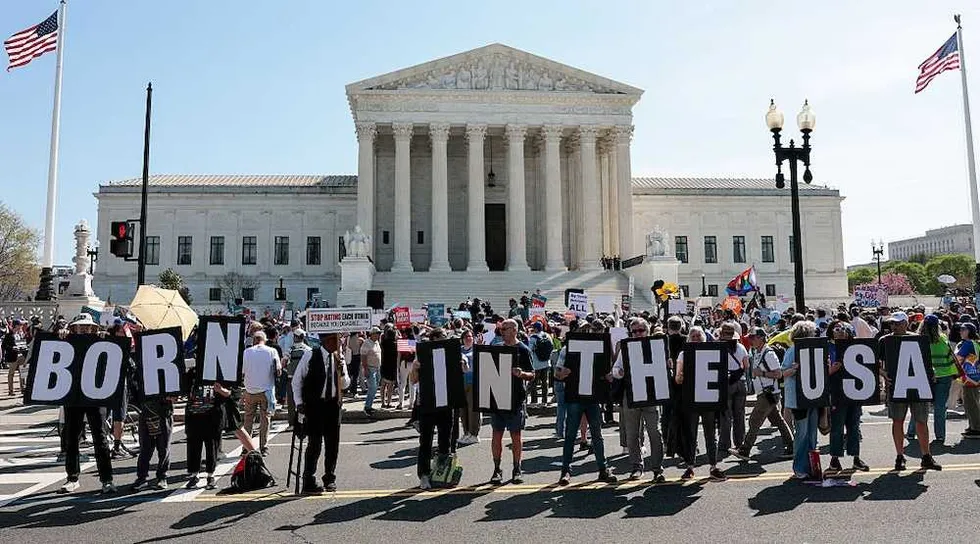
It can also be confronted through diligent enforcement of the Immigration and Nationality Act.
Now the Trump administration must do exactly that.
Illegal immigration is not merely a border problem. Once illegal aliens reach the interior, they settle in American communities and form families. Under Barbara, their U.S.-born children become citizens.
But illegal aliens who never enter the country cannot give birth here.
The damage from the court’s decision can therefore be reduced through secure borders and rapid removal of illegal entrants before they establish themselves and have children in the United States.
Birth tourism can also be curtailed through enforcement.
State Department consular officers already presume that pregnant women applying for B-2 visitor visas may be seeking entry for the primary purpose of giving birth to a U.S. citizen child.
After Barbara, the administration should scrutinize such applications more aggressively. Applicants suspected of birth tourism should bear the burden of demonstrating a legitimate temporary purpose for travel.
The problem becomes more complicated with foreign nationals admitted temporarily for work.
H-1B workers, L visa intracompany transferees, and other employment-based nonimmigrants may travel with their families and reside here for extended periods. Preventing every birth to those visa holders would be neither practical nor lawful.
But consular officers already have authority to refuse visas when they believe an applicant is misrepresenting the purpose of entry.
RELATED: The birthright ruling leaves Trump one clear move
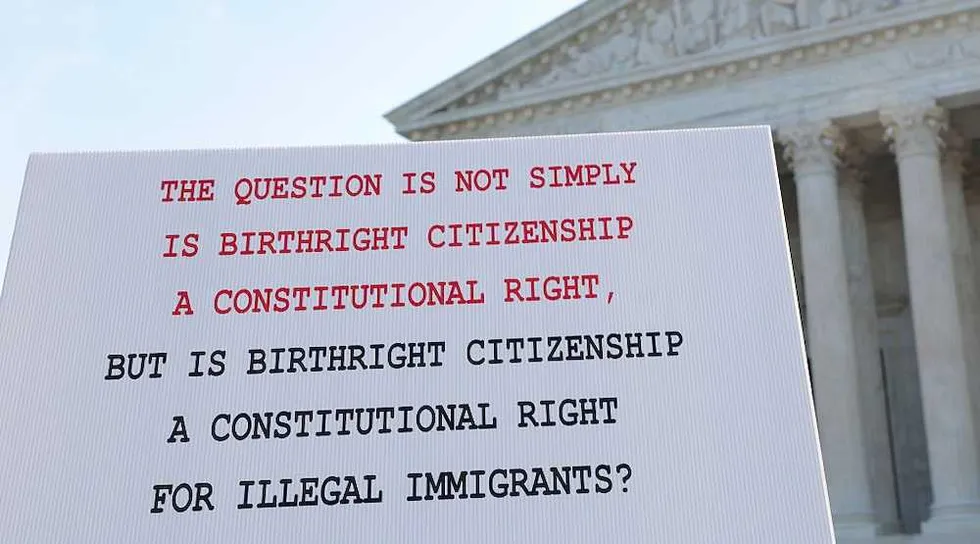
If officials have credible reason to believe that the primary purpose of an application for H-1B, H-4, or another temporary visa is to secure U.S. citizenship for a child, they should deny it.
The Supreme Court’s absurdly broad interpretation of birthright citizenship proves the adage that an ounce of prevention is worth a pound of cure.
Automatically granting citizenship to every child born on American soil to foreign nationals is terrible policy.
The best way to limit its consequences is to prevent the circumstances that trigger it. That means effective border security, rapid removal, rigorous interior enforcement, and close scrutiny of birth tourism and visa fraud.
The court has closed one path. It has not closed them all.
The Trump administration should now use every lawful enforcement tool available to prevent Trump v. Barbara from taking root and expanding the very incentive that produced the case.