

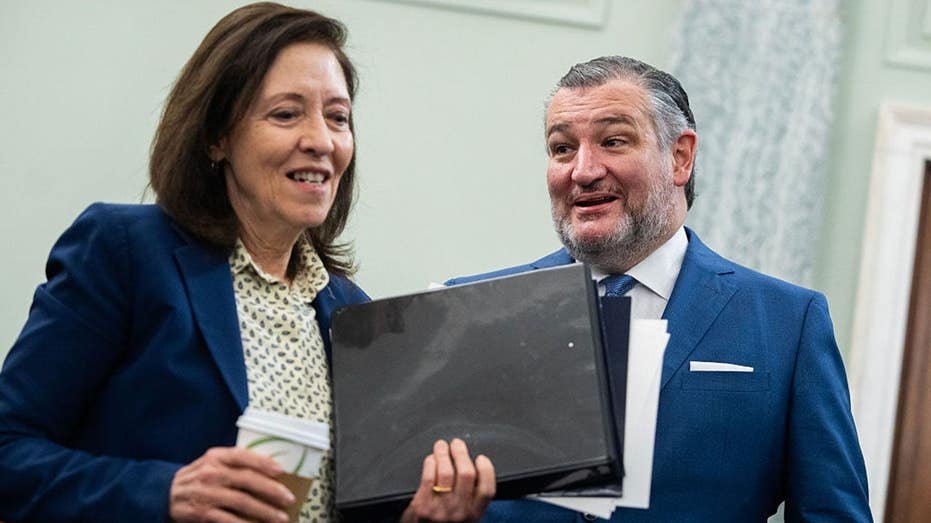
If the Senate Commerce Committee hearing that advanced the Protect College Sports Act to the Senate floor sounded contentious, expect the next few weeks to be even more heated.
After just a few weeks of debate surrounding legislation crafted by Sens. Ted Cruz, R-Texas, and Maria Cantwell, D-Wash., along with Texas Tech Board of Regents Chairman Cody Campbell, college athletics is entering a pivotal stretch before Congress’ August recess that could shape the future of the sport.
“If this thing does not go forward, there will be nothing that will go forward,” New York Yankees president Randy Levine emphasized.
Levine’s involvement stems from his role on President Donald Trump’s college athletics roundtable, a sign of just how unusual the politics surrounding college sports have become. Another example would be both Levine and Campbell holding a media call last week just hours after the Senate committee voted 19-9 to advance the legislation.
And yes, none of this has been traditional in terms of politics, besides the ongoing squabbles between certain politicians, boosters and commissioners from the two biggest conferences in college athletics.
Or, maybe this is exactly how some planned for it to play out.
For the past month, the talk of passing this legislation has centered on whether the SEC and Big Ten would put their support around a bill that also has flaws. What stands out the most right now?
Media pooling rights, and obviously a few other lines in the bill. But, while senators have tried to stress the word “voluntary” in the legislation, skeptics remain from those within the Big Ten and SEC footprint. There is a palpable tension in the air, and Cantwell did not try to decrease the ongoing kerfuffle during her remarks in the Senate Commerce hearing last week.
“What we did today is say we’re not going to let the most powerful and richest conferences dictate to the rest of America what’s going to happen to 500,000 athletes,” Cantwell said in her remarks.
Well, that’s obviously not going to sit well with those who are currently in charge of schools within those “powerful and richest conferences,” or entice them to bend the knee.
In addition to the “voluntary” pooling of media rights, senators and lobbyists seem hell-bent on pushing the “Super League” conversation to the forefront of their talking points.
The anti-expansion provision in the bill now includes the Big 12 and ACC, with the senators changing the language that now includes conferences that bring in $700 million in revenue from not being allowed to join forces. Sure, I think most people understand what senators are doing as they try to keep the SEC and Big Ten from breaking off and forming their own conglomerates that would compete outside the NCAA footprint.
But, both Greg Sankey (SEC) and Tony Petitti (Big Ten) have made it abundantly clear that they are not looking to join forces. At least not in putting together a league that would see them playing each other, or looking more like the NFL’s format of divisions.
Even with the assurances from the conferences, there has been a recurring theme recently regarding the pair, which has finally turned into a problem for some in the Senate to navigate. Sure, they would prefer to have this bill pass through the Senate and onto the House for further voting, but if they want a “sure thing,” then getting the SEC and Big Ten onboard would be the ultimate Avengers moment.
Though, it doesn’t sound as though the two are thrilled with the lack of concessions from Senate leaders on the Protect College Sports Act.
INSIDE THE SEC’S HIGH-STAKES DESTIN SHOWDOWN OVER CFP EXPANSION, NIL AND A POSSIBLE NCAA BREAKAWAY
“From the outset, we identified a set of essential revisions to the PCSA necessary for the long-term sustainability of college athletics,” both the SEC and Big Ten conferences noted. “We have worked with both majority and minority staff to advance those revisions, which focus on better supporting student-athletes and stabilizing the college sports environment. We continue to believe revisions are needed to secure our support for the bill.
“Despite our sustained engagement and good faith efforts, these critical revisions have not been accepted. We are encouraged that several Commerce Committee members share our concerns and support these recommendations.”
What happens next, will happen next. Randy Levine made it a point to say that both conferences tried to “sink the bill” before making it in front of the committee.
“Maybe they really don’t want change. Maybe they like the present system the way it is,” Levine said to reporters on Thursday after the hearing.
Multiple leaders from the SEC and Big Ten have told Fox News Digital/OutKick over the past few days since the bill was pushed to the Senate floor that while there is agreement that federal help is needed to navigate this current landscape of college athletics, the overwhelming sentiment hasn’t been one of unity.
“Look, we’re not just trying to play the role of a bad guy here,” one P-2 president told OutKick. “But, we all know that we’re being used as a pawn in this game of trying to build pressure that it’s ‘them against the world’ and we’re trying to hold things up. We had a 30-minute conversation with both Cruz and Cantwell, and there might have been ten minutes of actual time for discussion and questions.
“No, if we are going to ‘work together’, then let’s have some honest debates on what’s best for everyone involved. The clock is ticking, or it’s ‘fourth down territory’ as Cruz liked to put it.”
I think it’s fair to say that the next month is going to be a roller coaster, as the Senate looks to bring this thing in for a vote.