





Every June, when the annual fee on my United℠ Business Card (see rates and fees) posts, I ask myself the same question: Is it finally time to cancel one of my United Airlines credit cards?
That probably sounds strange coming from someone who carries between 25 and 30 credit cards at any given time. Most points and miles enthusiasts are looking for ways to simplify their wallets, and United isn’t even my primary airline. I only fly the carrier a couple of times a year, usually on domestic flights or trips to Mexico.
Yet for the past several years, I’ve continued renewing both my no-annual-fee United Gateway℠ Card (see rates and fees) and my United Business Card (which carries a $150 annual fee). While it may seem unnecessary to keep two United cards, this combination continues to deliver more value than it costs me.
Here’s why I haven’t been able to justify giving up either card.
How I ended up with 2 United credit cards
Like many travelers, I started with the United℠ Explorer Card (see rates and fees).
It was a great fit when I first opened it, but over time, I found myself not using as many of its benefits. Rather than canceling the card outright, I downgraded it to the no-annual-fee United Gateway Card.

At first, I wondered whether it was worth keeping a card that spends most of its time in my sock drawer. Today, I only make a small purchase on the Gateway Card every six months to keep the account active.
Later, I added the United Business Card to my wallet. That’s when I realized there was actually a meaningful benefit to holding both a personal and a business United card.
Related: Who qualifies for a business credit card?

The 5,000-mile bonus that keeps me renewing both cards
Each year, cardholders who have both an eligible United personal card and an eligible United business card receive a 5,000-mile anniversary bonus.
Eligible personal cards include:
You can pair any of these with either the United Business Card or the United Club℠ Business Card to receive the annual 5,000-mile bonus.
Based on TPG’s July 2026 valuation of United miles, those 5,000 miles are worth roughly $65. That alone doesn’t justify paying an annual fee, but it certainly helps tip the math in favor of keeping both cards.
The information for the United Club Business has been collected independently by The Points Guy. The card details on this page have not been reviewed or provided by the card issuer.
Why the no-annual-fee Gateway Card stays in my wallet
The United Gateway Card isn’t a card I use for everyday spending, but that doesn’t bother me.
Because it has no annual fee, there’s little downside to keeping this United personal card open and remaining eligible for the annual 5,000-mile bonus.

Holding the Gateway Card also means I don’t have to keep paying the Explorer Card‘s annual fee simply to remain eligible for the anniversary bonus.
How the United Business Card does the heavy lifting
The United Business Card is where almost all of the value in this strategy comes from.
The annual 5,000-mile bonus is nice, but it’s the combination of ongoing perks that keeps me renewing year after year.
One of my favorite benefits is the two United Hotels statement credits (up to $50 each) I receive each cardholder year. I have a recurring calendar reminder to use both credits, and I usually book two separate one-night hotel stays to maximize the full $100 value.
Related: A forgotten hotel credit on a United card saved me $200 — and it was super easy to use

I also appreciate having access to expanded MileagePlus saver award availability. Since I typically redeem my United miles for economy flights within the U.S. and to Mexico, I’ve been able to take advantage of lower award pricing that wouldn’t otherwise have been available.
This benefit is only available because I have the United Business Card. If I only held the United Gateway Card, I’d need to spend $10,000 on it each calendar year to unlock the same expanded award availability.
The two single-entry United Club passes I receive annually also come in handy. I used to like that they could be shared with anyone, but even after the benefit changed, I’ve still found them valuable while connecting through Houston’s George Bush Intercontinental Airport (IAH).

Another perk I use is Pay Yourself Back. Rather than paying the United Business Card’s annual fee out of pocket, I redeem MileagePlus miles to cover it. Since Pay Yourself Back lets me redeem miles at 1.5 cents apiece toward the annual fee, I’m getting more value than our valuation of 1.3 cents per mile.
I don’t get much value from some of the card’s other perks, like the credits for ride-hailing services and Instacart. That’s fine. I’d rather have a few benefits that fit naturally with the way I travel than feel like I need to go out of my way to justify keeping a card.
The overlooked value of airline-specific travel benefits
One lesson I’ve learned over the years is that you don’t need to be loyal to an airline to benefit from its cobranded credit card.
I only fly United a few times each year, but those trips are consistently better because I have the United Business Card.
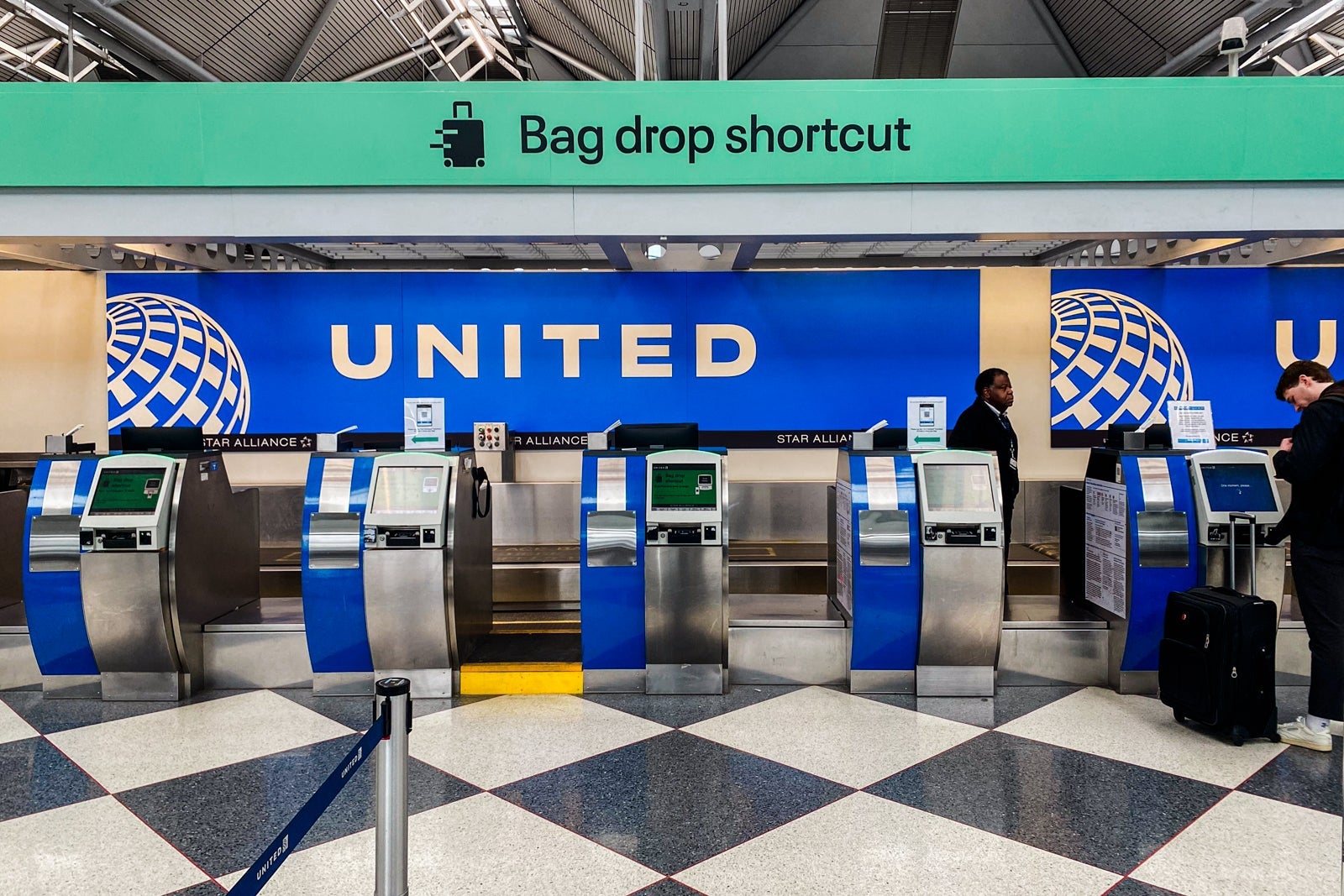
The free checked bag alone can save a meaningful amount if I’m traveling with luggage. (To receive your first checked bag free, you’ll need to pay for your ticket with your eligible United card or use that card to pay the taxes and fees on an award ticket.)
Priority boarding is another perk I enjoy, especially when overhead bin space starts filling up. (Unlike the free checked bag benefit, priority boarding doesn’t require you to pay with your eligible United card.)
Bottom line
At first glance, keeping both the no-annual-fee United Gateway Card and the United Business Card might seem like overkill, especially since United isn’t my primary airline. But together, they deliver enough value that I continue renewing them every June.
The Gateway Card quietly unlocks the annual 5,000-mile anniversary bonus at no ongoing cost, while the United Business Card provides the benefits I actually use, from United Hotels credits and expanded saver award availability to United Club passes and day-of-travel perks.
For my travel habits, it’s a combination that continues to earn its place in my wallet year after year.
Related: Current United credit card offers