

Let me tell you about the very rich,” F. Scott Fitzgerald wrote a century ago. “They are different from you and me. They possess and enjoy early, and it does something to them, makes them soft where we are hard, and cynical where we are trustful, in a way that, unless you were born rich, it is very difficult to understand.”
Last week’s SpaceX initial public offering made company founder and CEO Elon Musk the world’s first publicly known trillionaire — very different from all of us, at least on paper.
Bad enough he became too rich. Worse, Elon Musk became too independent.
On paper is doing plenty of heavy lifting. We’ll get back to that.
If billionaires “shouldn’t exist,” as our boring socialist friends never tire of saying, then a trillionaire must be not merely obscene but downright apocalyptic. If the existence of billionaires is a policy failure, the arrival of a trillionaire is a crime scene. Call Congress! Summon the United Nations! Eat the rich!
Let me tell you about the very left-wing. They are different from you and me. They enjoy little, and it does something to them. It makes them covetous where normal people are merely curious, bitter where normal people are merely skeptical, and stupid where the rest of us are trying very hard to be charitable.
Musk’s gargantuan wealth is a test no leftist can pass.
“If we liquidated Elon Musk as a financial entity we could each pocket $3,000,” one frivolous X user wrote. “Just putting that out there. 3K. Not bad.”
“Elon Musk is a trillionaire but it’s def the people on SNAP ruining your life,” a tedious Democratic strategist posted.
“Right? He could fund SNAP himself and still have a boatload left to spare,” a pseudonymous Marxist replied.
This is what happens when resentment collides with arithmetic.
“Elon Musk could easily fund” makes for a terrific party game, especially if everyone playing has skipped high school civics, freshman economics, and the day in third grade when Mrs. Campbell broke the news that Monopoly money was not legal tender.
RELATED: A child’s guide to why billionaires should, in fact, exist

With $1 trillion, Musk could buy every major carmaker in America, Europe, and Japan. With $1 trillion, Musk could fund global famine relief dozens of times over, provide clean water to the world, rebuild Gaza, or hand every person on earth a modest cash gift. With $1 trillion, Musk could cover the United Nations’ humanitarian appeals, the Australian budget, or — according to my friend Mac Owens — roughly 3.5 miles of Gavin Newsom’s high-speed rail system.
Cool. Put it all on the board. Have fun. Pour another drink. (Maybe pour me one, too.)
But Musk does not have $1 trillion in a checking account. He is not Scrooge McDuck swan-diving into a vault of gold coins (not that it would even work that way). He owns shares in companies that other people believe are valuable because those companies build things, launch things, connect things, sell things, and promise things investors think may be worth a lot more later.
His wealth is not a pile of cash. It is a claim on productive enterprise.
The socialist imagination never really gets past the pile. The left sees wealth and pictures a dragon atop a hoard. It sees equity and imagines stolen bread. It sees a balance sheet and imagines a pantry that can be raided without consequence.
But Musk’s wealth cannot be “liquidated” without destroying much of the value the envious wish to seize. Sell enough shares, and the price falls. Seize the company, and watch the engineers leave. Convert capital into consumption, and the thing that made the wealth possible begins to disappear.
Welcome to Economics 102. Economics 101 teaches scarcity. Economics 102 teaches that capital is not loot.
None of this makes Musk a saint. I don’t know if he is a good man. I don’t know if any man should have as much influence as he has, and neither do his fanboys. Musk is erratic, strange, reckless, sometimes brilliant, and often his own worst enemy. But he is not a political theory. He is not a catechism. He is not your dad.
I know do this much, though: If Musk had not bought Twitter in 2022 for the eye-watering sum of $44 billion, Americans would know less about their own country and less about the people who presume to manage it.
That purchase did not make him richer. It made him more dangerous.
Dangerous to whom? To the people who think “misinformation” means information they cannot control. To governments that prefer pressure campaigns to open censorship. To NGOs that discovered a business model in laundering political speech control through the language of “safety.” To journalists who miss the days when a few institutions could decide which scandals were real and which ones respectable people were expected not to notice.
RELATED: Democrats love free speech — until conservatives get some

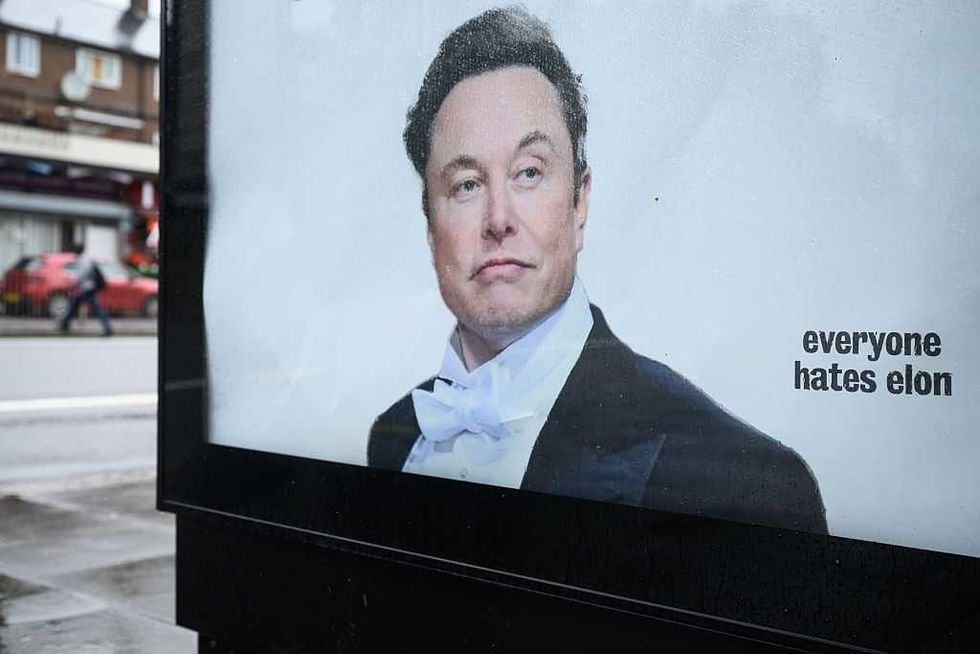
This is why the hatred aimed at Musk is never really about money. The money supplies the moral pretext. Control supplies the motive.
The left does not hate Musk because he could “fund SNAP.” The federal government already spends enormous sums on SNAP, and no serious person believes American nutrition policy should depend on one weird rich guy hawking rocket shares. The left hates Musk because he took a portion of his unrealized fortune and bought a speech platform that was supposed to belong forever to the consensus managers.
Bad enough he became too rich. Worse, he became too independent.
A billionaire who funds the approved foundations may be vulgar, but he can be managed. A billionaire who underwrites lawsuits, climate conferences, university centers, “democracy” initiatives, and grants for people who use the word “equity” as an incantation may still be welcomed at the proper tables. His money can be baptized.
Musk’s money did something else. It bought the key to a door the regime wanted to remain locked.
No wonder they want to eat him.