
Published July 23, 2026 12:31PM
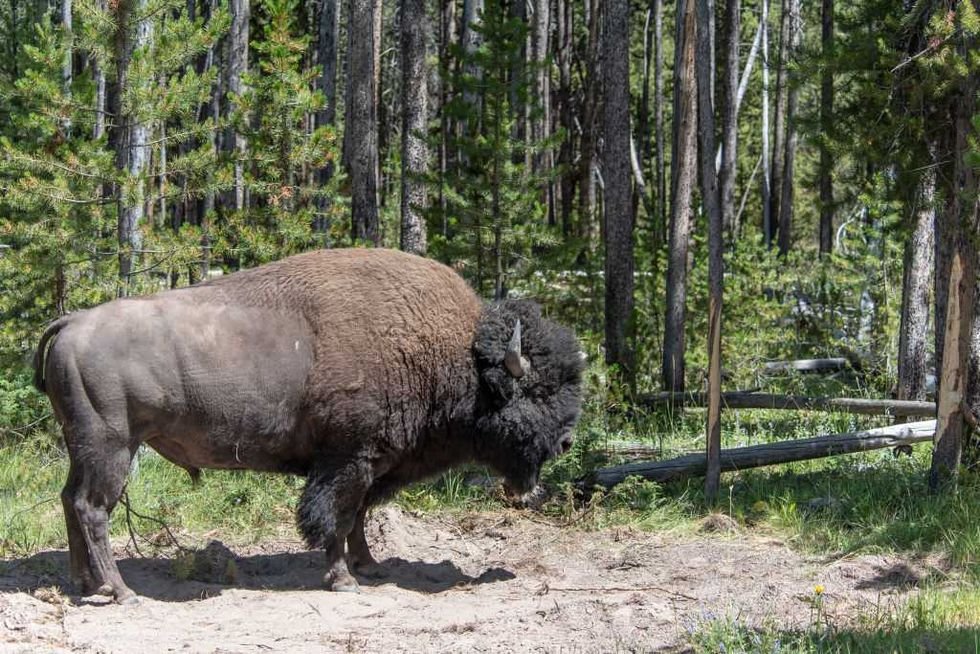
On May 3, Anthony Pollio, 33, was hiking Glacier National Park’s Mount Brown Trail when a grizzly bear attacked and killed him. Now, new details about his final moments offer a stark reminder of the risks of hiking alone after dark in grizzly country.
The strenuous ten-mile out-and-back trail lies in the heart of grizzly country. Pollio, who was visiting from Florida, was hiking alone at nighttime in unfamiliar terrain—all factors that put him at risk of an attack, the National Park Service (NPS) wrote in its July 20 report on the incident.
Fallen trees and poor visibility may have kept both Pollio and the bear from noticing each other until it was too late, turning a surprise encounter into a deadly one.
Chris Servheen, a grizzly bear expert who spent 35 years working for the U.S. Fish and Wildlife Service, told Outside that the circumstances described in the report left Pollio at a severe disadvantage. Although he discharged a canister of bear spray, investigators can’t determine whether the spray struck the bear or whether Pollio had enough warning to use it effectively.
“I’m not faulting him, because we don’t know exactly what happened, and these things are always unfortunate,” Servheen said. But, he continued, bear spray doesn’t give you immunity from hiking in the dark.
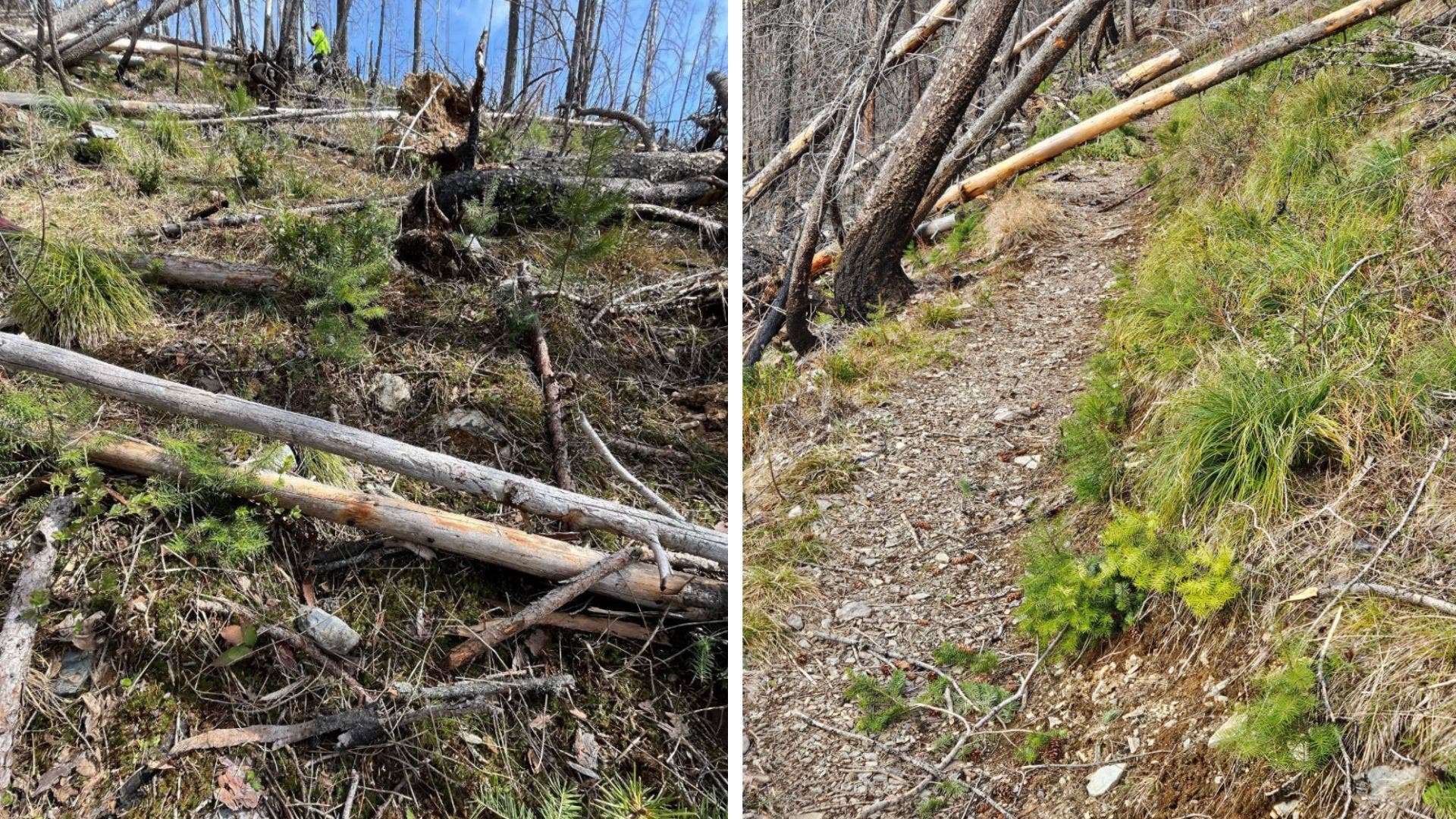
Mount Brown Trail climbs more than 4,200 feet, and includes over two dozen switchbacks. Investigators believe the bear rapidly charged uphill toward the trail near a switchback obstructed by downed timber.
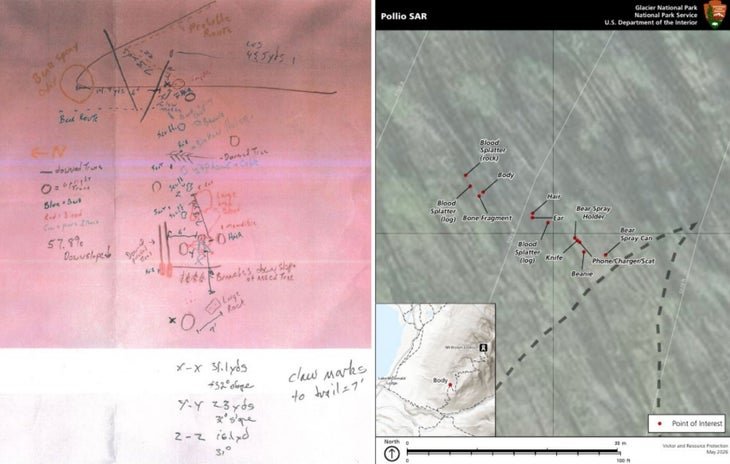
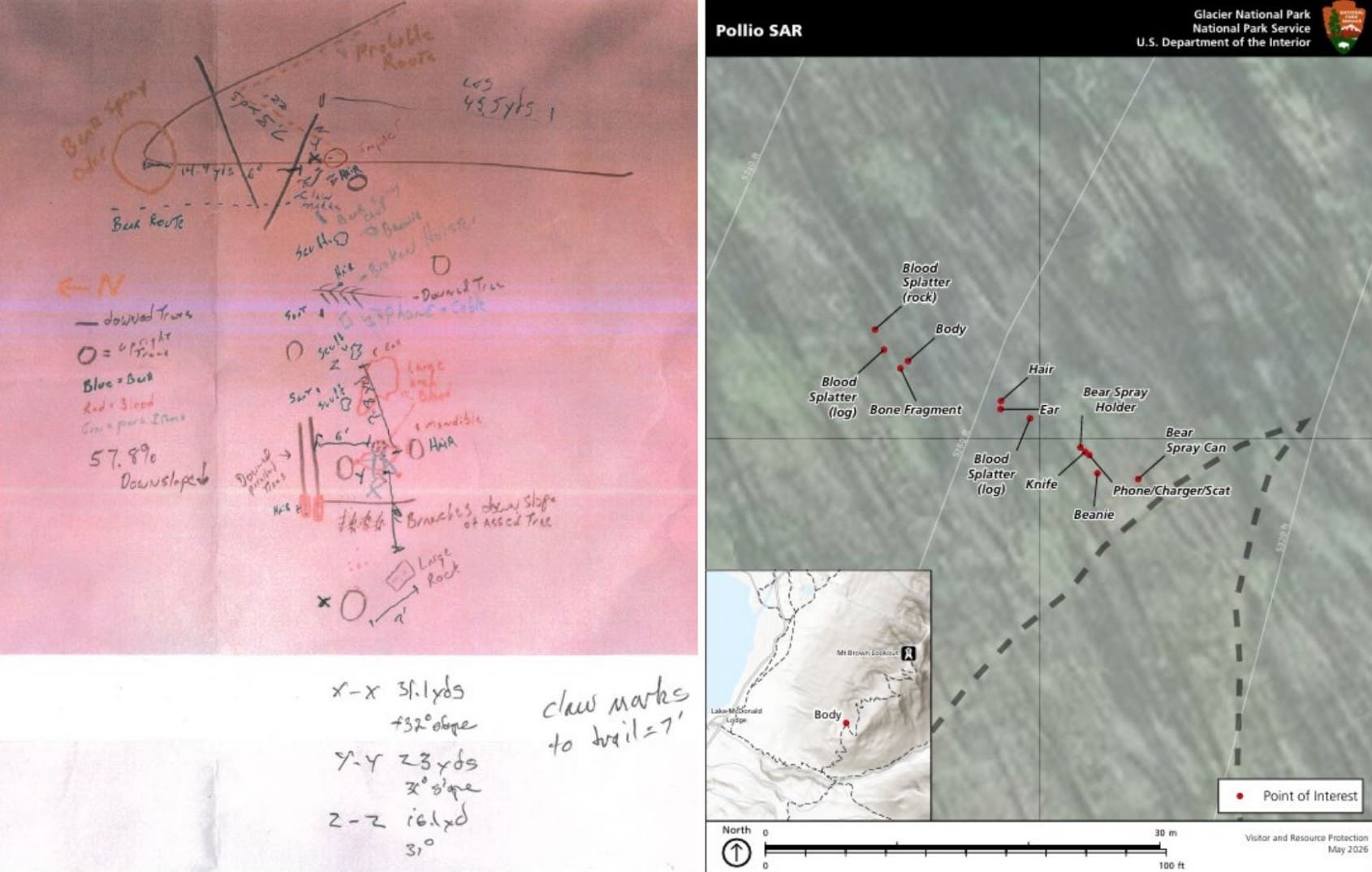
“His path was littered with personal effects beginning ten feet below the trail,” the report stated. “We believe the bear followed Mr. Pollio downhill, continuing the attack.” At some point, Pollio was able to climb roughly 18 feet back uphill before the bear attacked again. The report described his injuries as “severe and fatal” and attributed his death to “crushing bites to the head.”
The bear left the area after what officials characterized as an intense but relatively brief encounter. There is no evidence that the bear treated Pollio as prey. Using DNA, the park later identified the animal as a male grizzly at least 15 years old with no known history of conflict or aggression toward people. For these reasons, the Interagency Grizzly Bear Committee’s Board of Review that published the report concluded the attack was defensive, not predatory.
A team of grizzly bear experts from the Interagency Grizzly Bear Committee, U.S. Fish and Wildlife Service, Wyoming Game and Fish, Montana Fish, Wildlife and Parks, and the National Park Service collaborated on the 17-page report. It offers a rare look at what can unfold during a defensive grizzly bear attack—and why, in some cases, even properly deploying bear spray may not be enough to save your life.
A Timeline of the May 3 Attack
6:30 P.M. Pollio began his hike.
6:48 P.M. Pollio left his father a voicemail saying that he was starting his hike toward the lookout.
8:20 P.M. Pollio’s last communication occured when he texted his girlfriend that he had “climbed over 2,000 ft and 3 miles,” according the report.
8:49 P.M. Sunset in the park.
9:20 to 9:35 P.M. Investigators believe Pollio encountered deep snow before reaching the summit, turned around, and encountered the grizzly. Last light was at 9:24 P.M., indicating the attack began in near- or total darkness.
10 P.M. Pollio’s death likely occurred by this time.
On May 4, NPS received a report of a missing hiker at 2:19 P.M., and a search of the Mount Brown area began less than an hour later. Searchers discovered his body on Wednesday, May 6, just after noon.
Hiking at Nightfall Can Be Deadly
“Hiking in the dark in grizzly habitat is a really bad idea, because they’re active at night,” Servheen told Outside. “They can see better, and you can hardly see at all. You’re at a real disadvantage.”
Investigators drew similar conclusions.
“Mr. Pollio, while hiking alone, surprised an adult male grizzly bear on the Mt. Brown Lookout trail,” they wrote in the report. “We don’t know if Mr. Pollio was making any noise. He may have been using his cell phone flashlight,” it states.
While examining the scene, investigators found claw marks, a displaced rock, and Pollio’s empty bear spray bottle near the point where the bear likely made contact after moving rapidly uphill toward the trail.
“If you’re in a situation like that where sight distance is poor, you should make a lot more noise than normal,” Servheen said. “If you get caught hiking in the dark, you should be just a complete noise machine.”
The report doesn’t answer whether the spray made contact with the bear, the distance at which Pollio deployed it, at what point the bear began attacking, or whether the man could see the bear during the attack. The slope’s steep angle may have also made it more difficult to deploy bear spray directly in a direct manner.
“Bears don’t want to encounter people any more than you want to encounter them,” Servheen said. “But you have to give them a break by making noise so that they know that you’re coming.”
Servheen adds that bear spray should be a hiker’s last resort.
“It’s not a magic solution that’s always going to keep you safe. Your best opportunity to stay out of trouble with grizzly bears is to avoid an encounter in the first place,” he said.