Skip to content






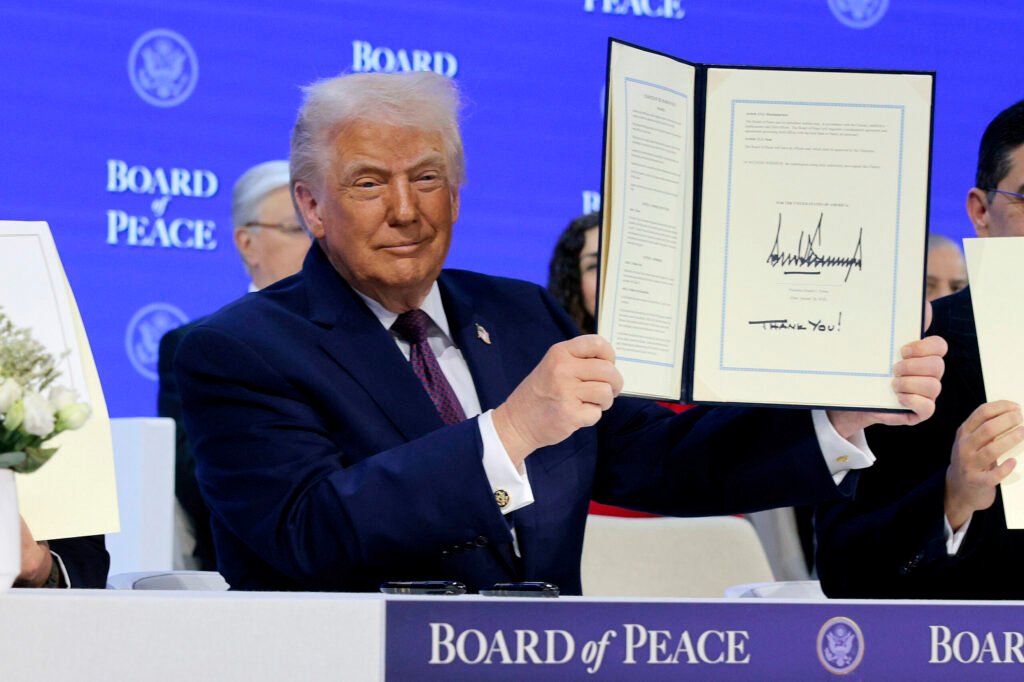
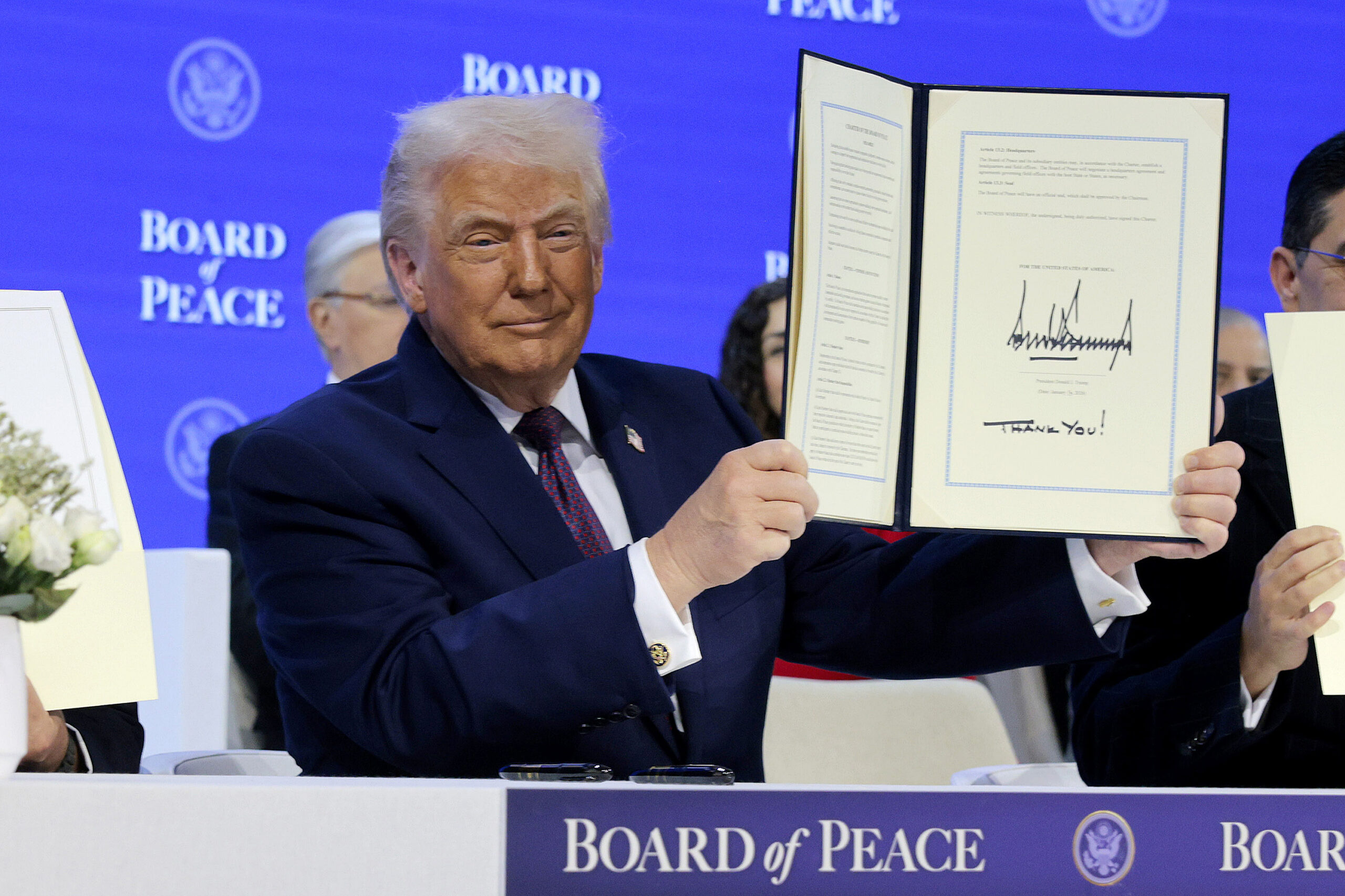
In the realm of international diplomacy, President Donald Trump is an optimist. Peace, or at least stability, is always just around the corner. The political and security disagreements that have sustained some of today’s most destructive wars, he insists, can always be resolved. And it’s only a matter of time before the very same conflicts that have vexed negotiators in the past are nipped in the bud.
Like all politicians, Trump is prone to gross exaggeration of his accomplishments and minimization of his failures. He’s certainly not the only politician to do this. When Libyan dictator Muammar Gaddafi was killed by his rebel opponents in October 2011, Hillary Clinton, the secretary of state and future Democratic presidential nominee, cheered and used it as an example of why the Obama administration’s decision to intervene in Libya was the right thing to do. (Fifteen years after Gaddafi’s death, the North African state resembles a Mad Max movie, with multiple governments and militias competing for territory). Trump’s declarations of victory in the foreign policy space, however, have become so numerous that they tend to go in one ear and out of the other.
When Trump announced a three-day ceasefire between Ukraine and Russia earlier this month, he presented it as the beginning of a new period in which the warring parties would, perhaps, negotiate seriously. “Hopefully, it is the beginning of the end of a very long, deadly, and hard fought War,” he posted on Truth Social. On April 16, when Israel and Lebanon agreed to a 10-day ceasefire as a confidence-building measure on the road to formal peace negotiations, Trump patted himself on the back and claimed this was the ninth war he solved since returning to the White House in January 2025. Ditto Gaza. After Israel and Hamas accepted his 20-point peace plan, Trump did his own grandiose iteration of Henry Kissinger’s “peace is at hand” line: “At long last, we have peace in the Middle East.”
How are those assessments holding up? Not well. The wars Trump claims to have solved are still smoldering; the combatants remain as intransigent as ever; the ceasefires the White House is so fond of rolling out haven’t really ceased the fire. Trump, one of the world’s most capable salesmen, increasingly looks like a man who is trying to put lipstick on the world’s ugliest pig.
The war in Ukraine looks immune from international mediation. That three-day truce was in actuality a truce in name only. Both sides blamed each other for violating it right out of the gate. Russia struck the northeastern Ukrainian city of Kharkov with artillery, drones, and missiles, and the Ukrainians claimed a total of 150 battlefield clashes over a 24-hour period. Moscow, meanwhile, accused Ukraine of sending attack drones into the country, a deep-strike capability the Ukrainian army has used against Russian energy infrastructure to great effect this year. That Putin scaled down the annual Victory Day Parade in the Russian capital last week suggested he didn’t have his hopes up for the truce sticking.
As far as war itself, the slow, deadly grind continues. The frontline today remains virtually indistinguishable from how it looked late last year, a consequence of a miles-wide gray zone between the two sides that is saturated by armed drones in constant search of soldiers trying to advance. The large-scale infantry assaults that dominated the war’s early years are now replaced with smaller-scale maneuvers, courtesy of the unmanned systems hovering in the sky. According to Ukrainian officials, at least 80 percent of Russian targets are now destroyed by Ukrainian drones, providing some respite from Kiev’s earlier manpower strains. Even so, despite more than 350,000 reported Russian troop fatalities through the end of 2025 and the extremely slow to nonexistent rate of progress on the ground, Putin remains defiant that nothing short of Russia’s capture of the Donbas is acceptable. The Ukrainians are as committed to defending this region as Putin is in claiming it. The war goes on.
Gaza is no better. Trump’s declaratory statement of peace in the Middle East is without foundation. Although all of the Israeli hostages, dead and alive, are released and Israeli tanks are no longer moving into Gaza’s crowded cities like they once did, the bombing hasn’t stopped. The humanitarian situation inside the Palestinian enclave remains deplorable, with next to no reconstruction and widespread accounts of rat infestation. Trump’s 20-point formula for Gaza is well-intentioned, but the White House is finding out that no plan is worth the ink if implementation fails.
In theory, the Trump administration’s formula for peace in Gaza is promising. Under its provisions, Hamas hands over its weapons to an international force tasked with stabilizing Gaza’s security situation until trained and vetted Palestinian police are ready to take over. An interim Palestinian technocratic committee takes over the enclave’s governance. The Israeli military withdraws in full. Then international reconstruction efforts begin.
Seven months later, however, none of this has happened. The Israeli military is extending, not decreasing, its control over the 53 percent of Gaza it is permitted to hold under the agreement. Hamas refuses to disarm, arguing that as long as Israeli forces remain in the strip and Israeli bombs continue to explode, it has the right to resist. Israel, in turn, argues the precise opposite: its troops need to remain where they are because Hamas remains armed and dangerous. The interim Palestinian administration hasn’t stepped foot in Gaza at all. The entire process is held up and frustration is building. “Seven months since the ceasefire, the door to the future of Gaza is still closed,” Nickolay Mladenov, the director general of the Board of Peace, said this week. “It is not what the Palestinians were promised, and it is not what they deserve. And it is not giving Israel the security to move forward, as the Israeli people also want.”
What about Lebanon? The situation is a bit better in the sense that Israeli and Lebanese officials are talking to one another directly, which is more than you can say about the Ukrainians and Russians or Israelis and Hamas at the moment. After a third round of talks on May 14-15, the U.S. State Department announced that Israeli and Lebanese officials agreed to extend the current ceasefire by another 45 days. The goal is straightforward: provide a semblance of calm to disarm Hezbollah in return for a full Israeli withdrawal from Lebanon and the formation of a peace treaty.
Yet as in Gaza, implementation is bogged down by competing interpretations and interests. Israeli troops continue to destroy homes in the area of Southern Lebanon roughly 6 miles deep that they now occupy. Israeli airstrikes against Hezbollah facilities occur on a daily basis, killing civilians in the process. Hezbollah rocket fire and drone attacks into Israel’s northern communities and against Israeli troops stationed in Southern Lebanon persist as well, giving Israel’s Prime Minister Benjamin Netanyahu justification to continue pressing on with the military campaign. More than 3,000 people have been killed since the latest war erupted on March 2.
Israel and the United States expect the Lebanese government to disarm Hezbollah in totality. Even the Lebanese government itself agreed to do this during the November 2024 ceasefire deal that ended yet another months-long war between Israel and Hezbollah. Unfortunately, it’s not that simple. The Lebanese army doesn’t have the capacity to perform this task on its own, and Lebanon’s President Joseph Aoun has no intention of using force to do so if it means plunging Lebanon into another civil war. For Netanyahu and the Israel Defense Force brass, all of these reservations are nothing but excuses. Having insisted on playing the bona-fide white knight, the Americans now find themselves caught in a diplomatic trap of their own making.
Will these wars end? Yes, eventually. But battlefield realities and mutual exhaustion will be just as responsible for ending them as Donald Trump is—or even more so.
The post Trump’s Diplomacy Has Stalled appeared first on The American Conservative.