Skip to content







America’s debt topped 100 percent of our national GDP last month, marking a grim milestone for the nation. “We’re headed toward uncharted territory,” Marc Goldwein, senior vice president of the Committee for a Responsible Federal Budget, told the Wall Street Journal. “There’s no magic of 100 percent vs. 99 percent, but it’s a scary place to be.”
The disturbing news wasn’t greeted with much concern. Upon reflection, that’s not very surprising. The debt has been increasing exponentially for years without the average America feeling the effects. People simply don’t care about it much anymore. With the exception of some libertarians in Congress and at think tanks, it’s been a long time since even conservatives obsessed over the debt clock.
But it remains an obvious problem. Rising debt can lead to an inflation spike and cause other economic ailments. But don’t expect Americans to do anything about it any time soon. To deal with the debt would require sacrifice among ordinary citizens. There’s very little chance of that happening in our sacrifice-averse nation. In order to secure votes, politicians will likely do more to increase the debt than reduce it. They know they’d lose their seats if they ever pushed the cuts necessary to get America’s fiscal house in order.
It’s selfish, but those are the values America operates with now. When “I got mine” is the guiding public philosophy, the debt balloons.
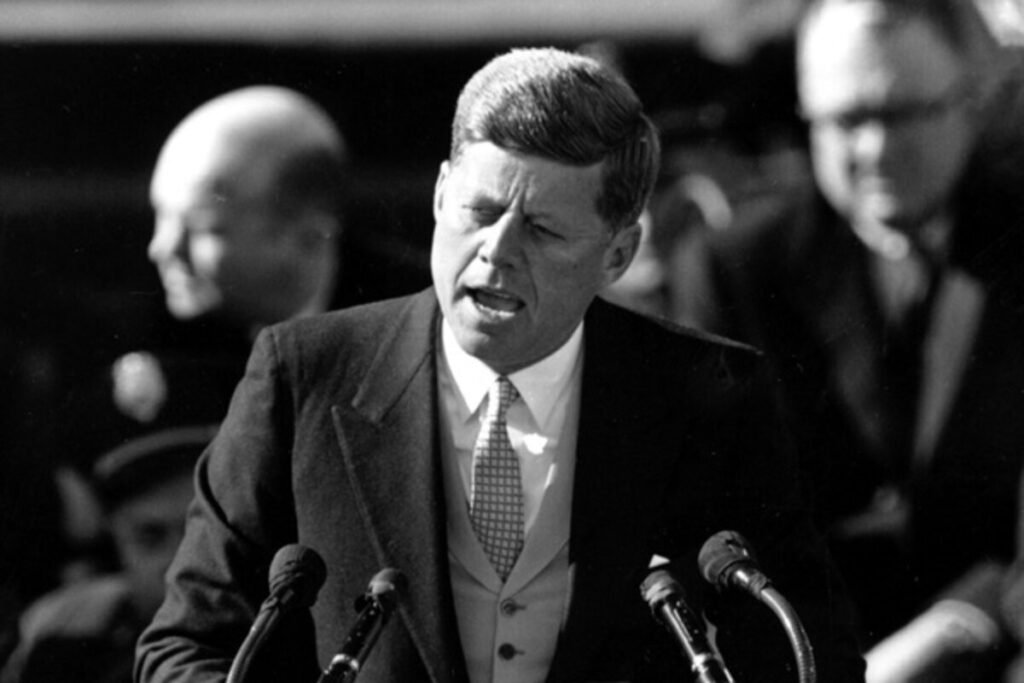
President John F. Kennedy’s dictum of “ask not what your country can do for you — ask what you can do for your country” is fondly remembered. But it’s not a statement that would resonate with today’s public. The 35th president issued his challenge while World War II was fresh in Americans’ minds and the nation was committed to winning the Cold War. The public had made sacrifices to win a global conflict and was willing to make additional ones to defeat communism.
We are no longer that America. These days, we’re more inclined to starve our own communities of funds while still expecting the same level of public services.
One of the best examples of “ask what your country can do for you” is the demand to abolish property taxes. No one likes paying taxes, yet they are necessary to fund the public services everyone in the community enjoys. Schools, first responders, roads, and other public goods depend on this revenue. It’s true that property taxes have gotten out of hand in many areas, but it’s increasingly popular to want to ban them altogether.
There are proposals to eliminate these taxes in at least 13 states. It’s a top issue for Republicans in Florida, Texas, and Georgia. The idea proved to be very popular in Texas last year, with nearly 80 percent of voters backing property tax breaks for certain homeowners.
Such measures would wipe out public services in communities across the country. The National Association of Counties warns that eliminating property taxes would devastate nearly half of the 67 counties in Florida.
If relatively well-off Americans feel they shouldn’t pay taxes to maintain public services, how can we expect them to support measures to reduce the debt? It would be one thing if citizens were fine with foregoing these services in exchange for paying less to the government. But that’s not the expectation. They still demand the same level of public services with the diminished revenue. The only thing they’re willing to “give up” are public goods they think they don’t need, like schools, which a number of boomers now think shouldn’t get their tax dollars.
The same mentality animates public discourse over the federal debt. Polls find strong majorities of Americans back spending cuts—but only in theory. When asked about specific programs, overwhelming majorities oppose cuts. In fact, strong majorities back increased spending on many government programs, such as Social Security, Medicare, veterans’ services, and assistance to the poor. According to a recent YouGov poll, only foreign aid and ICE lacked plurality support for increased funding. People even thought colleges should get more federal dollars. Theoretical support for government spending cuts doesn’t matter when the majority overwhelmingly opposes specific cuts.
While Americans want these services to get more funding, they don’t actually want to pay more for them. Polls find that Americans vastly prefer spending cuts to tax increases to reduce the deficit. But it appears these same Americans want government spending increased when asked for specifics. So in reality, the public wants spending increased and taxes cut. No wonder politicians never tackle the debt.
After Americans receive a benefit, they never want to give it up, no matter how damaging it proves to the country. Obamacare proved disastrous and was unpopular when Americans first faced its effects. But once they got used to the program, it became unpopular to alter, much less to abolish. Republicans learned that during the first Trump administration.
Americans expect to receive Social Security and Medicare right when they turn 65, and no later. To fiddle with the retirement age would, apparently, impose an unbearable burden. It would also make those affected think someone else is benefiting at their expense, which would make them even angrier about taxes. Reducing the debt is simply not a cause the majority cares about if it affects them personally. Since it’s impossible to solve the problem completely painlessly, there’s no appetite for it.
We’re far away from the idealism of the Cold War years. There’s no higher cause for the average American citizen than their personal self-interest. Increasingly, every American acts as a selfish agent at war with everyone else. There’s no sense of common good or duty. There’s certainly no willingness to make a tiny sacrifice for a better future.
There are understandable reasons for this mentality. Many Americans know the government makes a mess out of idealistic crusades on behalf of a higher good. See the Iraq War. Citizens saw their tax dollars wasted with little to show for it. Many hardworking Americans feel taxed to death while those who refuse to work reap the benefits. They’d rather look out for “number one” rather than to be suckered into some politician’s scheme.
However understandable, this mentality also prevents us from solving serious problems and exacerbates social pathologies. Americans may want to focus more on themselves, but they still expect the rest of society to provide common benefits. The latter requires a level of public mindedness we’re losing. You can’t maintain the great things we have if everyone wants to draw from the well without refilling it. When that mentality becomes widespread, no one gets anything.
The only way we’re ever going to tackle the debt is if we revive public mindedness. People need to start asking what they can do for their country again, not expecting the country to provide them handouts free of any obligations. America will be truly great again if citizens can accept small sacrifices on behalf of a better future.
Cutting the debt is a great task before us. Americans must overcome the prevailing “I got mine” mentality to tackle it.
The post To Reduce the Debt, Revive the Spirit of Sacrifice appeared first on The American Conservative.