




Ohio Water Torture
Bad as Chinese schools can be, there is something more sinister in the U.S.

Two unrelated events collided recently: President Donald Trump went to China, and I learned that the boy who bullied me in high school died. The two events connected in my mind in an unexpected way.
The media, bullies themselves, of course found the China trip largely a disaster. Trump generated predictable coverage: panic over diplomatic protocol, endless parsing of symbolism, and stories about EVs and AI. As when at home they report on every Trump gaffe, act of pantomime-like resistance, and negative turn in the Iran War, the purpose is to humiliate Trump and mock the Orange Man.
The other media tic that emerged, especially when nothing really significant came from the meetings between Trump and Xi Jinping, is that some American journalists rediscovered the soft piece: short videos about how strange stuff is in China, or how they venerate their elders, or maybe about a family where the Yoda-like grandpa fought with Mao while his young granddaughter wears a miniskirt. There is also the serious think piece, where a journo discovers Chinese math-centric schools have lessons to teach America.
But he’ll probably miss the real point: America’s school problem is not simply academic. The sad fact is that there is too much truth to the claim that American education is terrible, which contributes to the failures of our society in so many ways. The think piece on Chinese education will not, however, include anything on bullying or violence in Chinese schools, one of our own pervasive problems. The journo’s Chinese government translator will not tell him about bullying in local schools.
China has its own school problems, but American schools often tolerate something more openly physical. In China, social exclusion can be severe, particularly in a world where fitting into peer groups is highly valued. Students may be ostracized for appearing different or violating expectations. In some cases, classmates create groups on WeChat to spread rumors. Success on exams by itself can determine admission to top universities. This pressure creates stress, anxiety, and competition. Students who perform poorly may become targets of ridicule, while high achievers may be bullied for appearing overly ambitious or socially awkward. Imagine an American kid bullied over a high SAT score.
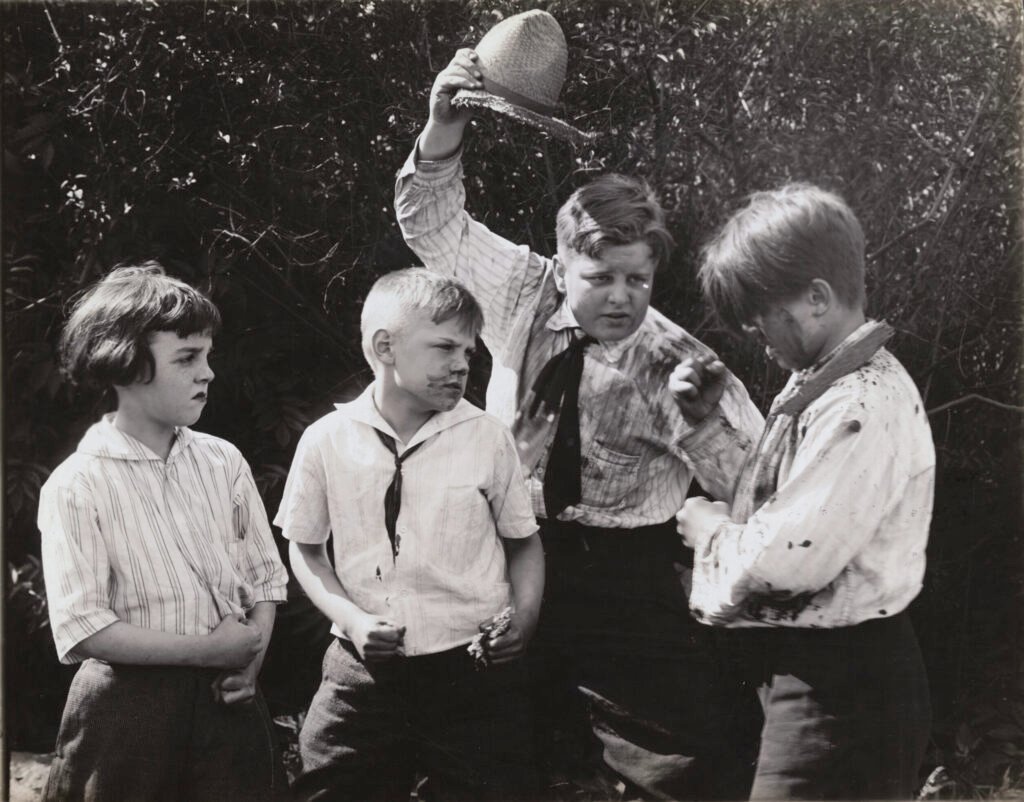
Chinese schools may be harsh and conformist, but American schools often normalize violence. Both systems fail students in different ways. We share humiliation. But the key difference between Chinese high schools and my old one is violence, straight-up physical brutality in cases, which trains American kids to be violent themselves, to condone violence, and quietly to endure it; this leaves long-term social scars. My suburban Ohio high school was a violent place, even if it failed to compete statistically with the assault rates in nearby urban schools. My bully, Jimmy, was on the varsity football team when I was barely holding it together on the junior varsity crew. I had stopped growing a year before, and my interest in being one of the smaller kids on the squad was lessening all the time. Jimmy singled me out.
In a coaching era where drinking water at practice was considered a sign of weakness, Jimmy would take away my lunch-break thermos, meaning nothing to drink halfway through the two-a-day football practices in the 95-degree, humid Ohio afternoons. The grit from the high school track in my mouth was awful without a splash of water to wash it down. Jimmy would chug my thermos while I stood there watching. He was bigger than me and I knew nothing about fighting, so I never thought to fight back. He’d often pretend to hold the thermos out to me so I could have a sip then pull it back. He’d offer it to another varsity player, and usually finish the daily show by dumping whatever he did not drink onto the ground. If I ever got anything, it would be room-temperature water snuck from the groundskeeper’s upright spigot.
These behaviors exist on a spectrum ranging from cruelty to severe physical violence. They created a ritualized environment in which I felt unsafe in places that were supposed to foster learning and development.
Jimmy would also take a few swings at me, after school, before practice, whenever. But those just hurt. In retrospect, the water thing was in a way humiliating long after my split lip healed. When I learned that Jimmy had died at a fairly young age while Trump was in China, I did not feel that was a bad thing.
I was not the only person bullied in my high school. Most assaults, like mine, went unreported because of fear of retaliation, masculine embarrassment, or disbelief from adults. Bullying was endemic, and what made it worse is how it was allowed by the people who could have helped us. My father brushed it all off over the newspaper as “boys will be boys,” and my mother responded by buying me a bigger thermos in hopes a few drops would be left for me post-Jimmy. We had no school resource officers to intervene. The football coaches were with us every minute of every practice, like Marine Corps drill sergeants—except for a brief period during lunch break every day when not a single adult was to be found. That’s when the bullying took place. The regular teachers who elsewhere patrolled the school restrooms for underage cigarette smokers somehow never paid any attention to the wood-shop corridor. And of course none of the students there never saw nothin’.
Luckily, this was before mass shootings became routine. But many of us graduated believing the world was fundamentally unsafe, that authority figures would look away, institutions would fail, and humiliation was simply part of life. That lesson may have had a more lasting impact than anything we learned in class.
The post Ohio Water Torture appeared first on The American Conservative.