




BEYOND THE HUDDLE
The four-time Super Bowl champion now says that asking for help is one of the “hardest things” he’s ever done.

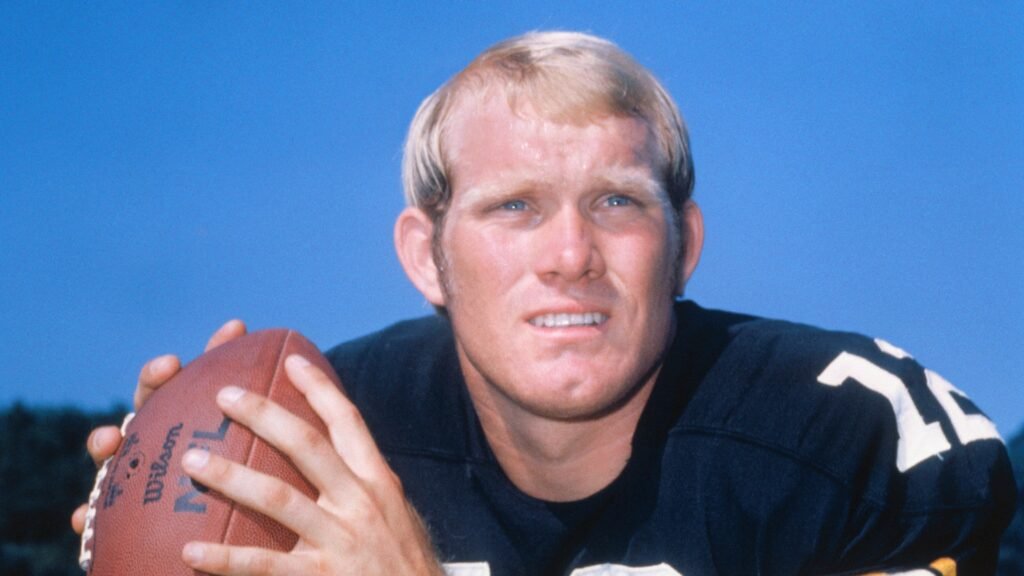
NFL legend Terry Bradshaw has opened up about mental health struggles that followed him beyond the football field.
The 78-year-old former Pittsburgh Steelers quarterback opened up about his lifelong struggle with clinical depression in an interview with People this week to promote his new memoir, Looking for Terry.
“Men think that’s a weakness. I got past it being a weakness. It’s a sickness,” Bradshaw told the outlet. “There’s nothing wrong with admitting you’ve got issues.”

The four-time Super Bowl champion said he spent years struggling behind the scenes, even as he built one of football’s most celebrated careers.
Bradshaw played quarterback for the Steelers for 14 seasons, winning four Super Bowls before retiring in 1984. He then became a CBS Sports analyst and joined Fox NFL Sunday in 1994, where he remains a co-host.

But his championship record concealed emotional turmoil that started long before his football fame.

Growing up in Shreveport, Louisiana, Bradshaw writes in his memoir that he had undiagnosed ADHD. He later experienced anxiety attacks and intense emotional highs and lows during his playing career, which he dismissed as normal.
Get a First Look
By clicking “Sign Up” you agree to our Terms of Use and Privacy Policy.
“You didn’t talk about it,” he told People.

Admitting that he was struggling was especially difficult in a sport where players were expected to appear tough.
“Finally saying, ‘Hey, I’m really f—-d up. I need to get some help,’” was one of the “hardest things” he ever did, he said.

The quarterback’s anxiety was compounded by the pressure to win. Speaking on Lewis Howes’ The School of Greatness podcast on Oct. 5, Bradshaw acknowledged the insecurity that followed him throughout his NFL career.
“I always had fear. I was always scared of losing,” he said.
In his latest interview, Bradshaw explained that his mental health struggles persisted long after his playing days ended. He was formally diagnosed with clinical depression in the late 1990s, as his broadcasting career was taking off.
Working with a therapist, psychiatrist, and pastor helped him understand his condition. “It is an ugly disease,” he told People, adding that having a “good support group” is important.

The support of his wife, Tammy Bradshaw, 65, would also prove transformative.
The former radiation therapist, whom he married in 2014, helped him stop viewing his depression as something he had brought upon himself.
“This is not a choice. This isn’t the consequence of something you’ve done. It’s not your fault,” Bradshaw recalled.
Bradshaw now feels comfortable telling his wife when he is struggling, rather than trying to hide his emotions.

“She just gets me out of it. She gets my mind off of it. She frees me up,” he told People, explaining that the couple talks through his difficult days and finds things to do together.
Tammy said she can sometimes recognize those moments just by looking into his eyes. The couple even have a nickname for his depressive episodes: “Roy.”
The father of three also discusses his back-to-back cancer diagnoses in his new memoir, following battles with bladder cancer and a rare form of skin cancer.
The diagnoses also forced Bradshaw to confront his mortality. During a Sept. 2 appearance on William Shatner’s No Time But Now podcast, he recalled questioning his life and faith.
“My thoughts were about dying. Am I going to heaven? Am I a good enough man? Have I been a good enough Christian?” he said.
Today, Bradshaw has found “peace” breeding horses on the 155-acre Texas ranch he and Tammy purchased in 2023. He hopes the memoir encourages others to open up and seek help instead of hiding their struggles.
“I’m proud of myself for making it through and surviving,” he said.