




From zero to hero
Version Reviewed: North American
Editor’s note: Due to the low resolution and peculiarities of how screengrabs display for Virtual Boy games on NSO, all the screens here are Nintendo press shots.
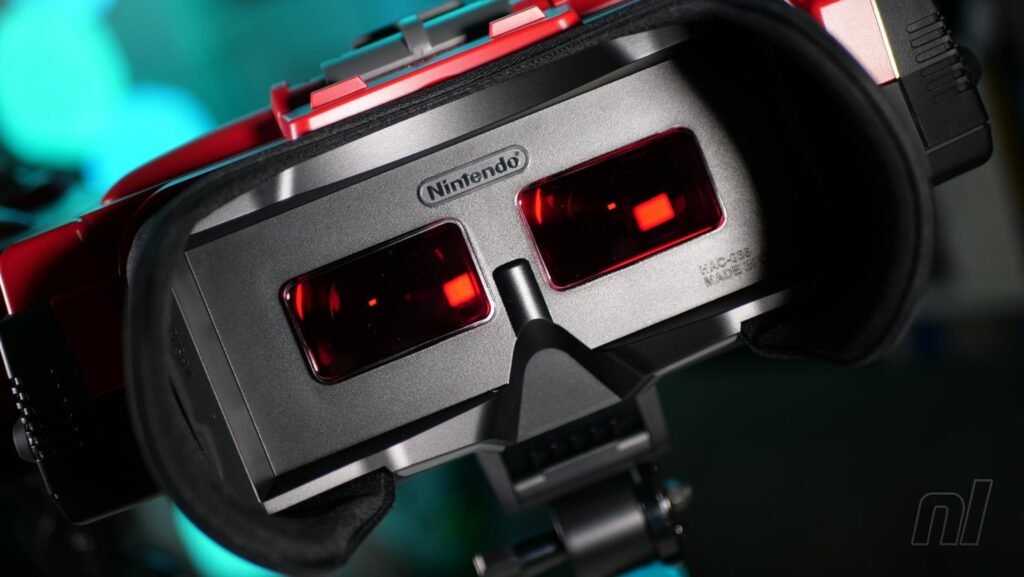
I can honestly say that Zero Racers is the most fun I have ever had in a Virtual Boy headset. In fact, the more I play it, the more it feels like it could have been a killer app for Nintendo’s doomed VR headset had it come out in 1996. 30 years later, it is hard not to wonder what might have been, but at least Zero Racers finally made it to the starting line.
And to be sure, it does not feel like an underbaked curiosity from Nintendo’s archives. This is a fully fledged futuristic racer that takes the speed, structure, and mechanical DNA of F-Zero and translates it brilliantly to the Virtual Boy’s stereoscopic display, or the next-best approximation of it available through Nintendo’s pricey replica Virtual Boy peripheral for Switch.
Rather than racing along a flat track, you pilot a flying craft through wireframe tunnels, diving beneath obstacles, ascending over barriers, and ricocheting off walls and ceilings at several hundred miles per hour. It is frantic, visually intense, and occasionally disorientating, yet once the controls click, it is super satisfying to lock in and win races by a hair’s breadth.
Visually, it could hardly be further removed from the colourfully elaborate backdrops associated with other F-Zero games. The 15 courses are a collection of glowing red wireframe tunnels suspended in darkness. Yet the minimalist presentation works beautifully here; it’s like playing inside the targeting display of an ’80s science-fiction cockpit.
The sparse-looking stages serve Zero Racers’ blistering sense of momentum, with the clean wireframes helping to make upcoming corners, hazards, and boost gates easy to read without adding visual clutter. The sound design is similarly restrained, limited to sound effects during races themselves, while catchy, upbeat music accompanies menu screens.
Most importantly, the game’s F-Zero essence feels perfectly translated to the hardware – the main craft is even called the Falcon. It takes that series’ speed, damage system, and recharge pit stops, but adds an extra axis to the formula so that races play out vertically as well as horizontally as tracks narrow, dip, and careen up and down.
This gives Zero Racers a mechanical identity distinct from its track-bound brethren. Its closest existing Virtual Boy comparison would be the wireframe designs and multidirectional movement of Red Alarm. Yet where that game can feel slow and floaty, Zero Racers truly scratches that same futuristic piloting itch.
Its controls are buttery smooth to boot. Learning when to release the throttle, tap the brake, and reposition is essential to avoiding a high-speed bumper car routine. There is a built-in ‘sleep’ option allowing for breaks between Grand Prix races, too. Virtual Boy is notoriously difficult on the eyes for long stretches, and Zero Racers might just be too busy for some in this regard.
For decades, Zero Racers existed as little more than a rumour, discussed online as one of those lost games that would surely never see the light of day; that makes its Nintendo Classics emergence a genuine delight. For anyone still on the fence, its inclusion alone arguably justifies the price of the cardboard Virtual Boy peripheral.