





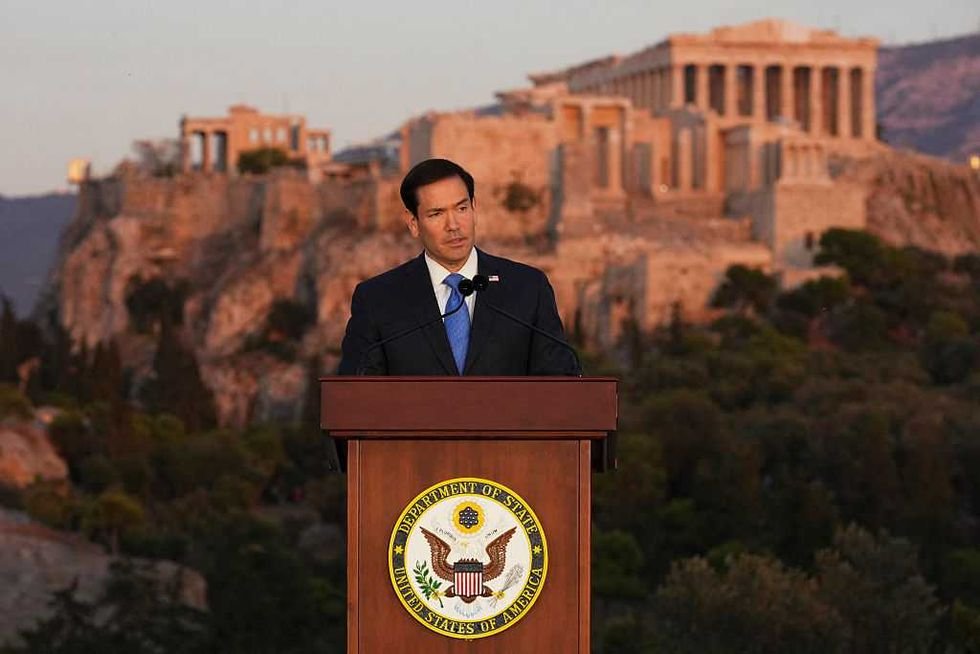
For policymakers and citizens sick of decades wasted on failed globalist experiments, Marco Rubio’s nationalist speech in Athens on Wednesday was a huge gulp of fresh air. The alternative to collectivist one-world ideology can sound almost embarrassingly obvious: Nations should pursue their own interests, recover confidence in their inheritance, and cooperate from a position of strength rather than dissolution.
Rubio’s setting made the point for him. Speaking at the Pnyx beneath the Acropolis, he traced America’s inheritance through Athens, Rome, Christendom, medieval Europe, and England. He called for the West to recover the ambition, confidence, and national power it once took for granted. His speech made the civilizational case in deliberately grand terms.
Pretending the Eastern Romans never existed — or that they have nothing to tell us about who we really are — leaves us poorer, more arrogant, and less prepared for the trials ahead.
But his civilizational reset could have been stronger and surer. The great omission was the thousand-year span defined not by Athens, Rome, or even Jerusalem, but by Constantinople — capital of the Eastern Roman Empire and guardian of a Roman Christian civilization that survived long after the political West had collapsed.
Its final outposts fell only about three decades before Columbus reached the Americas. For perspective, 30 years ago the Unabomber was arrested, the first Motorola flip phone appeared, and IBM’s Deep Blue became the first computer to beat a reigning world chess champion in a game under standard tournament conditions.
That Byzantium received no real showing in Rubio’s address is hardly surprising. Despite its millennium-long life after the fall of the Western Roman Empire, the Eastern Empire has endured generations of Western neglect, condescension, and selective amnesia.
There are many reasons. One is that the modern West became preoccupied almost to obsession with its own political development — its revolutions, constitutions, ideological struggles, and repeated attempts to construct an order that could tame human nature without destroying liberty. Somewhere along the way, the East came to seem like the place where history had stalled.
“Byzantium” — no longer “really” Rome in Western eyes — became shorthand for decadence, intrigue, stagnation, and oriental despotism. The important action supposedly moved elsewhere: to the Latin West, where Europe would eventually beat back Islamic power at Tours, Lepanto, and Vienna and narrate the victories as its own civilizational story.
That is an impoverished self-understanding. Excising the Eastern Roman Empire deprives the West of some of the warnings it most needs as it flails through geopolitical waters that seem unprecedented, mostly because we have forgotten so much precedent.
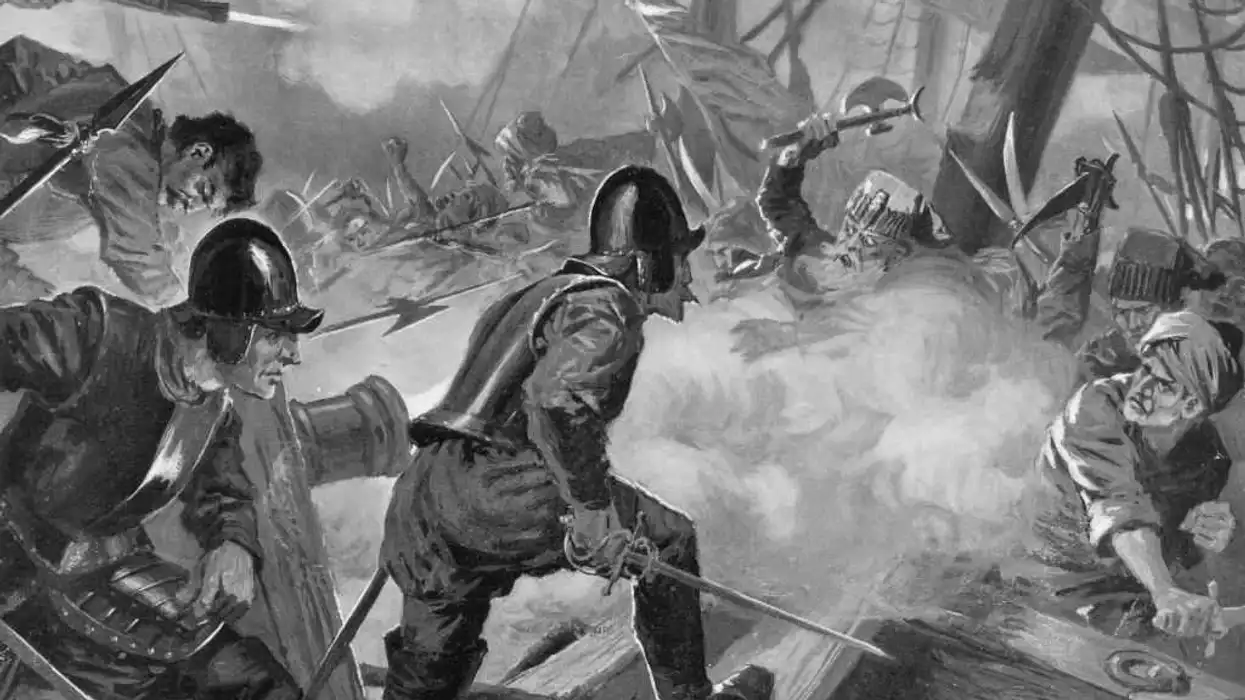
The Eastern Romans spent centuries fighting for survival against great powers on their frontiers. Their long rivalry with Sasanian Persia culminated in a ruinous early-7th-century war that exhausted both empires. Almost immediately, Arab Muslim armies surged through territories Rome and Persia had fought over for generations. Centuries later, Latin Christians inflicted one of Byzantium’s worst wounds themselves when the Fourth Crusade diverted to Constantinople and sacked the city in 1204. The empire was restored in 1261, but it never recovered its former strength.
RELATED: Rubio celebrates Western exceptionalism, warns civilization is at an ‘inflection point’

The point is not that the modern West owes Byzantium an apology, although some historical humility would be healthy. The point is that civilizations sometimes face grueling, protracted defense requiring a spiritual sobriety to match. Today the West is dangerously tempted by visions of global end-zone dancing — speedrunning the uncool parts of geopolitics in favor of a world-war blitz won by super-duper wonder-weapons.
Some Constantinopolitan emperors knew the temptation. Nikephoros II Phokas, the warrior-emperor who reigned from 963 to 969, won spectacular victories against Muslim powers and reportedly sought church recognition of soldiers killed in those campaigns as martyrs.
The church refused. Patriarch Polyeuctus invoked St. Basil’s Canon 13, which says that although killing in war had not traditionally been treated as murder, soldiers who shed blood should abstain from communion for three years because their hands were not clean. Whatever else one makes of the canon, the answer to Nikephoros was unmistakable: Military victory did not automatically confer holiness.
That is a useful warning against today’s temptation to treat defeating our enemies by whatever means we choose as the height of spiritual purity and moral heroism. It is also a reminder that strong, healthy, independent churches can serve as an irreplaceable counterweight to political rulers who begin to imagine themselves as spiritual authorities and their regimes as godlike powers before which citizens and foreigners alike must bow and scrape.
RELATED: The last knight of Europe rides again
And Polyeuctus’ victory points toward something still more important. Spiritual authority does not arise from the top-down power of worldly lawgivers. Holiness begins with people willing to make the difficult purification of their own hearts a lifelong athletic practice — the opposite of the performative, self-flattering spiritual box-checking Jesus decried in the parable of the Pharisee and the publican.
The West would benefit from reordering its sociopolitical habits in that direction — not to weaken itself or retreat into inert obscurantism, but to recover clarity and responsibility at a time of immense division and instability.
Much of today’s turmoil arises from efforts to turn political might, now amplified by astonishing technology, into a new god and a new church with very old stripes. Rubio is right that the West must remember what it is. But Athens and Rome are not enough, and “Christendom” becomes dangerously abstract if we skip the civilization that carried Roman Christianity for a thousand years while the Western world was being remade.
Pretending the Eastern Romans never existed — or that they have nothing to tell us about who we really are — leaves us poorer, more arrogant, and less prepared for the trials ahead.