




Is the U.S. Capable of Being Cautious About Foreign Interventions?
American adversaries have learned how to outlast the U.S.

The United States loves to remember the Second World War and the Gulf War, because they resulted in the United States smashing the huge conventional armies of diabolical adversaries such as Adolf Hitler, the Imperial Japanese, and the former American ally Saddam Hussein. Yet most recent U.S. wars haven’t gone all that well. Although the outcome of the Korean War against countries using conventional armies—North Korea and China—didn’t provide the expected decisive victory over adversaries, the real trouble started in Vietnam, when such opponents began to realize that the center of gravity when fighting the United States abroad was really at home in the United States.
The general public in America since the Civil War and Indian Wars has been shielded from the most horrific effects of combat: death and destruction on U.S. soil. Although American service personnel have been lost, sometimes in significant numbers, modern American wars have always been “over there.” And after the World Wars, the American public developed an aversion to casualties and a short-term mentality about how long they wanted to remain at war in a far-flung place. Unlike the formal British and French Empires, which had no problem fighting “forever wars,” the informal, postwar American Empire consisted of hundreds of foreign military bases and ideally engaged only in periodic, shorter-term interventions or even CIA covert actions.
The North Vietnamese and Viet Cong were pioneers in exploiting these constraining factors on the American superpower. They had a longer time horizon than did the U.S. government and the American people, and they combined conventional warfare with irregular guerrilla warfare just to keep forces in the field until American public opinion at home soured on the war. Although the United States was dominant on the battlefield, the communists won just by not losing the war until American opinion turned and U.S. forces withdrew.
Since the Vietnam War, more and more adversaries are recognizing that conducting long-term “asymmetric warfare”—conducting hit-and-run raids and then going back to hiding places in mountains, forests, caves, or among the civilian population—until the American public tires of war is the way to defeat the United States. After Vietnam, the U.S. military tried to make adjustments to increase its chances of winning such asymmetric conflicts. One major factor in souring the American people on the war in Vietnam’s jungles was the draft, which shanghaied young men from civilian life into risky warfare and sometimes resulted in their death or dismemberment. To help insulate the U.S. military from such pressures, the U.S. government changed to an all-volunteer force of professional soldiers, often drawn from multigenerational military families more inured to the sacrifices of war.
This adjustment did give the U.S. military more time to defeat opponents involving counterinsurgency techniques, but in the end has not been very successful. Even after the 9/11 attacks, the American public soured on fighting Al Qaeda and the Taliban long before the U.S. withdrew in abject defeat after 20 years at war. Although the Iraq War lasted from 2003 to 2011, the main reason it ended was the decision of many formerly hostile Sunni tribesmen to join with the U.S. in the fight against Al Qaeda, and the Iraqi public rejecting the continued presence of U.S. occupation forces in their country. Even that outcome was unsatisfying: The U.S. sent troops back to deal with rampaging ISIS forces, which originally formed to fight the American invasion. Iraq’s stability remains in question even today. U.S. forces are still there, and the big winner of the long effort was American nemesis Iran, which has gained much influence in Iraq.
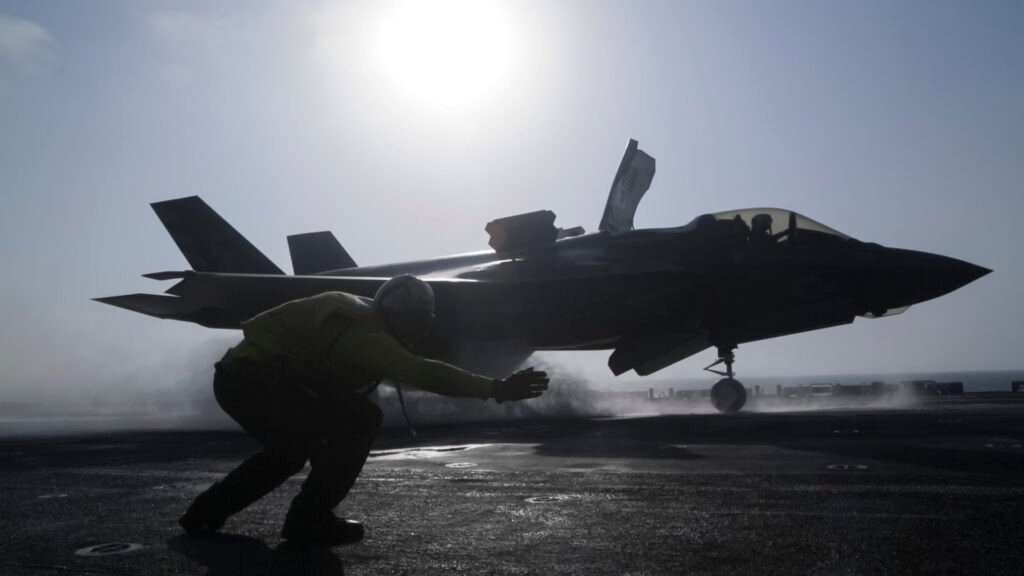
Now the United States has launched an unprovoked direct attack on Iran, which is predictably employing asymmetric warfare using missiles, cheap attack drones, mines, and small boats at sea to effectively close the Strait of Hormuz by threatening commercial marine traffic going through it, thereby dramatically increasing the world’s oil price. It has also used missiles and drones to attack the oil-producing capabilities of U.S.-allied Persian Gulf Arab states. The Trump administration seems unsure of how to end the standoff and get the strait reopened.
Unbelievably, with one quagmire ongoing, the administration is now making threats to attack Cuba. What could go wrong? The United States already faces depleted missile inventories that will take years to replenish from the Iran fiasco. If the Cubans are smart, they too will threaten to use asymmetric warfare against any invasion force. Heavy bombing in Iran did not result in regime change or even capitulation. Would it fare any better in Cuba, where a rally-around-the-flag effect against an attacking foreign behemoth might also occur?
More generally, the proliferation of missiles, cheap surveillance, and attack drones may have actually made groups or countries using asymmetric warfare even more formidable against stronger attackers—for example, Ukraine against Russia. Now the United States seems especially vulnerable to asymmetric opponents because it has an exhausted public that seems more enlightened on the perils of foreign quagmires than is the country’s foreign policy elite, if initial unfavorable public opinion polls on the Iran debacle are any indication.
The post Is the U.S. Capable of Being Cautious About Foreign Interventions? appeared first on The American Conservative.