


Just months after suffering the most widespread assassination campaign in modern history, Iran’s leadership has reemerged in the public sphere, showcasing its new confidence with international visits.
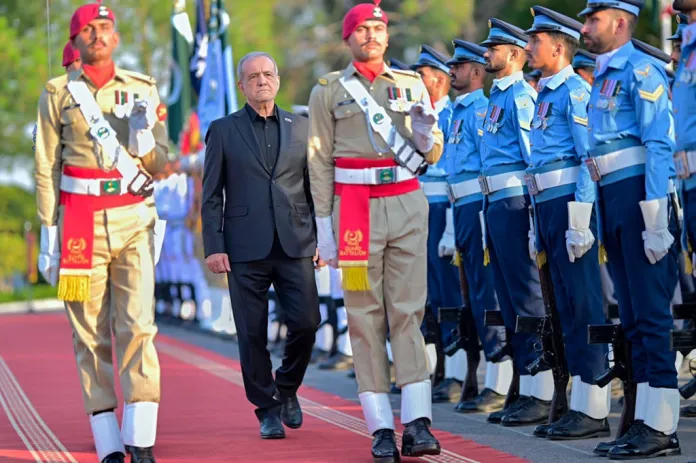
Iranian President Masoud Pezeshkian made his first trip abroad since the war began in late February on Tuesday, landing in Pakistan with Foreign Minister Abbas Araghchi and a delegation. The trip appeared to be less than urgent, with both sides portraying it as a ceremonial visit to voice Tehran’s gratitude for help in peace negotiations, but not broaching any new topics. Its lack of urgency showcases Iranian leaders’ newfound comfort in being protected from new assassination attempts.
Press statements from both sides glowed over the visit, with President Asif Ali Zardari’s office saying the visit “reflects the longstanding brotherly relations between the two countries and a desire to stay together in good and bad times.”
“The President reaffirmed Pakistan’s principled support for Iran’s peace, stability, national unity, sovereignty and territorial integrity. He stated that Pakistan has consistently opposed one-sided initiatives and has supported dialogue and diplomacy as the means to achieve a durable and sustainable solution to regional and global challenges,” the president’s office said, adding that Pakistan was committed to “preserving the unity of the Muslim Ummah,” meaning the Muslim community.
Notably, the office of President Asif Ali Zardari said he voiced his condolences for the “martyrdom” of former Iranian Supreme Leader Ayatollah Ali Khamenei.
Pezeshkian beamed as he was greeted by an F-16 flyover — the Pakistani Air Force’s version of some of the jets that bombed Iran just four months ago.
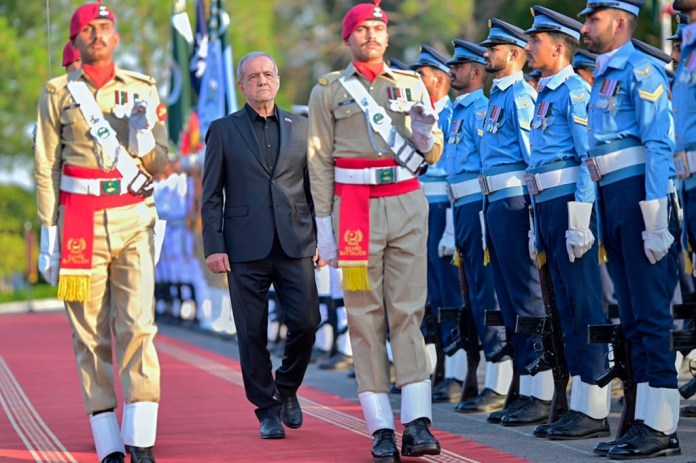
Pakistan was the first country Pezeshkian visited after the 12-day war with Israel last year, underscoring its importance.
Pakistan is also a safe choice for a first international trip post-war, given it borders Iran and enjoys a close relationship with the U.S. Iran was accused of flying some aircraft into Pakistan to hold them there for the duration of Operation Epic Fury/Rising Lion, confident the U.S. wouldn’t launch strikes against its longtime ally.
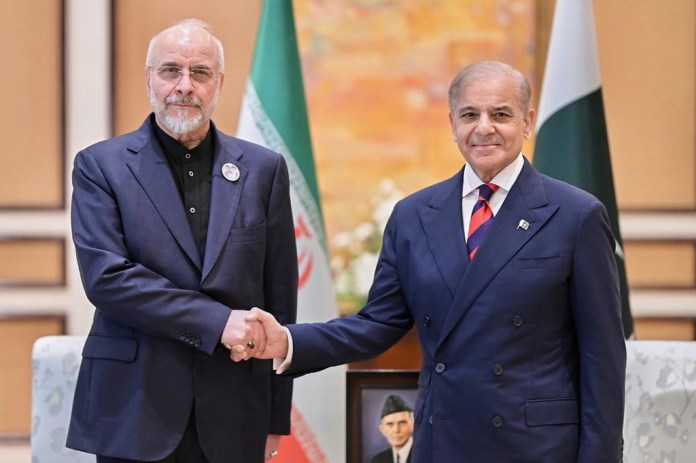
While the visit is the Iranian president’s first since the ceasefire, other top officials have been flying all over. Iranian Parliamentary Speaker Mohammad Bagher Ghalibaf traveled to Islamabad, Pakistan, on April 11; Doha, Qatar, in mid to late May; and Switzerland over the weekend.
Araghchi has been even busier, making high-profile trips to Pakistan, Oman, Russia, India, Qatar, China, and Switzerland, beginning in mid-April.
Such international trips would have been unthinkable before the initial ceasefire, when the U.S. and Israel unleashed the biggest spree of assassinations against a country’s senior leadership in modern history. Nearly Iran’s entire military and civilian senior leadership was wiped out in the opening days of the war, with dozens killed in targeted strikes.
Araghchi and Ghalibaf were even reportedly on Israel’s kill list, but a Pakistani official speaking with Reuters in March told Jerusalem to hold off upon Islamabad’s begging.
“The Israelis had their … coordinates and wanted to take them out, we told the US if they are also eliminated then there is no one else to talk to, hence the US asked the Israelis to back off,” the official said.
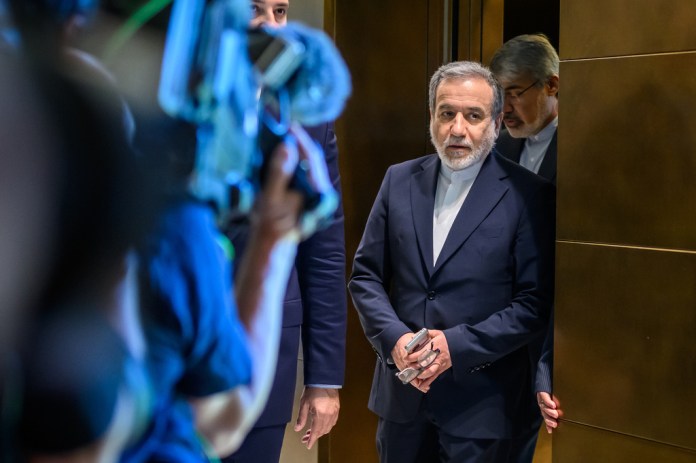
Many recent trips have been as visible as possible, with Iranian media in attendance to spread the word, and the high-level delegations often being greeted with the highest pomp and ceremony available.
Iran had sought to counter this image of a terrified and isolated regime even at the height of the war. Pezeshkian, negotiator and Secretary Ali Larijani, and other officials openly walked the streets during a Tehran parade amid the war in a display of confidence. The gamble possibly cost Larijani his life, as he was killed shortly thereafter. He was the second-highest-ranking official killed in the war behind Khamenei.
Iran’s leadership is also likely confident that Trump’s pressure on Israel has restrained the IDF, which has been behind nearly all of the assassinations.
The risk of assassination is still present, however, something Iranian media has sought to convey, possibly to boost the perception of their bravery.
Mohammad Marandi, a member of the Iranian negotiating delegation to Islamabad in mid-April, claimed in an interview with Al-Mayadeen English that the delegation’s plane had to be diverted and make an emergency landing in an eastern city in Iran as it made its return flight, after intelligence was obtained suggesting the plane would be shot down. The delegation then returned to Tehran by car or train.
TOP IRANIAN OFFICIALS LAND IN OMAN TO DISCUSS MANAGING STRAIT OF HORMUZ
No Western outlets have confirmed the claim.
Despite the new visibility, the trip locations also indicate a degree of cautiousness. Every country visited by top Iranian officials so far has either been close, friendly, or the site of neutral negotiations, where an assassination attempt would spark international condemnation. Tehran will likely have to wait some time before its leaders can return to their past travel routine.