Skip to content








The next big fight over your car isn’t about gas prices, emissions, or electric vehicles. It’s about something bigger: who controls the road — and how much control they have over you while you’re on it.
What’s happening in Illinois should get drivers’ attentions. Lawmakers are advancing the Road Usage Charge Act, introduced by state Rep. Ram Villivalam (D), as a pilot program to study a mileage-based tax. On paper, it sounds routine. In reality, it’s the first step toward replacing the gas tax with a system that charges you for every mile you drive.
History shows that once a system like this exists, it rarely stays limited to its original purpose.
For decades, drivers have paid for roads through fuel taxes. You fill up, you pay your share. It’s simple, predictable, and largely invisible. But as more drivers move into electric vehicles and high-efficiency cars, gas tax revenue is declining. States like Illinois, which rely heavily on that revenue, are looking for alternatives.
Instead of cutting spending or rethinking how funds are used, they’re moving toward a system that expands oversight.
Double trouble
Illinois drivers are already paying for the road — heavily. Under Gov. JB Pritzker (D), the state doubled its gas tax in 2019, making it one of the highest in the country. Add tolls, registration fees, and local taxes, and drivers are already funding the system at a premium. Now comes the next step: charging not for fuel, but for movement itself.
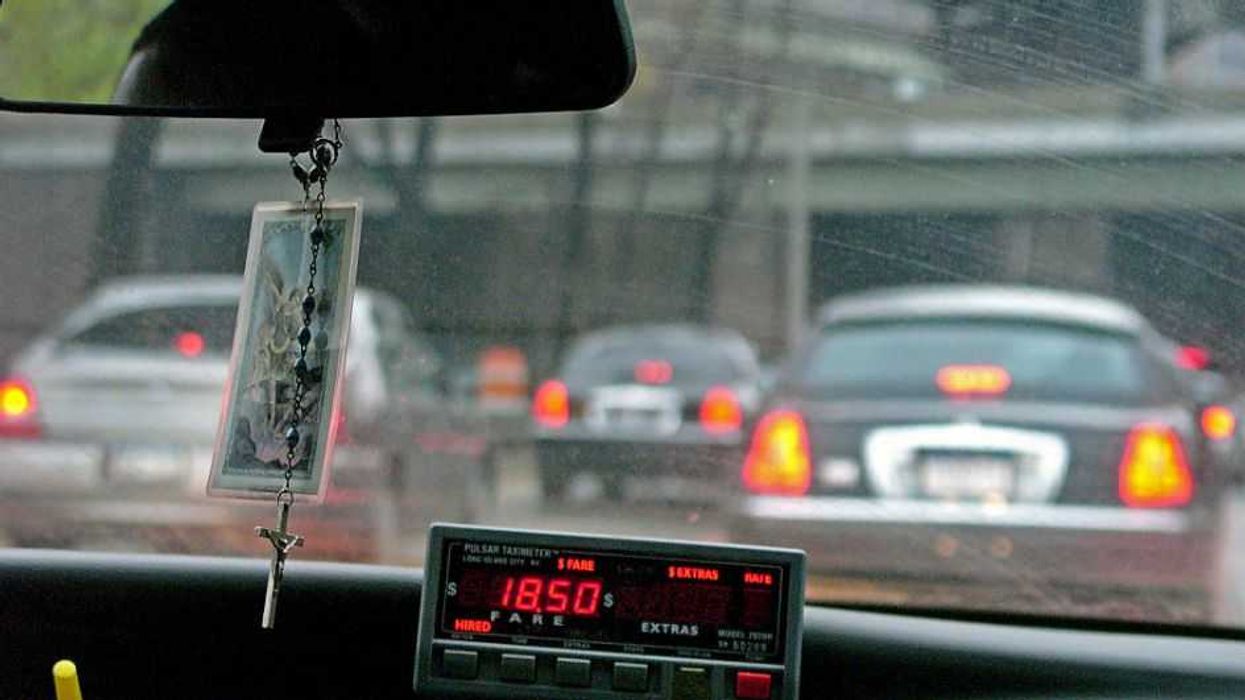
A mileage-based tax — often called a vehicle miles traveled tax — sounds straightforward. Drive more, pay more. But the details matter. Some proposals rely on annual odometer reporting. Others involve installing tracking devices or using connected vehicle data.
This is where it stops being just a tax policy.
Once a system is in place to measure how far you drive, it can also measure when you drive, where you go, and how often you travel. Even groups like the American Civil Liberties Union have raised concerns about the risks that come with collecting that kind of data. And history shows that once a system like this exists, it rarely stays limited to its original purpose.
RELATED: FIRST LOOK New York International Auto Show: Cool cars, but drivers still face sticker shock
 VIEW Press/Getty Images
Miles to go
Supporters argue this is about fairness. If electric vehicle owners aren’t paying gas taxes, they should still contribute to road funding. On its face, that argument makes sense. But this proposal doesn’t just target EVs. It applies to everyone — including drivers already paying high fuel taxes every time they fill up.
The result could be double taxation.
There’s also the cost of running the system itself. A mileage-based tax isn’t free to administer. It requires new technology, enforcement mechanisms, and ongoing oversight. Those costs don’t disappear — they get passed on to drivers, adding another layer of expense before you even get to the per-mile charge.
Before any of that happens, there’s a more basic question: Where is the current money going? States already collect billions through gas taxes, tolls, and vehicle fees. Before asking drivers to pay more — or pay differently — there should be clear accountability for how those funds are being used.
That question rarely gets answered.
What tends to grow instead is the system itself — more programs, more layers, more cost.
I spy
Illinois has already seen pushback on similar proposals. A 2019 effort was shelved after public backlash. Drivers understood what was at stake: not just higher costs, but more oversight and less control.
At its core, this is about how driving is changing. Driving in America has always meant a certain level of independence — the ability to go where you want, when you want, without someone tracking the details. A mileage-based system, especially one tied to data collection, begins to change that, turning driving into something that’s measured, recorded, and managed.
That’s a fundamental shift.
A better way
To be clear, declining gas tax revenue is a real issue. As vehicles become more efficient and electric adoption grows, states will need to adapt. But there are simpler ways to do it. If EVs aren’t contributing equally, adjust registration fees. Create transparent, targeted solutions. Keep the system straightforward and limited.
What’s being proposed goes further. It builds a framework that could apply to every driver, not just the segment creating the revenue gap. And once that framework exists, it won’t stay narrow — these systems tend to expand over time.
Illinois may be calling this a pilot program. But other states are watching closely.
Drivers should be asking a basic question: Is paying for the road one thing — and being tracked to use it something else entirely?
Because once the system is in place, it won’t be easy to roll back.