





Disclaimer: Early release articles are not considered as final versions. Any changes will be reflected in the online version in the month the article is officially released.
Author affiliation: University Medical Center Ljubljana, Ljubljana, Slovenia (P. Bogovič, F. Strle); University of Ljubljana, Ljubljana (J. Slunečko, M. Kodre, R. Kogoj, M. Brecl Jakob, M. Korva, E. Ružić-Sabljić)
Borrelia miyamotoi is an emerging tickborne spirochete belonging to the relapsing fever group of Borrelia spp. It was first detected in Ixodes persulcatus ticks in Japan and formally described as a novel species in 1995 (1). The first human cases of B. miyamotoi disease were reported in Russia in 2011, establishing its clinical relevance as a human pathogen (2). Since then, B. miyamotoi has been identified in Ixodes ticks and documented in human cases throughout the Northern Hemisphere, including Asia, North America, and Europe (3).
In Europe, the prevalence of B. miyamotoi in I. ricinus ticks varies geographically; estimated prevalence is 1%–1.5% (3,4), and the reported prevalence up to 4% (5). In Slovenia, B. miyamotoi was detected in 8 (2%) of 398 tested I. ricinus ticks (6) and in 2% of tested small rodents (7). Seroprevalence studies have demonstrated B. miyamotoi antibodies in an average of 4.4% of tested persons; reported values were 0%–25.6% (3). However, the lack of a commercially available serologic assay limits comparability across studies. A previous study examined exposure to and infection with B. miyamotoi in the Netherlands and Sweden during 2007–2019 (8). A total of 2,160 participants, including healthy controls, persons with a recent tick bite, and patients with post–tick bite fever, were tested by multiantigen serologic assay. IgM or IgG seroprevalence was 1.0%–2.5% in healthy participants, 6.1%–8.9% in those reporting recent tick bites, and as high as 16.5% in febrile persons in Sweden.
By March 1, 2021, more than 500 cases of B. miyamotoi disease had been reported worldwide, primarily in Asia (particularly Russia) and North America, whereas 6 cases had been documented in Europe (3). A subsequent literature search through January 31, 2026, identified 3 additional cases in Europe (9–11); those cases originated from the Netherlands, Germany, Sweden, Austria, Norway, and Poland (3,9–11).
B. miyamotoi disease usually manifests as acute febrile illness with fatigue, headache, chills, myalgia, arthralgia, and nausea. Although the pathogen belongs to the relapsing fever group, recurrent febrile episodes occur in ≈10% of patients (3). Meningoencephalitis has been reported predominantly in immunocompromised patients (3,9,10,12). Here, we describe 2 cases of B. miyamotoi disease acquired and diagnosed in Slovenia.
The Study
Participants qualified for our study if they met the following criteria: adult patients with acute febrile illness (>38°C for >2 days), without localizing signs, who remained without diagnosis after standard laboratory testing and were evaluated at the Department of Infectious Diseases, University Medical Centre Ljubljana (Ljubljana, Slovenia), during 2021–2025. We analyzed archived EDTA blood samples from those patients using shotgun metagenomic sequencing (mNGS) as previously described (13). The National Medical Ethics Committee of the Republic of Slovenia approved the use of archived specimens (approval no. 0120-253/2023/3).
Figure
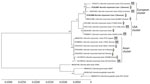
Figure. Phylogenetic analysis of 2 cases of Borrelia miyamotoidisease, Slovenia, 2025. Analysis was based on the 16S rRNA gene. We aligned consensus sequences (1,241-bp-long 16S rRNA sequences) using MAFFT…
We detected B. miyamotoi in 2 (0.6%) of 337 cases by mNGS. We confirmed the presence of B. miyamotoi in both samples by specific real-time PCR (2) and sequencing of the full-length 16S rRNA gene (Figure). In addition to the 2 cases of B. miyamotoi, we identified other pathogens among sequenced patients: parvovirus B19 (n = 3), Epstein-Barr virus (n = 1), tick-borne encephalitis virus (n = 1), Anaplasma phagocytophilum (n = 1), Neoehrlichia mikurensis (n = 1), and Spiroplasma ixodetis (n = 15).
Case 1 was in a 36-year-old man who sought care in July 2022 for a 3-day history of fever as high as 38 °C and moderate headache, accompanied by occasional dry cough and mild nausea. Three weeks earlier, he had removed 2 ticks and noticed no subsequent skin changes. His medical history was unremarkable, and he was not taking any regular medications. He had not traveled outside Slovenia in the preceding 6 months. In 2012, he had received the basic vaccination for tick-borne encephalitis.
At examination, he was afebrile (36°C); blood pressure was 111/73 mm Hg, pulse 50 bpm, and peripheral oxygen saturation 98%. Physical examination was unremarkable; the patient had no rash or meningeal signs. Laboratory testing revealed several abnormalities, including elevated inflammatory markers (C-reactive protein 61 mg/L [reference range <5 mg/L]; procalcitonin 1.93 µg/L [reference range <0.25 µg/L]), increased creatinine (127 µmol/L [reference range 49–90 µmol/L]), mild thrombocytopenia (136 × 109/L [reference range 150–410 × 109/L]), abnormal liver function tests (total bilirubin 68 µmol/L [reference range 3–22 µmol/L]; aspartate aminotransferase 0.99 µkat/L [reference range <0.52 µkat/L]; alanine aminotransferase 1.24 µkat/L [reference range <0.57 µkat/L]; γ-glutamyl transferase 1.24 µkat/L [reference range <0.63 µkat/L]), and increased lactate dehydrogenase (5.93 µkat/L [reference range <4.12 µkat/L]). Chest radiography findings were unremarkable. Molecular and serologic tests for A. phagocytophilum, hantaviruses (the patient sought care during an ongoing hantavirus outbreak in Slovenia), and SARS-CoV-2 were negative. IgM and IgG serology for Borrelia burgdorferi sensu lato were also negative. He received no antimicrobial therapy. At 2-month follow-up, he was clinically well, and laboratory abnormalities had resolved.
Case 2 was in a 31-year-old previously healthy woman who, in May 2025, experienced acute fever (38.5 °C), chills, nausea, severe frontotemporal headache (visual analogue scale 8/10), photophobia, neck and shoulder pain, and lower limb paresthesias. She had removed a tick 10 days earlier. She had not traveled outside Slovenia in the preceding 6 months.
At examination, she was alert and afebrile (35.9°C) and had unremarkable vital signs (blood pressure 101/62 mm Hg, heart rate 88 bpm, peripheral oxygen saturation 100%). Mild neck pain on anteflexion and horizontal nystagmus were observed; the remainder of the neurologic and physical examination was unremarkable. Laboratory testing showed elevated C-reactive protein (37 mg/L), leukopenia (leukocytes 3.2 × 10⁹ cells/L [reference range 4–10 × 109 cells/L]) with lymphopenia (lymphocytes 0.46 × 10⁹ cells/L [reference range 1.1–3.5 × 10⁹ cells/L]), and mild anemia (hemoglobin 116 g/L [reference range 120–150 g/L]). Renal function test results, electrolytes, and coagulation parameters were within reference ranges. Molecular and serologic analyses for A. phagocytophilum, along with serologic testing for tick-borne encephalitis virus, and B. burgdorferi s.l. yielded negative results. She received treatment for symptoms only. At 1-month follow-up, she was asymptomatic, and her laboratory values were within reference ranges.
Conclusions
We report 2 confirmed human cases of B. miyamotoi disease in Slovenia, both locally acquired. Those cases add to the small but growing number reported in Europe and provide clinical confirmation of human infection in a region where B. miyamotoi has been documented in ticks. Both patients were immunocompetent adults who experienced a self-limiting febrile illness without neurologic complications and without relapses; neither was treated with antimicrobial drugs. Detection by mNGS, confirmed by B. miyamotoi–specific PCR, underscores the importance of molecular diagnostics for identifying emerging tickborne pathogens in patients with unexplained febrile illness.
Information on asymptomatic or self-limiting B. miyamotoi infections remains scarce. The true incidence of B. miyamotoi disease is unknown because of limited clinical awareness, nonspecific and often mild symptoms, and restricted availability of diagnostic tools (3). In Slovenia, where tick-borne encephalitis and human granulocytic anaplasmosis represent the most common febrile illnesses after tick bites (14,15), clinicians should consider B. miyamotoi disease in the differential diagnosis. Our findings expand knowledge of the pathogen’s geographic distribution and highlight the need for enhanced surveillance and improved diagnostics to better define disease burden in Slovenia and neighboring countries.
Dr. Bogovič is an infectious diseases specialist in the Department of Infectious Diseases of the University Medical Center Ljubljana, Ljubljana, Slovenia. Her primary research interests are zoonoses, particularly tick-transmitted diseases.