




Italian Prime Minister Giorgia Meloni is preparing to ban burqas and niqabs in the country’s schools as part of a broader proposal to integrate foreign students and their families into Italian society.
Meloni announced the planned restrictions on Sunday during Fennix, a gathering of her conservative Brothers of Italy party in Rome. The proposal would also place a legal cap on the number of foreign students in individual classrooms and require some parents to take Italian language lessons.
“You must go to school with your face uncovered, and in Italy no one, in the name of a real or supposed tradition, can decide that a young woman must hide herself,” Meloni said during the meeting.
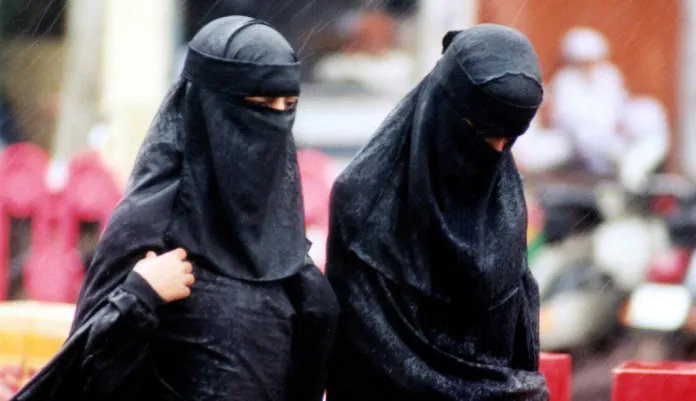
The proposed ban would apply to the burqa, which covers the entire body and face, and the niqab, which covers the face while leaving the eyes visible, both of which are often associated with strict adherence to Islam. Meloni did not mention hijabs, which are headscarves that leave the face uncovered.
The measure is expected to be presented to Meloni’s Cabinet before heading to parliament, which would have 60 days after government approval to act on it. Meloni has not specified how many foreign students would be permitted in each classroom under her proposed cap, but spoke of it with urgency, saying, “Italian children cannot feel like a minority in the classroom.”
Italy already has rules addressing face coverings. A 1975 law generally prohibits people from wearing clothing or other items that hide their identity without a justified reason. A 2008 ruling clarified that religious or cultural reasons can justify a face covering as long as the person removes it when necessary for identification.
Meloni’s government moved to ban burqa and niqab face coverings in all public spaces last year, framing the measure as a reaction to “Islamic Separatism,” but the bill has yet to be approved by the Chamber of Deputies.
The new measure also includes a requirement for regular Italian lessons for parents of students experiencing difficulties assimilating into the school system. Meloni said the new measures are intended to prevent language barriers from isolating students.
HEY GERMANY. IT’S TIME TO LIMIT IMMIGRATION
“If the number of children who do not understand the language of instruction becomes large, or even forms the majority, that is no longer integration. That is neglect,” she said.
Migration has remained a major political issue in Italy, one of the principal entry ports into Europe for migrants from the Mediterranean. Students without Italian citizenship account for roughly 11.6% of the school population.