




As a professor who has spent his career among left- and far-left academics, I have watched them justify discrimination on the basis of race, religion, and political outlook for decades. So I was not surprised by the Jason Arday story.
Cambridge professor Jason Arday resigned from his tenured position last week, and almost immediately the academic left began demonstrating why the controversy matters far beyond one professor.
Human beings need redemption. Redemption does not come from DEI administrators or university bureaucracies proposing to cure discrimination with more discrimination.
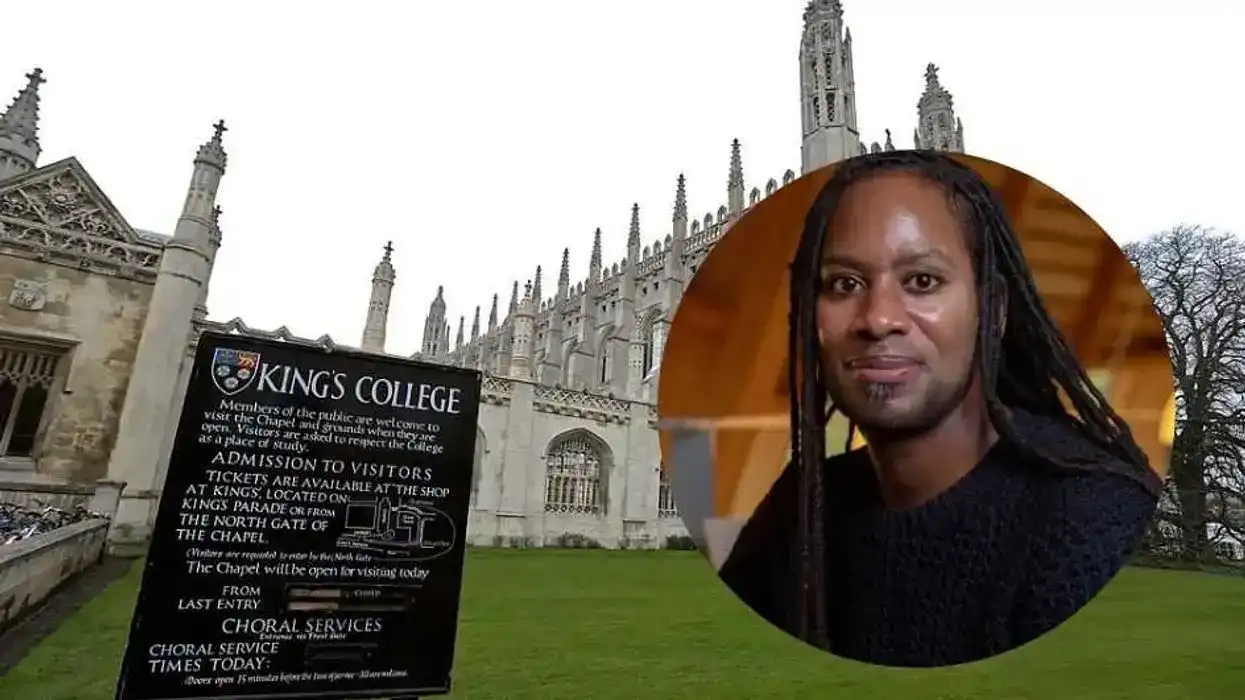
Arday became an academic celebrity when Cambridge appointed him professor of sociology of education in 2023. He was celebrated as the youngest black professor ever appointed at the university.
Now he has resigned amid allegations of plagiarism and serious questions about claims concerning his academic and professional record.
Arday disputes the broadest accusations against him and has acknowledged some errors. Cambridge, meanwhile, is reviewing the process by which he was appointed. The obvious question is whether ordinary safeguards failed — and whether the university’s diversity priorities had anything to do with that failure.
“Diversity, equity, and inclusion” is not simply the old affirmative-action idea of giving a candidate a chance. Equity ideology goes further. It treats unequal outcomes as presumptive evidence of injustice and then demands institutional action to manufacture more equal outcomes, even when differences in interest, preparation, achievement, or merit may explain the disparity.
But something even more revealing happened after Arday’s resignation: the defense of the system that produced him.
The Guardian interviewed black British academics who acknowledged problems with Arday’s conduct but argued that the extraordinary attention paid to his case reflected something darker. White academics commit misconduct too, they argued. Why, then, had Arday become a national story? Some suggested that the political right was weaponizing his case against diversity and black academics more broadly.
Professor Kehinde Andrews went further, connecting the controversy to what he considered a more important story: black academics losing jobs as British universities make cuts.
That response illustrates the DEI worldview almost perfectly.
Andrews himself is among five black academics threatened with redundancy at Birmingham City University as it moves to eliminate its master’s program in black studies and global justice. He has described the move as an “erasure” of black studies.
RELATED: Cambridge star Jason Arday was the perfect DEI success story. Is that why nobody questioned him?
But notice what is actually being eliminated: a specific degree program, not black students as a class.
There is also another relevant fact. The university says the program suffers from low recruitment. The master’s program reportedly has eight students.
If a university eliminates a program that attracts too few students to justify its costs, we do not need racism to explain what happened. We have economics.
British universities are facing a serious financial crisis. Programs and faculty positions are being cut across numerous disciplines.
Yet the circular logic of oppression studies kicks in immediately: Elimination is proof of racism, and racism is proven by the elimination. No other explanation is allowed.
DEI reverses the burden of proof. If members of a designated oppressed group suffer an adverse outcome, the outcome itself becomes evidence of oppression.
That is precisely the intellectual habit that created many of these programs in the first place.
For decades, universities created entire academic programs around increasingly specialized forms of identity studies. Taxpayers and students subsidized them. The programs produced graduates, some of whom became professors who taught the next generation why universities needed those same programs.
The reasoning became wonderfully circular: We need professors in these programs because we have these programs, and we need these programs because professors in these programs tell us how urgently society needs them.
There are two inconvenient participants in this arrangement: the student and the taxpayer.
Students eventually ask what they are receiving in exchange for tuition, years of their lives, and often considerable debt. If the degree will not improve their prospects, why not study the same subjects independently for the price of a library card?
Taxpayers eventually ask why they should subsidize programs unable to attract enough students to sustain themselves.
Calling the resulting budget cuts “racism” does not answer either question.
Nobody is prohibited from studying whatever subject he wishes. If there is enormous demand for these programs, their advocates are free to establish private institutions devoted to them.
But that would expose the programs to a test they have largely avoided: persuading enough people voluntarily to pay for what they offer. If they fail that test, they go bankrupt.
Public subsidy is more comfortable than market judgment, especially when the program can always explain its own weakness as further proof that society needs more of it.
The Arday controversy therefore reveals something deeper than questionable hiring practices or plagiarism allegations. It exposes the circular reasoning at the heart of DEI.
RELATED: Warning: This college course may be bad for your brain

But there is an even deeper mistake.
DEI correctly senses that something is wrong with human beings. People really do hate. They really do discriminate. They really do exploit one another. Human history provides more than enough evidence. Human beings hate their neighbors.
Where DEI goes wrong is in believing that the human heart can be remade by dividing people into oppressors and oppressed, redistributing positions and honors among groups, and endlessly rehearsing grievances about historical injustice.
That experiment cannot redeem humanity. At best, it rearranges power. At worst, it gives old human vices a new moral vocabulary.
And we are watching it fail.
The problem is not merely institutional. It is human.
If the problem is the human heart, the solution will not be found in another diversity office, another identity-studies program, or another attempt to manufacture equity.
Christianity has always offered a more radical diagnosis and a more radical cure.
Human beings need redemption. Redemption does not come from DEI administrators or university bureaucracies proposing to cure discrimination with more discrimination.
It comes from Christ.