



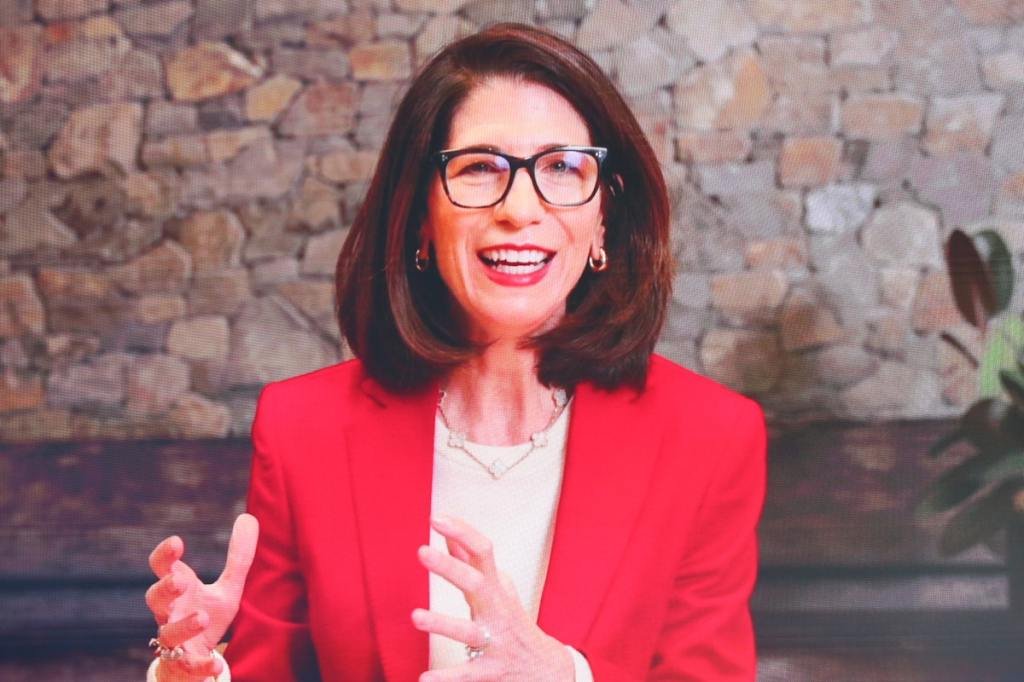
Ariane Gorin, CEO, Expedia Group
Moderated by Dennis Schaal, Skift
Every travel company with a direct channel faces the same question when a new platform gains traction quickly: join it and risk losing control, or stay off of it and risk being left out. In that vein, Gorin said that Expedia will be on Meta’s Muse, the AI agent the Wall Street Journal called “an instant hit” two weeks after launch. She said the approach is case-by-case and experimental — Expedia has teams engaging with Google, OpenAI, Anthropic, and Meta — because “you want to be at the table as discussions evolve.” The takeaway for any travel company watching agentic AI platforms grow: you don’t have to understand where it might end up to know you should be watching it every step of the way.
- Get on emerging platforms early and learn. Gorin said Expedia organized quickly around Muse after its launch and announced the partnership the day before she spoke. She said a year ago that “everyone was worried that it was going to be the agent browsers that were going to take over. But now what we actually see is there’s still AEO, but there’s paid advertising that’s starting to evolve.” The landscape is shifting quarter by quarter. Companies that wait for clarity before engaging risk falling further behind.
- Build modular AI agents over a single end-to-end experience. Gorin said Expedia started with a single end-to-end agent and reversed course. She said common technology across brands lets the company reuse the same AI capabilities in different contexts and move faster. She said she would not have given this answer two years ago. Travel companies building a single large conversational agent may consider following Expedia’s model.
- Strengthen direct channels through bundling and service. Gorin said Expedia is seeing record bundled bookings, and that the number improves every quarter. She said the investments in traveler value — bundling, savings, servicing, loyalty — make their channel durable regardless of where discovery starts. She said travelers will book with “brands they trust” even when AI agents become the first touch, especially for big-ticket travel “where you can’t get your time back if something goes wrong.”
- How quickly agent platforms start completing bookings. The economics of showing up on them look very different if they close the transaction. Gorin said she does not believe end-to-end conversational booking will capture a large share of travel transactions. “I think sometimes people forget that there is a joy in travel planning,” she said. Planning is “multi-turn. Often it involves talking to different people. It involves some reflection. You sometimes want to slow down.”
- How fast AEO matures into a real distribution channel with measurable attribution and paid advertising models. Gorin said AEO — answer engine optimization — is now Expedia’s fastest-growing channel. She said the fundamentals carry over from SEO. “If you have great brands with strong value propositions and you can make sure that those come through when your brands show up in these experiences, then we’re going to be fine.” Gorin said paid advertising in AI environments “is starting to evolve,” and the window where organic visibility alone is enough may already be closing.

Access all the Skift Takeaways from this event, as well as full session videos, presentation documents, and more editorial coverage at our Skift Global Forum attendees hub.