




 Image source, EPA
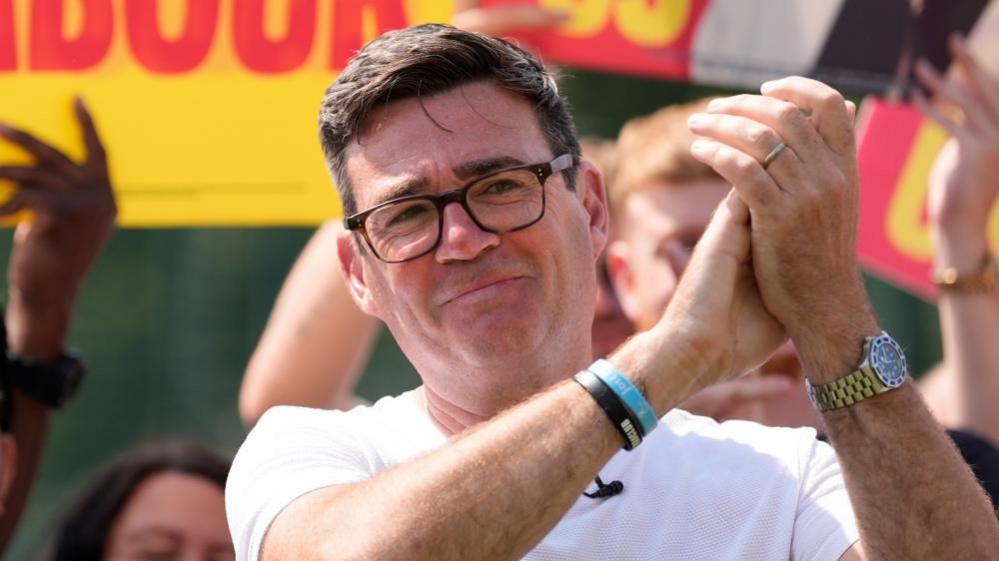
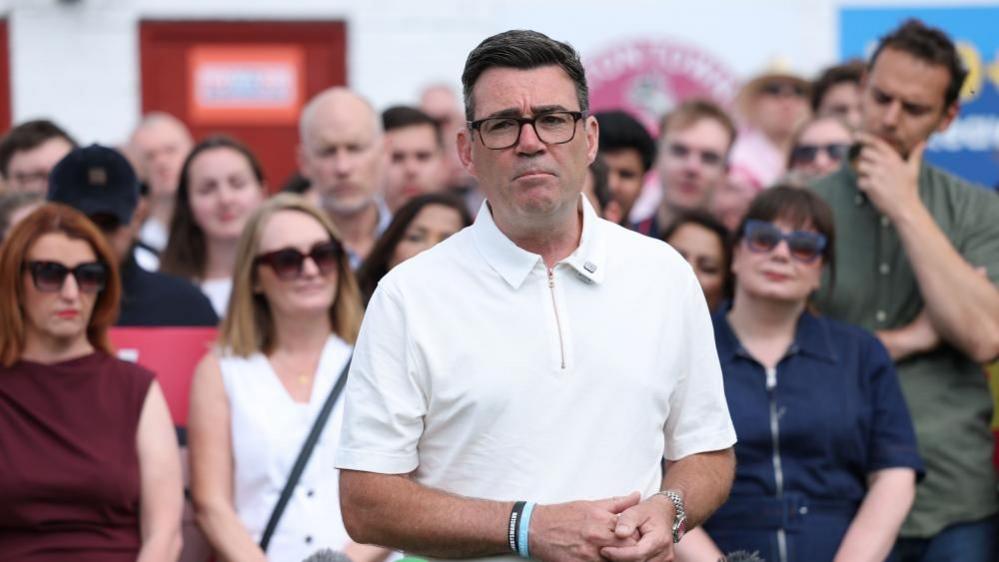
Andy Burnham will give a major policy speech later, his first since launching a bid to become prime minister, in which he will announce plans for a “No 10 North”.
Speaking in Manchester, Burnham is expected to say the body will be tasked with driving growth “across every nation and region of the UK” as he vows to put devolution at the heart of his programme for government.
He will set out a commitment for a “10-year mission” to raise living standards, as well as proposals on youth employment, in order to “lift Britain back up to where it should be”.
In the event no other Labour MP puts themselves forward to be leader, Burnham is expected to become prime minister on 20 July.
He has faced calls from opposition parties to set out his plans, confirm who he intends to appoint to his cabinet and explain whether or not he will deviate from Labour’s 2024 manifesto.
In Monday’s speech Burnham is expected to say the government must “give Britain the circuit-breaker it needs”, as well as address his view of why there is low public trust in politics.
He will say decision-making needs to be “pushed to regions and local communities”, and will promise “good growth in every postcode”.
Burnham has signalled he will stick to the fiscal rules set out by Chancellor Rachel Reeves, who he is expected to replace if he becomes prime minister.
Those rules stipulate that day-to-day government costs will be paid for by tax income, rather than borrowing, and a commitment to see debt falling as a share of national income by the end of this parliament in 2029-30.
Pressures on the government’s budget and high borrowing costs mean Burnham or any prospective prime minister have little financial room to pursue policy objectives.
Speaking at a conference in London on 25 June, Reeves urged Burnham to stick to her economic approach, saying it was “beginning to bear fruit”, as well as backing his approach to “fiscal devolution”.
But some Labour MPs on the left of the party have called for him to relax Reeves’s self-imposed rules to allow for more spending.
He is reported to be considering Ed Miliband, David Miliband, Wes Streeting or Shabana Mahmood as possible replacements for Reeves.
Burnham has also come under pressure to commit to increased defence spending.
The government is due to publish its defence investment plan (DIP) before a new prime minister succeeds Sir Keir Starmer, which will set out a multi-billion funding increase.
On Sunday, the former Chief of the Defence Staff Admiral Sir Tony Radakin called on Burnham to commit to increasing defence investment to 3.5% of GDP by 2035 if he becomes prime minister.
Asked what his advice to Burnham would be, he told the BBC’s Sunday with Laura Kuenssberg programme: “It is [to] keep our country safe, acknowledge that you have this extraordinary responsibility – so you’re almost like a wartime prime minister at the moment.
“And that means you need to invest in what really keeps us safe.”
Responding to the upcoming speech, Conservative Party chairman Kevin Hollinrake said Burnham’s “big idea is to shuffle power between politicians” rather than make welfare reforms, cut taxes or “fund the defence our country desperately needs”.
He continued: “Just more devolution, more committees, more process. It’s the politics of distraction from a Labour Party that is deliberately avoiding the questions that actually matter.”
A Reform UK spokesman said previews of the speech amounted to “a lot of words for no actual concrete changes”, adding: “It’s clear that Burnham has taken a leaf out of Starmer’s book – all talk, no action.”
Liberal Democrat leader Sir Ed Davey warned that Burnham had only a “very short window to turn this government around” as the country is “impatient for change”.
“People have heard this sort of talk before only to be badly let down because nothing changes – Burnham mustn’t repeat that mistake,” he said.
Related topics