



During the Cold War, quixotic Albanian dictator Enver Hoxha built some 750,000 concrete pillboxes to fend off a phantom invasion that never came. Yet Albania’s bunker-laden landscape may soon feature a pair of luxury resorts, at least if Jared Kushner has his way.
The son-in-law of builder-in-chief President Donald Trump is pushing ahead on two developments of his own along the Mediterranean waterfront. Frustration with those projects, along with deeper issues of corruption and opaque governance, has sparked the largest popular uprising in Albania since the fall of communism.
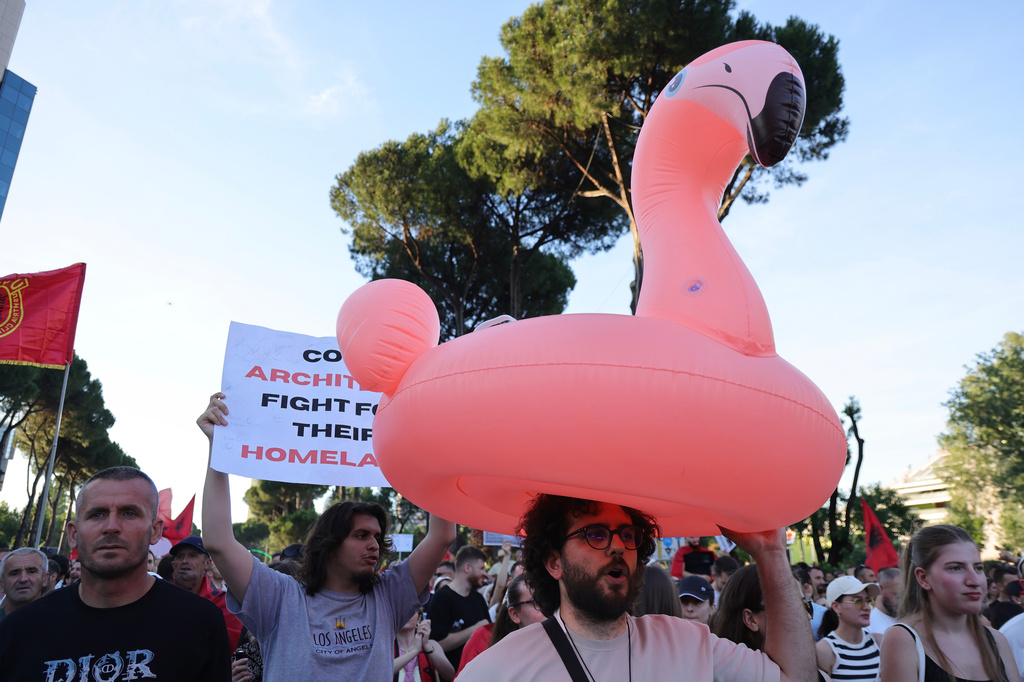
Here is everything you need to know about the so-called “Flamingo Revolution.”
What opportunity does Kushner see in Albania?
Protests in Albania began over two related developments backed by Kushner through his investment firm: a luxury resort on the largely undeveloped island of Sazan, a disused military base; and a larger tourism complex within the Vjosa-Narta wetlands, a protected ecological reserve.
Kushner and his wife, Ivanka Trump, visited Albania on a yacht trip in July 2021. Albanian Prime Minister Edi Rama, who met with the couple at the time, told Reuters that he found them to be “very nice, humble… humanly good people.” Kushner first scouted potential development sites during that trip.
Kushner’s Albanian ambitions became public in March 2024, when he posted a series of renderings on his personal Instagram account. Those images featured sleek, low-slung villas with panoramic windows integrated into the Mediterranean cliffside.
“We have this 1,400 acre island in the Mediterranean and we’re bringing in the best architects and the best brands,” Ivanka Trump, referring to Sazan island, said in a July 2024 interview. Trump went on to describe how the project would feature a luxe hotel managed by Aman Resorts and a food and beverage program from Manhattan staple Carbone.
Albania’s Strategic Investment Committee expects the Mediterranean project to be worth 1.4 billion euros ($1.6 billion).
How did an environmental protest become a political flashpoint?
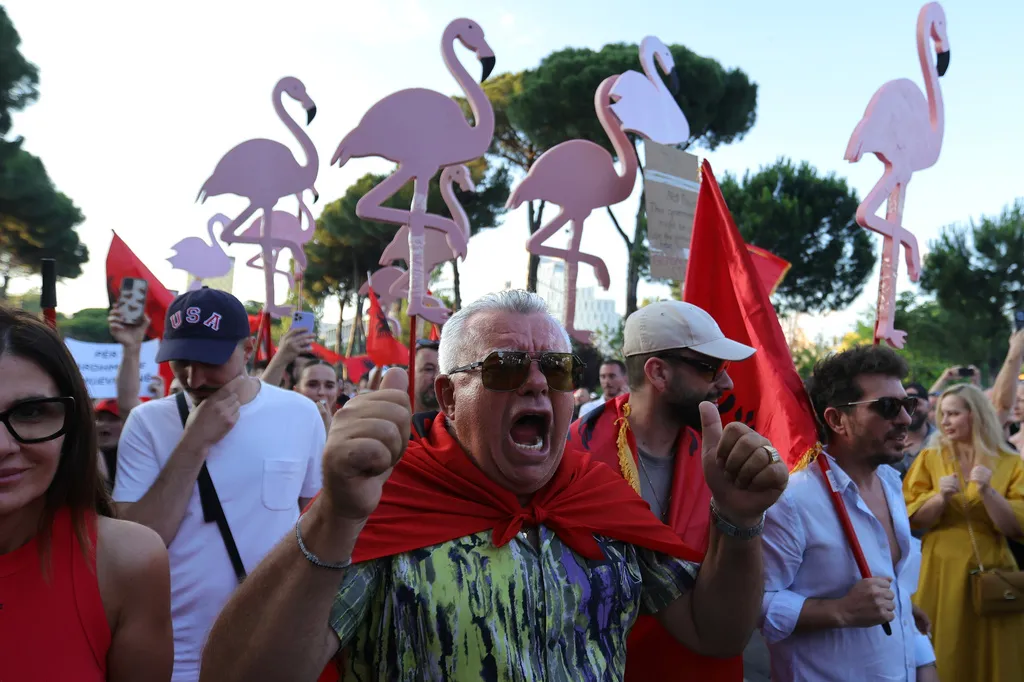
Soon after Kushner announced his project, environmental activists began objecting to its potential ecological implications. They note that the Vjosa-Narta wetlands are part of a major migratory route for flamingos, from which the “Flamingo Revolution” gets its name.
While part of Kushner’s project sits on protected land, Albania amended its environmental protection law in 2024 to allow for “structures of excellence, 5 stars or more.” That change has become a major point of contention for protestors.
In late May, a video spread across Albanian social media of private security guards dragging a protester across the beach at the wetlands. Soon thereafter, the protest movement reached the streets of Tirana. Tens of thousands of protestors have demonstrated daily over the past month.
The movement lacks central leadership and messaging, but its scope has expanded beyond the environmental complaints that sparked it.
Protestors have rallied around the slogan “Albania is not for sale.” They allege that Kushner has received preferential treatment because of his proximity to the Trump administration, though they believe that Albania’s corruption problem runs far deeper. In some cases, they have also called on Rama, the prime minister, to resign.
“Albania is like a studio apartment that barely holds place for Albanians,” Albi Batozi, a 34-year-old software developer, told NPR last month.
A spokesperson for Sazan Real Estate Development LLC, which is behind the project, told the Washington Examiner: “This project remains in the planning and design phase, with our team continuing to refine scope, approach, and vision through a deliberate process that prioritizes environmental stewardship and showcases the country’s natural beauty. Various concepts and workstreams continue to be evaluated, and no conclusions should be drawn from individual consultant tenders or preliminary planning materials. We look forward to continued engagement about the potential of this project and its ability to contribute positively to Albania’s future.”
What happens to the Kushner development now, and what is next for Albania?
Rama argues that Albania needs an infusion of foreign cash from development and tourism. He said last month that the chant “Albania is for Albanians” evoked Nazi beliefs “that everyone else outside that is not welcome — just as Germany was ‘for the Germans’ and then became Europe’s ‘black sheep’ for years and years afterward.”
While Rama appears eager to push forward on the Kushner project, he acknowledged last month that an environmental impact assessment had not begun, even as bulldozers plow through the reserve. “When it comes to the environment, there is no project yet, there is no environmental impact assessment yet, because this is still a planning process,” he said.
Albania’s anti-corruption watchdog has opened an investigation. Kushner, meanwhile, has refrained from commenting on the project publicly.
A Sazan spokesperson told the Washington Examiner: “We are not a party to that matter and are not the subject of any investigation. We continue to believe the underlying land acquisitions were conducted lawfully and in accordance with applicable procedures. As always, we respect and will cooperate with any lawful process as required.”
Perhaps the most significant bind Albania’s government finds itself in over the project is the country’s relationship with the European Union.
Future membership in the bloc is almost universally popular in Albania, with 91% of the public supporting it according to an EU survey. Closer ties to the EU would open up investment opportunities, help improve infrastructure, and provide increased freedom of movement for citizens of the Balkan nation.
Yet Tineke Strik, a Dutch member of the European Parliament and the head of a delegation to Albania, told the Guardian that Tirana is “playing with fire.” If the deal continues, Strik added, Albania will “have a big problem with the EU during the negotiations” over meeting environmental benchmarks.
Asher Abehsera, Chair of Sazan Real Estate Development LLC, told the Washington Examiner: “For four years, we have worked toward creating a world-class destination on the Albanian coast — one rooted in thoughtful design, environmental stewardship, and long-term economic opportunity.
“Our goal is simple: celebrate Albania’s natural beauty, create jobs, and build something future generations can be proud of,” Abehsera added. “Its future will ultimately be determined by Albania and the Albanian people.”