




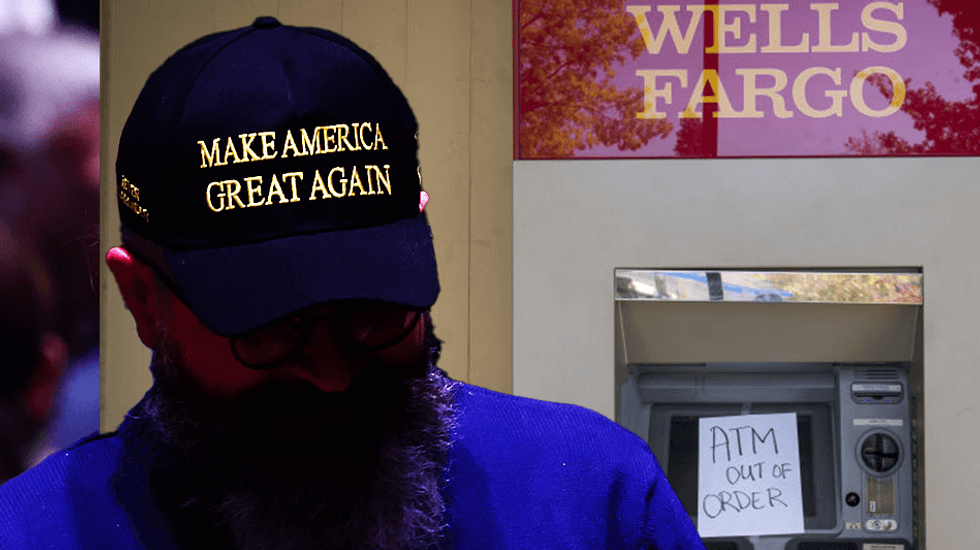
After President Trump made it a point to declare banking rights as guaranteed and fair for Americans, the government actually went to work.Now, a federal agency has revealed that major U.S. banks were guilty of limiting or denying access to financial services to citizens based on their beliefs or business activities, and the evidence is shocking.A payment processor owned by one bank closed the account of a merchant that sold Make America Great Again merchandise.The Office of the Comptroller of the Currency released a scathing report detailing its intention to review potential de-banking activities at the nine largest banks in the country and whether or not they had been improperly limiting access. This was in direct response to President Trump’s executive order to guarantee fair banking for all Americans. The report declared that between 2020 and September 2025, all nine banks had policies in place that do so.The OCC identified two categories that presented an “elevated risk of ‘encouraging’ or ‘otherwise influencing'” institutions to deny access to financial services: reputation risk practices and industry specific practices.The first can be summarized as a potential for “adverse” brand impact resulting from negative public perception, while the latter is an alleged bias toward certain industries or sectors unrelated to financial or operational concerns.The practices affected both sides of the political aisle. For example, in February 2023, one bank declined to provide public services to an educational organization because it solely endorses Democrat candidates.In February 2021, a payment processor owned by one bank closed the account of a merchant that sold Make America Great Again merchandise.These policies reportedly negatively affected industries like firearms, oil and gas, coal mining, prisons, and tobacco.RELATED: The fight over prediction markets is hitting the Supreme Court — and dragging in the NFL Image courtesy Office of the Comptroller of the Currency In the report, the OCC said it observed Citibank using an “environmental and social risk management policy” that restricted it from entering into a business relationship with customers that did not have policies that align with Citibank’s firearm standards.”This included, for example, limitations on the sale of high-capacity magazines and restrictions on firearm sales to individuals under the age of 21.”In February 2021, TD Bank was making decisions regarding a Paycheck Protection Program loan based on its own reputation risks, the report claimed.”TD’s decision is based on public statements about immigrants made by [the organization] or people affiliated with your organization, including social media activity, leading up to and following the November 2020 election. These statements are inconsistent with TD’s values,” the bank wrote, per the federal government.All nine banks were cited in the report as having conducted biased practices based on their perceived reputational risk or simply their policy regarding whether or not they wanted to do business with people based on their industry or their activities.RELATED: Guess which secretive former president has big ideas about how AI should control you
Another example included Capital One flagging a religious organization, in multiple client reviews, for stances on abortion, LGBTQ rights, and “ties to the world of conservative politics.”The OCC has suggested making changes to the client complaint process, forcing increased transparency, and redefining how it considers politicized or unlawful de-banking. Like Blaze News? Bypass the censors, sign up for our newsletters, and get stories like this direct to your inbox. Sign up here!