



Marking Time in U.S.-China Relations
Xi’s visit may yield incremental improvements, but a grand bargain is unlikely.
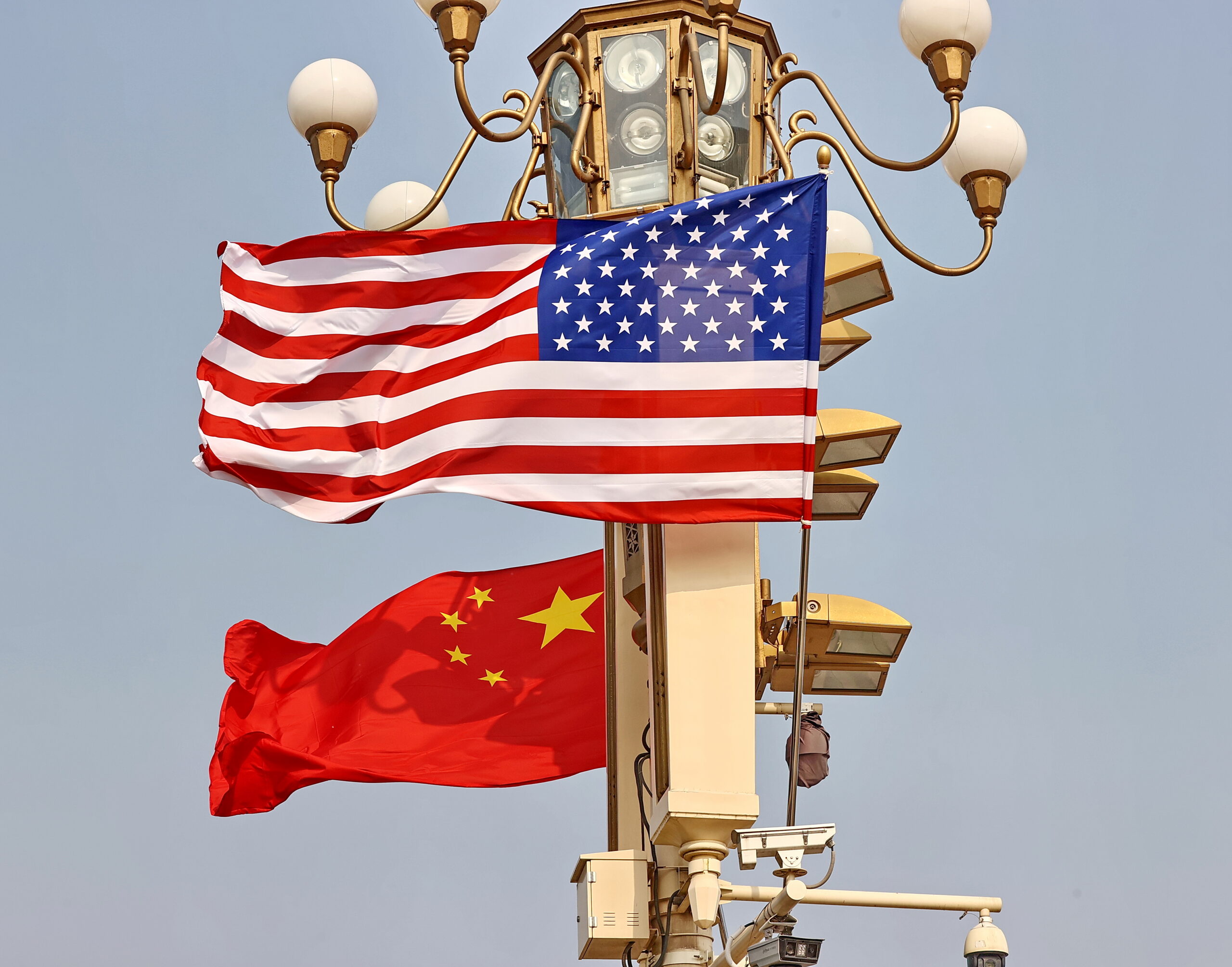
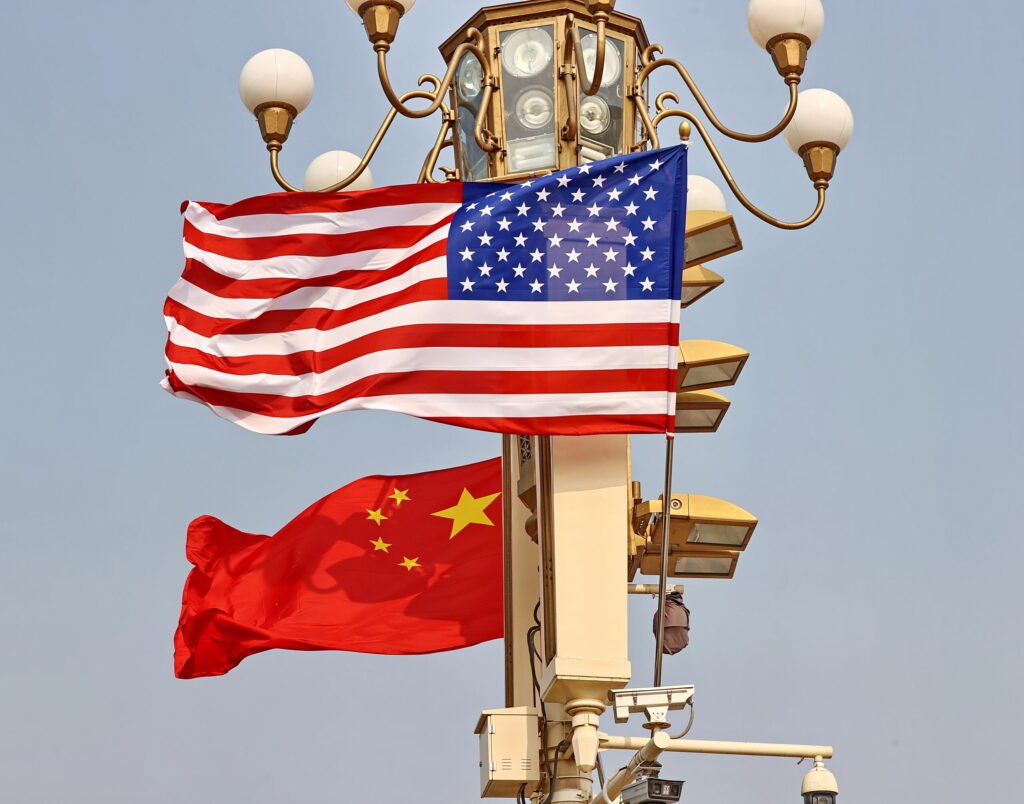
Last October, the United States and China agreed to a one-year pause in the trade war set off by Trump’s “Liberation Day” tariffs. The truce stabilized economic ties, and is likely to be extended when President Xi Jinping visits the White House this week for a summit sure to be heavy on pageantry (President Donald Trump is expected to personally greet Xi at the airport). But progress in areas besides commerce will be elusive without a meeting of minds on the long-term direction of the relationship. The baseline scenario is that a narrow trade truce keeps things just above water and leaves higher-stakes issues to the future—perhaps until after Trump leaves office. Improving this precarious trajectory will require both sides to restrain their most zero-sum impulses and take steps to expand engagement beyond trade to the political issues dividing them.
The “truce era” of U.S.-China relations is pitched between visions. The first is suggested by a “constructive relationship of strategic stability,” the awkward framing both sides adopted at the Beijing summit in May. In this view, a durable “strategic stalemate” requires a bilateral reset. Beijing and Washington must accept that the power gap between them has narrowed to such a degree that the relationship must be recast to sustainably protect each side’s redlines, particularly regarding political issues like Taiwan and the U.S. alliance system.
The second is that the truce is just what it sounds like: a useful lull for each side to get its house in order. Trump 2.0, in this read, is just a temporary exception to the hawkish impulses of official Washington, and the bilateral power gap is not guaranteed to continue narrowing in China’s favor—especially given the revolutionary promise of AI. It follows that the truce is not an opportunity to set the relationship on a more sustainable path, but rather to patch techno-economic vulnerabilities, corral allies, and prepare for a long-term resumption of confrontation and instability.
The deliverables most likely to emerge from Xi’s visit will be notionally compatible with both visions. They will sustain the truce and begin to flesh out the “constructive relationship of strategic stability,” but they will also be easily reversible in the event of a sudden downturn in the relationship. Under the October deal, both sides rolled back tariffs, the U.S. paused an expansion of export controls on Chinese firms, and China agreed to resume rare earths exports to the U.S. and pause a licensing regime that could restrict trade in any goods containing Chinese inputs.
The Chinese side reportedly wants to extend this arrangement until the end of Trump’s term, but the U.S. has offered only six months, possible because it believes China has not fulfilled its promise to restore rare earths shipments. Preparatory talks last weekend between Treasury Secretary Bessent and China’s Vice-Premier He Lifeng did not settle the issue. The truce is vague and fragile. This summer it was strained by U.S. import bans on Chinese robots and power equipment and retaliatory Chinese sanctions on American firms. Still, it is low-cost for both sides and now serves as the central ballast of the relationship. Expect it to be renewed when Trump meets Xi.
The Bessent–He talks apparently produced a tentative agreement to create a “U.S.-China AI dialogue.” According to Bessent’s remarks to reporters last Sunday, the body will help establish joint understandings of AI threats and might also include a “notification mechanism” for each side to alert the other of AI safety incidents such as the recent cases of rogue behavior by AI agents. Like the 2024 Biden–Xi agreement to keep AI out of each side’s nuclear command and control systems, a notification mechanism is not enforceable or verifiable. The best case is that it becomes a frequently used channel for both sides to develop a common vocabulary of AI policy and communicate red lines. The worst case is that it suffers the fate of previous U.S.-China hotlines: No one will pick up the phone.
Progress on military-to-military talks will be similarly incremental and reversible. This week’s meeting will reportedly build on work done to resuscitate bilateral military contacts in the wake of the Busan and Beijing summits. This might include regularized meetings between U.S. and Chinese theater commanders, as well as a resumption of the arms control talks China broke off in 2024 following U.S. arms sales to Taiwan.
The arms-control mechanism may lead to other crisis stability measures, such as a formal missile launch notification agreement (U.S. officials pushed for this late in the Biden administration). And Elbridge Colby, the head of the Pentagon’s policy office, may finally get the green light to visit Beijing, reportedly a longstanding goal of his. These would all be valuable measures, but they will make flimsy scaffolding absent efforts to address the political sources of the U.S.–China rivalry.
First among those is Taiwan. Trump’s decision to pause a $14 billion arms sale to the island has probably been vital to sustaining the truce. After the Beijing summit he told Fox News the sale is a “good negotiating chip” and that he is “not looking” for Taiwan to go independent. With each passing summit, Washington’s China-watching community holds its breath, concerned that Trump may assent to China’s wishes and significantly weaken the US commitment to Taiwan. A U.S. policy shift such as formally “opposing” Taiwan independence given in exchange for commensurate Chinese concessions would signal both sides are willing to reconcile their interests to sustain “constructive strategic stability” in the long run.
But despite many China-watchers’ fears (and some restrainers’ hopes), a grand bargain is unlikely. Trump disciplines his rhetoric about precious few topics, and one of those topics is Taiwan. Unlike his predecessor, who said four times the U.S. would definitely defend Taiwan, Trump consistently hews to the traditional US policy of “dual deterrence,” which sustains the status quo by keeping both Taiwan and China guessing about US intentions.
An overture to Kim Jong Un is a more promising avenue for political cooperation. Xi and Trump will recall that their coordination in 2017–18 helped end the Korean missile crisis. It also served as a stabilizing force for the broader U.S.–China relationship, which at that time was strained by Trump’s first tariff war. Since then, North Korea has tripled its nuclear arsenal and entered into an expansive security alliance with Russia. Its neighbors, including China and South Korea, increasingly accept that denuclearization is no longer a viable basis for relations with the Kim regime; still, they continue to see engagement as in their national interests. In August President Trump renewed his diplomatic push on the issue and said he wants to meet with Kim “this year.”
The North has rebuffed Trump so far, likely because it sees no evidence Washington is modifying its insistence that U.S.–DPRK relations can only improve if denuclearization occurs. China reportedly offered to help broker a potential new round of Trump–Kim talks, and this week’s summit could bring those into being. The White House readout from the Beijing summit contained the stock reaffirmation of the goal of denuclearizing North Korea. New joint language this time—perhaps explicitly elevating stable engagement over denuclearization—would signal to the North that the U.S. is serious about talks. It would also provide an opportunity for U.S.-China cooperation on a regional security challenge that touches both sides’ vital interests.
This week’s summit will mostly be an exercise in marking time, yielding smiles and incremental agreements. That is better than many alternatives. It was easy to imagine that the second Trump administration would pick up China policy where the first one left off and resume the Covid-era hardline. Instead, Trump kept the China hawks in his administration at bay. Neither Trump nor Xi is allergic to confrontation, but each ultimately sees the other as a powerful peer he must work with to secure his own country’s interests. This week, and in the two further meetings to come in 2026, both sides need to begin to give political expression to “constructive strategic stability.” Otherwise, the truce will wither, and the relationship will remain at the mercies of accident and force.
The post Marking Time in U.S.-China Relations appeared first on The American Conservative.