



Every great action story begins the same way. Someone is in trouble. The clock is running. The police cannot — or will not — solve the problem.
Then comes the name.
This is not simply another detective recounting old war stories. It is a portrait of a disappearing breed: the independent lawman who covets justice and is willing to deliver it.
If Hollywood were casting the role, it might once have chosen Tom Selleck. Today, maybe Chris Pratt. The man walking through the door is not chasing glory. He is there because everyone else has run out of options.
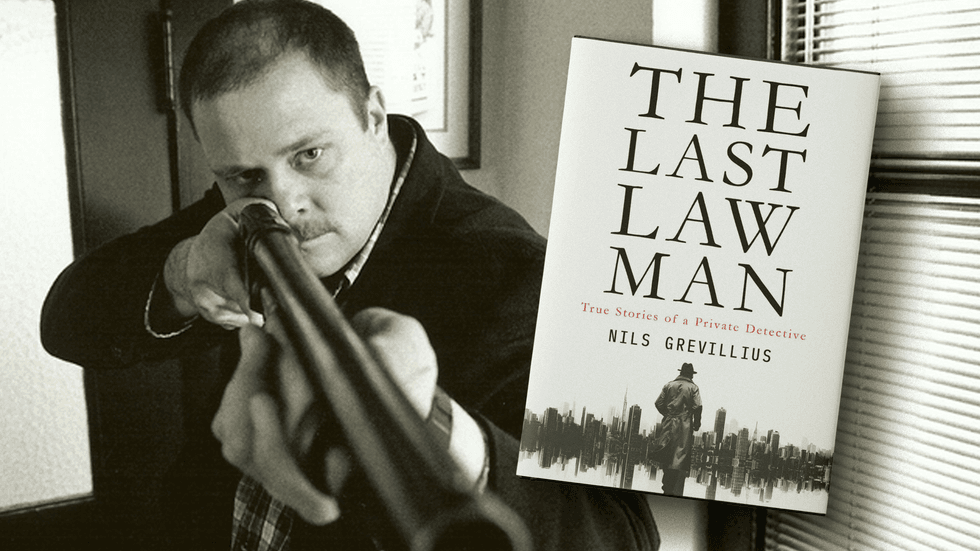
In real life, that man was Nils Grevillius.
“The Last Lawman” does not read like a memoir. It reads like the first season of a television series you cannot stop watching.
Imagine “The A-Team” without the wisecracks. Imagine “Bosch” without the bureaucracy. Imagine film noir stripped of romance and dropped into the unforgiving streets of Los Angeles, where every decision carries consequences and nobody gets to yell, “Cut.”
Before most memoirs have finished introducing the author, Grevillius is chasing an armed robbery suspect through Watts with eight rounds in his pistol and no backup coming.
The danger is not manufactured to hook the reader. It was simply another day on the job.
That authenticity separates “The Last Lawman” from nearly every private-investigator memoir on the shelf.
Josiah Thompson’s “Gumshoe” remains a respected classic, offering an intelligent account of investigative work and the detective’s craft. Grevillius takes the genre somewhere darker and more visceral.
His stories are not puzzles reconstructed from a safe distance. They are unfolding crises in which one mistake can cost a client everything — or cost the investigator his life.
For decades, Grevillius worked in places most people wisely avoid: organized crime, fugitive recovery, surveillance, missing-person cases, violent offenders, and the criminal world just beyond the edge of ordinary life.
His résumé includes military intelligence, Pinkerton investigations, and some of the toughest assignments Southern California could offer. The result is a memoir with an authority no novelist can manufacture.
RELATED: America needs heroes who do not apologize for being heroes
Yet the greatest surprise is not the danger. It’s the humanity.
Beneath the stakeouts, foot chases, interrogations, and close calls lies a thoughtful examination of what decades spent confronting evil do to a man.
Grevillius writes candidly about discipline, loyalty, courage, and the emotional cost of making a career out of walking toward situations everyone else is trying to escape. His reflections never seem imposed because he earned every one of them.
The early chapters reveal a man shaped by formidable influences: a father, decorated for service in the Korean War, who remained haunted by combat; a mother, a demanding attorney with an uncompromising sense of justice; Cold War military service; and years spent learning the patience required for surveillance before applying those skills as a private investigator in Los Angeles.
The path is not linear. That is precisely why it rings true. Life rarely follows a screenplay.
Grevillius also possesses what many memoirists lack: the ability to tell a story.
He introduces colorful characters without reducing them to caricatures, explains complex investigations without killing the pace, and adds dry humor at exactly the moment the reader needs relief.
His prose has the cadence of a man who has spent decades telling impossible stories to skeptical audiences — and winning them over.
Advance praise calls “The Last Lawman” “a blast of a book” and compares its pace to the great detective stories. It also describes Grevillius as the sort of lawman you want beside you when everything goes sideways.
All of that is true. It still does not quite capture what makes the book distinctive.
RELATED: ‘BURN IT ALL DOWN’: Firebrand feminist filmmaker calls for violent revolution

This is not simply another detective recounting old war stories. It is a portrait of a disappearing breed: the independent lawman who covets justice and is willing to deliver it.
Modern policing and investigation are increasingly constrained by bureaucracy, technology, institutional caution, and politics. The investigator who relies on instinct, observation, experience, and personal courage has become an endangered species.
Grevillius represents that tradition at its highest level. Reading his memoir feels like spending time with one of the last practitioners of a craft that once defined American crime-fighting.
Hollywood has spent decades trying to create believable action heroes. Most are invincible. Most are predictable. Most survive because the script requires it.
Nils Grevillius survived because he had to.
That is why “The Last Lawman” is so compelling. The stories are cinematic not because they were embellished, but because reality occasionally produces men no screenwriter would dare invent.
Truth can be more powerful than fiction.
When the credits finally roll, readers will not simply close the book. They will wonder why nobody has turned it into a television series — and they may find themselves longing for a time when Americans still believed men like Grevillius could bring bad actors to justice.