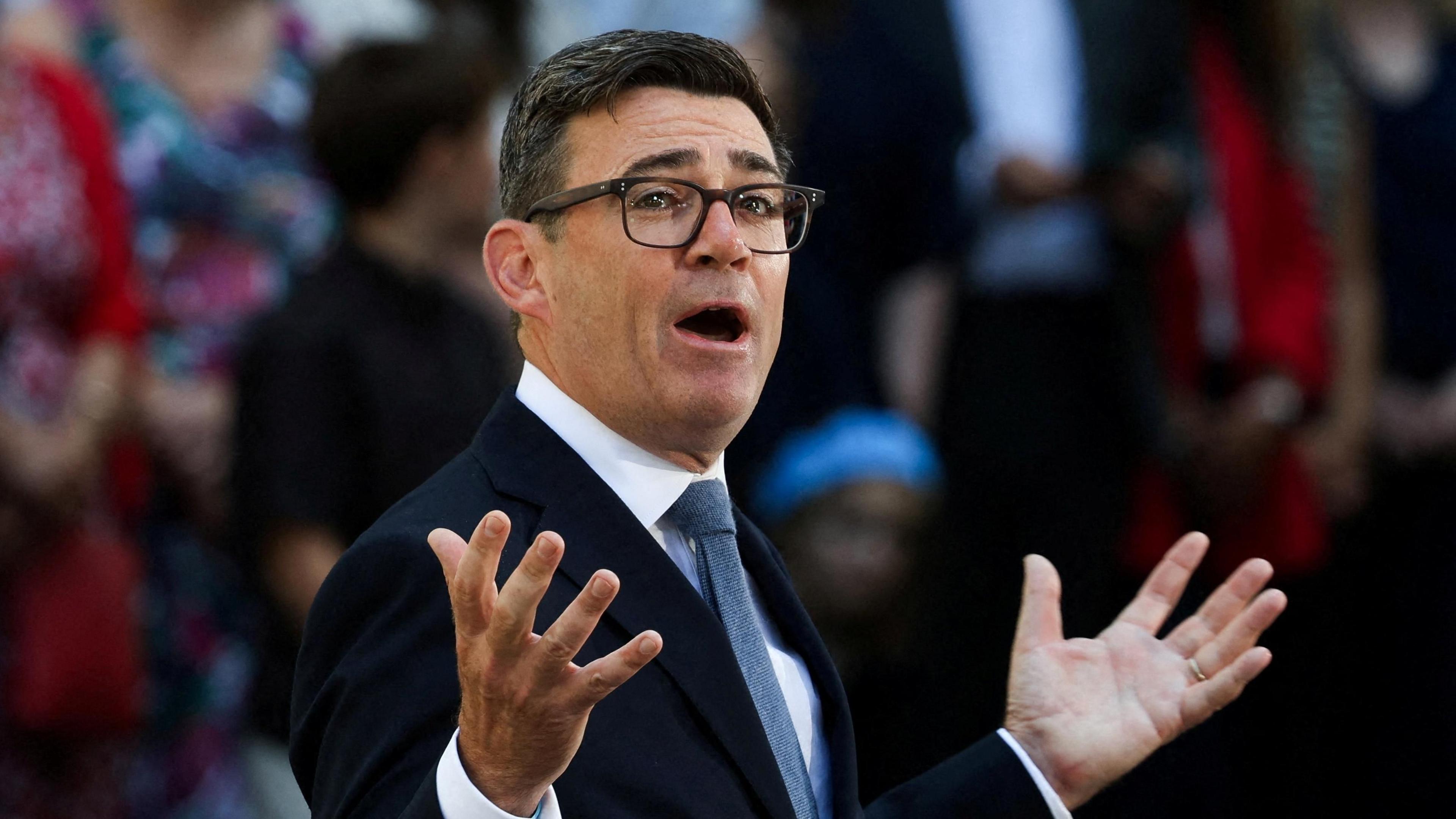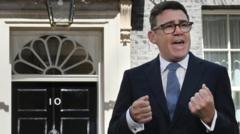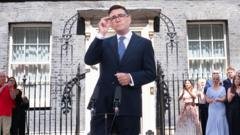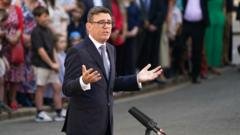




Prime Minister Andy Burnham has started building his new cabinet after taking office following the resignation of Sir Keir Starmer.
Tap or click on a cabinet member in our interactive guide below to learn more about them and their role in government. The guide will be updated as new appointments are made.
Andy Burnham’s cabinet
-
Andy Burnham is the new prime minister, after winning the backing of 379 of Labour’s 403 MPs as the best person to replace Sir Keir Starmer.
He has pledged to shift power away from Whitehall, introduce “greater public control” of the water and energy sectors and to build more council houses – while keeping Labour’s election pledge not to raise the main rates of income tax, VAT or National Insurance.
Born in Aintree in 1970, Burnham was inspired by the miners’ strike to join the Labour Party in his teens and first became an MP in 2001.
The former health secretary had twice failed to become party leader – losing to Ed Miliband in 2010 and Jeremy Corbyn in 2015 – and after leaving Parliament, served as Greater Manchester mayor. He returned as Makerfield MP in June and succeeded Sir Keir Starmer a month later.
A life-long Everton fan and talented sportsman, he was part of Labour’s Demon Eyes FC football team when Tony Blair was PM, and regularly featured in the Labour MPs vs Lobby journalists match while in Parliament.
-
John Healey has returned to the cabinet as chancellor of the exchequer, less than two months after quitting as defence secretary.
In his resignation letter Healey was highly critical of the government’s defence spending plans, saying Sir Keir Starmer had been “unable” and the Treasury was “unwilling to commit the resources the nation needs to defend the country”.
It is a surprise appointment for the MP for Rawmarsh and Conisbrough in South Yorkshire, with many speculating the role would go to Ed Miliband or Shabana Mahmood.
Healey was parliamentary private secretary to Chancellor Gordon Brown from 1999 to 2001, before serving as adult skills, Treasury, local government and housing minister between 2001 and 2010.
He is well-respected on the international stage and has built links with key economic allies in Europe, the Middle East and the United States.
-
Louise Haigh has become chancellor of the Duchy of Lancaster, first secretary of state and Cabinet Office minister.
Haigh, one of Andy Burnham’s closest allies, will run the Cabinet Office, the department that supports the prime minister and co-ordinates the government’s policies to deliver its agenda.
After entering parliament as MP for Sheffield Heeley in 2015, Haigh was named the hardest-working new MP in 2016 due to the number of her Commons speeches and questions, and praised by then-Speaker John Bercow for her “terrier-like intensity”.
In 2025, the former special constable and Unite union shop steward became the first person to resign from Sir Keir Starmer’s cabinet as transport secretary after it emerged that she had admitted a fraud offence in 2013.
On the backbenches she emerged as a crucial power broker on Labour’s “soft left”, and was at the heart of the huge rebellion that scuppered the government’s welfare cuts in 2025.
-
Ed Miliband is the new foreign secretary, moving from the energy and net zero brief he has held since Labour returned to power.
He had been touted as a possible chancellor, but opinion was divided between supporters who pointed to his experience in the Treasury, and opponents who distrusted his views, particularly on energy.
Since the election he has spoken out against those urging the government to drop its net zero ambitions and insisted the party’s green power transition will help secure social justice and national security.
Miliband has been the MP for Doncaster North since 2005 but has been at the centre of Labour politics for even longer – working for Labour MPs before the 1997 election win and as a special adviser to Gordon Brown when he became chancellor.
He is best known as a former Labour leader – having beaten his brother David, among others, in the leadership contest that followed the party’s 2010 general election defeat – but has also co-hosted the Reasons to be Cheerful podcast since 2017.
-
Shabana Mahmood remains home secretary, the position she has held since September 2025.
Mahmood, who has a reputation among Labour MPs as a hardliner on immigration, is responsible for that brief in the role, along with national security and for policing in England and Wales.
Shortly after being appointed, she announced sweeping changes to the UK’s asylum system, brushing off criticism from some Labour MPs and describing the previous system as “out of control”.
A former national campaign co-ordinator for Labour, Mahmood oversaw the party’s Batley & Spen by-election win in 2021 which some have credited with saving Sir Keir Starmer’s leadership following a defeat in Hartlepool months earlier.
The Birmingham Ladywood MP claims to be the first female Muslim MP – although she was elected in 2010 alongside Yasmin Qureshi and Rushanara Ali – because, she says, her count was the first completed on the night.
-
Wes Streeting is the new defence secretary, replacing Dan Jarvis who had only been in the role for a matter of weeks.
Streeting, who resigned as health secretary in May saying he had lost confidence in Sir Keir Starmer as prime minister, eventually decided to back Andy Burnham rather than launch his own leadership bid.
The former National Union of Students president and London councillor is widely seen as one of the party’s most skilled communicators.
He has written an autobiography about growing up in a council flat in London’s East End, visiting his bank robber grandfather in jail, growing up as a gay Christian and about being diagnosed and treated for kidney cancer at the age of 38.
The Ilford North MP has said his upbringing left him “quite cynical” of the role of the state compared with many Labour colleagues, aware of its failings as well as its potential to enable opportunity.
-
Yvette Cooper remains in cabinet but in a new role as health and social care secretary, having most recently served as foreign secretary in Sir Keir Starmer’s government and home secretary before that.
She was first elected as an MP for Yorkshire seat of Pontefract and Castleford in 1997 and went to serve as the first female chief secretary to the Treasury, later becoming work and pensions secretary in the Labour government.
After the 2010 election defeat for Labour, she took on the role of shadow home secretary. She now represents Pontefract, Castleford and Knottingley.
Among other firsts in her political career, the former journalist became the first minister to take maternity leave, and she was one half of the first married couple in the cabinet – alongside her husband, former education secretary and Strictly Come Dancing contestant, Ed Balls.
-
Lucy Powell has been appointed as education secretary.
Powell had been leader of the House of Commons – responsible for delivering the government’s legislative programme – until she was sacked by Sir Keir Starmer in the reshuffle that followed Angela Rayner’s resignation from the cabinet.
She went on to replace Rayner as deputy leader of the party, winning an election of Labour members.
Powell, who joined the Labour Party at 15, has been an MP since winning a by-election in Manchester Central in 2012 and has held several shadow cabinet roles, including stints leading on education, housing and culture.
She led Ed Miliband’s successful campaign to become Labour leader in 2010, helping him defeat Andy Burnham among others, and was then Miliband’s chief of staff for two years. However, as a Manchester MP she has also worked closely with Burnham for many years.
-
Pat McFadden remains work and pensions secretary, the role he has held since September 2025.
He took over the department months after the party was forced to U-turn on extensive changes designed to reduce the welfare bill.
As the party’s national campaign co-ordinator McFadden was one of the masterminds behind Labour’s historic 2024 election victory, constantly stressing the need for message discipline ahead of the election and warning activists and MPs alike to ignore the opinion polls.
A former adviser to Sir Tony Blair, the Glasgow-born MP has represented the Wolverhampton South East constituency since 2005, serving as a business minister under Gordon Brown and in several shadow ministerial roles since then.
McFadden has also held the post of chancellor of the Duchy of Lancaster, responsible for running the Cabinet Office – the department that supports the prime minister and co-ordinates the government’s policies to deliver its agenda.
-
Angela Rayner has returned to the cabinet as secretary of state for housing, communities and local government, months after settling her tax affairs with HM Revenue and Customs.
She quit as Sir Keir Starmer’s deputy PM and housing secretary after the then prime minister’s independent ethics adviser found that she had broken the ministerial code by underpaying stamp duty when she bought a flat in May 2025.
Born in Stockport, Greater Manchester, in 1980, Rayner grew up on one of the area’s poorest council estates and from an early age, was caring for her mother, who had bipolar disorder and suffered from depression.
She left school with no qualifications but, after having her first child at 16, Rayner studied part-time at college, gained a vocational qualification in social care.
As she worked as a care worker in Stockport, she also rose quickly through the ranks of the union Unison, and she credits the union movement for encouraging her to enter politics. She became MP for Ashton-under-Lyne in 2015 and is a powerful figure on Labour’s “soft left”.
-
Jonathan Reynolds has become secretary of state for business, innovation, science and trade.
It is a return to the business department he led until September 2025 but the role has been expanded to take in science and innovation, which were in a separate department.
The son of a fireman, Reynolds grew up in Sunderland – and still supports the city’s football club – but he went to university in Manchester, where he joined the Labour Party and chose to remain after graduating.
Reynolds, who has described himself as a Christian socialist, has been the MP for Stalybridge and Hyde in Greater Manchester since 2010 – he had been an assistant to the constituency’s previous MP James Purnell.
-
Bridget Phillipson will remain in cabinet as women and equalities minister but will no longer be education secretary.
Before becoming an MP she managed a refuge for women and children who were fleeing domestic violence.
Raised by her mother in a small terrace council house with rotting window frames and no upstairs heating in a former mining town near Sunderland, she was bullied at school and received free school meals.
But Phillipson credits “amazing teachers” for encouraging her to apply to Oxford, where she studied modern history.
She had joined Labour aged 15 and became its MP for Houghton and Sunderland South in 2010, aged 26. She has been a member of Sir Keir Starmer’s top team since he became Labour leader.
-
Former Labour leadership challenger Lisa Nandy remains digital, culture, media and sport secretary.
In the role she has held negotiations with the BBC about how it will be funded in the future and has said she is thinking “quite radically and creatively” about alternatives to the “deeply regressive” licence fee.
Nandy stood against Sir Keir Starmer in the 2020 leadership race and was described as “refreshingly untribal” by one Tory MP who thought she was Labour’s best choice.
She finished third but her reward was to become shadow foreign secretary.
Nandy later shadowed Levelling Up Secretary Michael Gove before moving to international development.As co-founder of the Centre for Towns think tank, Nandy has been a vocal champion of places like Wigan, which she has represented since 2010, arguing they have been overlooked in discussions on regional development and devolution.
-
Miatta Fahnbulleh has been named energy security and net zero secretary, replacing Ed Miliband who has become foreign secretary.
She had been working on policy ideas for a potential Burnham government since resigning as a junior communities minister in the aftermath of Labour’s disastrous local election results in May.
Born in Liberia, she was brought to the UK as a five-year-old by her parents who were fleeing the country’s civil war in 1986 – the family were granted asylum in the late 1980s.
A trained economist, she is a former civil servant and also ran the New Economics Foundation think tank before becoming MP for Peckham in London in 2024.
She is seen as being part of Labour’s “soft left” faction.
-
Former Home Office minister Alex Norris has been promoted to the role of justice secretary and Lord Chancellor.
The former Trade Union organiser and Nottingham City councillor was first elected to Parliament in 2017.
In the Home Office he was responsible for border security and asylum.
The Nottingham North and Kimberley MP, who was born in Manchester, describes himself as a keen runner and Manchester City supporter.
-
Heidi Alexander remains transport secretary, the role she has held since November 2024.
The former Lewisham MP has previously been in charge of transport in London – having quit parliament in 2018 to become deputy mayor of London for transport.
She has spoken of her pride at helping to bring the Elizabeth line into service and of keeping the city’s transport network running during the pandemic.
Alexander returned to parliament as MP for Swindon South in July and was serving as a justice minister before taking on the transport brief.
She had been shadow health secretary under Jeremy Corbyn but quit the role in 2016 describing the shadow cabinet as “entirely dysfunctional”.
-
Dame Angela Eagle has been promoted to the cabinet as secretary of state for environment, food and rural affairs.
She was previously a minister in the Home Office and Cabinet Office and has been on the Labour front bench since the last Labour government.
Eagle is perhaps best known for challenging the leadership of Jeremy Corbyn in 2016 – but withdrawing to back rival Owen Smith days later.
She has been MP for Wallasey since 1992 and was joined in the Commons in 1997 by her identical twin sister Maria Eagle.
-
Sir Chris Bryant has been appointed secretary of state for Northern Ireland, replacing Hilary Benn.
He moves from the Department for Business and Trade.
It’s Sir Chris’s first cabinet position, although he held a number of shadow frontbench roles under Sir Keir Starmer and Jeremy Corbyn.
Sir Chris, a former Anglican priest, was awarded a knighthood in 2023 in recognition of his campaigning work around acquired brain injury and melanoma – a type of skin cancer.
He was elected as the MP for Rhondda and Ogmore (previously Rhondda) on 7 June 2001.
-
Douglas Alexander stays in the cabinet as Scotland secretary, having previously been in the cabinets of Keir Starmer, Gordon Brown and Tony Blair.
A former secretary of state for international development and for transport, Alexander lost his Paisley and Renfrewshire South seat to the SNP in one of the biggest shocks of the 2015 general election.
He was re-elected to parliament in 2024 as MP for Lothian East and was tipped for an immediate return to cabinet, but Sir Keir Starmer initially appointed him as a trade and economic security minister.
Alexander told the BBC he hadn’t missed “the game of politics” or the “brutality of social media” but had been asked to stand for re-election by local party members.
-
Stephen Kinnock has been named secretary of state for Wales.
He had been the care minister since Labour won the general election in 2024.
The son of former Labour leader Neil Kinnock, he joined the Labour Party aged 15 during the miners’ strike and has been MP since 2015.
He is married to the former prime minister of Denmark Helle Thorning-Schmidt.
-
Emma Reynolds is chief secretary to the Treasury, working under new Chancellor John Healey.
She was previously secretary of state for environment, food and rural affairs and had served in Labour’s shadow cabinet as shadow secretary of state for housing and planning and shadow secretary of state for communities and local government).
She trained as a solicitor and worked in public policy before entering parliament.
She was elected as MP for Wycombe in 2024, having previously served as MP for Wolverhampton North East from 2010 to 2019.
-
Anneliese Midgley, one of the key figures in Andy Burnham’s leadership campaign, has been promoted to the cabinet in the role of chief whip.
She has only been the MP for Knowsley, not far from Makerfield, since 2024 but she has been an influential force in the Labour movement for much longer than that, working for both Sir Keir Starmer and Jeremy Corbyn in opposition, following stints at the TUC.
She has spoken about how, when she was growing up, her family’s life was changed by the “secure, well-paid, unionised job” her father got at a car factory.
Before her political career, music lover Midgey ran club nights in Liverpool, worked in record shops and helped bands including Pulp with press.
She was briefly married to Bob Stanley, a member of indie group Saint Etienne, and has told how the couple shared their first kiss on hearing that Tory grandee and TV personality Michael Portillo had lost his seat in the 1997 election.
-
Ellie Reeves has been appointed attorney general and will attend cabinet.
The sister of former chancellor Rachel Reeves, Ellie has previously attended cabinet as minister without portfolio and Labour Party chair.
She had been solicitor general since September 2025.
The former employment rights lawyer, who joined the Labour Party at the age of 15, represents Lewisham West & East Dulwich and has been an MP since 2017.
-
Sir Alan Campbell remains the leader of the House of Commons.
In the role, he is responsible for delivering the government’s legislative programme, by working closely with the chief whip to manage Commons business, like motions and debates.
He was previously chief whip, responsible for making sure MPs vote in line with party policy.
Sir Alan has been MP for Tynemouth since 1997 and was Sir Keir Starmer’s opposition chief whip, but he also has experience in the Government Whips’ Office under Sir Tony Blair.
The former history teacher was knighted in 2019.
-
Baroness (Angela) Smith of Basildon remains leader of the House of Lords.
The role, which she shadowed in opposition, sees her responsible for delivery of the government’s legislative programme in the Upper House.
She was an MP for Basildon throughout the last Labour government from 1997 to 2010, serving as a minister under Sir Tony Blair and Gordon Brown.
She became a life peer in the 2010 Dissolution Honours List and is also patron of an animal welfare charity.
-
Hamish Falconer has been promoted to be a minister of state attending cabinet in the Foreign Office and the Cabinet Office.
He will be responsible for intergovernmental and European relations.
He entered the House of Commons as an MP after the 2024 general election and was promoted to the front bench, as a Foreign Office under-secretary, less than a year later.
He is the son of Baron (Charlie) Falconer who served as Lord Chancellor under former Labour PM Tony Blair.
Before becoming MP for Lincoln, he had worked for the Foreign Office and for the Institute for Public Policy Research and Labour Together think tanks.
-
Kanishka Narayan has been appointed as Minister of State (Minister for Artificial Intelligence) jointly in the Cabinet Office and the Department for Business, Innovation, Science and Trade.
He will attend cabinet.
Born in India and raised in Cardiff, Narayan worked in government and business before entering Parliament in 2024, later serving as online safety minister.
-
Matthew Pennycook will continue as a minister of state in the Ministry of Housing, Communities and Local Government but will now attend cabinet.
A former Labour councillor in the London Borough of Greenwich, Pennycook became an MP in 2015.
Before that he had worked in the charity and voluntary sector, with a particular focus on child poverty and low pay.
Images: House of Commons, Getty Images
Related topics