


On Monday night, the U.S. men’s national team lost 4-1 to Belgium, concluding its run in the FIFA 2026 World Cup. The crushing defeat was a massive upset, as much of the nation had high hopes the team would make a serious run this time — maybe even win the whole tournament.Those hopes, BlazeTV host Jason Whitlock argues, largely stemmed from the fact that the team had more black players on its roster than ever before. Many U.S. fans, he says, mistakenly assumed that blacker equals better. France was the proof. Its national team — Les Bleus — has long had one of the highest proportions of players with black or African heritage in international soccer, and for roughly the last 25-30 years, it has been one of the most consistently strong and dominant teams in World Cups.But the blowout against Belgium — which even kept its best player, Kevin De Bruyne, on the bench — proved the same formula flopped in the U.S.“They used this World Cup to sell you globalism, and you fell for it,” Whitlock comments, highlighting how the U.S.’ star forward, Folarin Balogun, was born in the U.S. but spent his entire life in London.While Whitlock didn’t agree with the red card Balogun received in the game against Bosnia, he disliked Trump’s involvement and FIFA’s reversal of the suspension even more.“If he were good enough to actually play for England, that’s where he would have played,” Whitlock says, “and watching a group of international, loosely connected, dark-skinned guys put their hands over their heart during the national anthem while this Balogun pretended like he was singing the national anthem … it didn’t move me.”“This is the false, phony patriotism that they want you to have. It’s very soft. It’s meaningless,” he adds, calling the World Cup “a TV show” where it “[marketed] this myth” that the U.S. was a genuine contender this time.But the loss to Belgium exposed our limits and the inauthenticity of our “globalist” roster.Belgium, Whitlock says, was so nonchalant about the game that it sat its three best players — Kevin De Bruyne, Romelu Lukaku, and Jeremy Doku — for the majority of the game.“Belgium, despite all this ‘fear’ and ‘discomfort,’ [said], ‘Larry Bird, Magic, Michael, you guys sit down. Mike, we’ll put you in at the end of the game when it’s over, let you get a goal,” he analogizes. “That’s how concerned Belgium was.”If the U.S. really wants to be a top competitor in the soccer world, Whitlock argues it has to stop prioritizing women’s sports. “When you make a decision as a country to invest far more money in developing women than men, there are consequences for that, and no one wants to have that conversation.”“We wanted World Cups for women, and that’s what we’ve got. We won four World Cups. We’re the most dominant team in the Women’s World Cup. We’ve prioritized what’s important to us,” he says.But the price we pay is that our men’s team is perpetually subpar, and no amount of “[buying] some of this extra African talent” trying to become “baby France” is going to fix it, he chides.“We’re not going to beat France at the game of buying and renting Africans to play soccer. … They’ve been doing it for longer than us. They have stronger connections. They got more African migrants in their country.”“This whole little phony passion that we have for the World Cup … it’s falling for the television show,” Whitlock says.To hear more, watch the episode above.Want more from Jason Whitlock?To enjoy more fearless conversations at the crossroads of culture, faith, sports, and comedy with Jason Whitlock, subscribe to BlazeTV — the largest multi-platform network of voices who love America, defend the Constitution, and live the American dream.
FOX NEWS
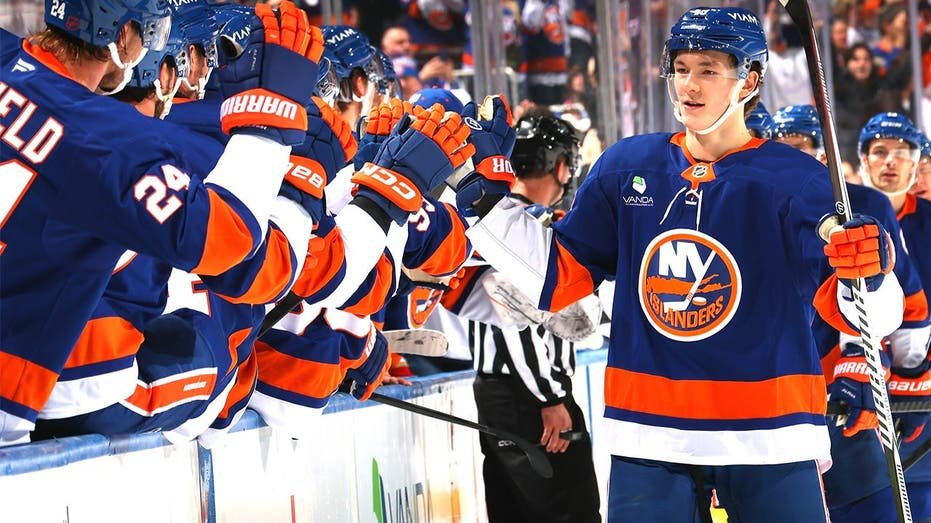
The New York Islanders are setting out to do