




Modern people tend to see knowledge as something humanity achieves collectively and then keeps forever. Once a scientific advance or moral truth is discovered, we assume it becomes part of the species’ permanent inheritance.
That is false.
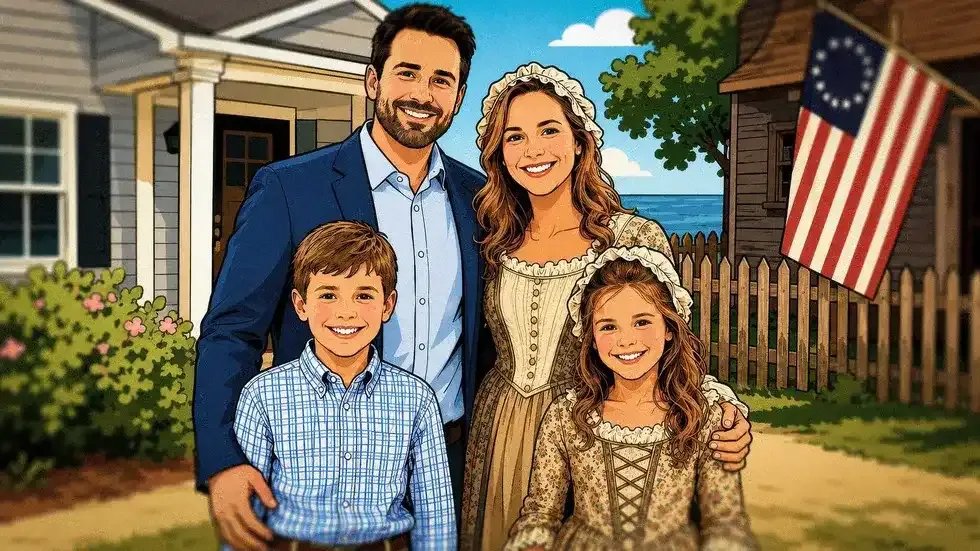
Tradition is not a museum display. It is not a costume we wear on patriotic holidays. It is a discipline.
Truth may be eternal, but our knowledge of it is not. Knowledge can be lost when a civilization stops practicing it. As America celebrates its 250th anniversary, we must understand that remembering our traditions and values is not enough. To keep them alive, we must embody them in what we do.
Ancient Rome is remembered as one of the most powerful civilizations in history and also one of the most technologically advanced. The Romans developed special concrete and engineering techniques that allowed them to build extraordinary structures and civic infrastructure.
When Rome fell, those techniques still existed in one sense. They had been discovered. But they were lost to time because the people who possessed the knowledge could no longer practice it or pass it on. The scientific truth remained objectively real, but without the civilization that had maintained it, the knowledge faded as if it had never existed.
People lived in the ruins of ancient wonders, taking shelter in buildings they could not build or maintain. Without the continuity of tradition, science had no practical meaning.
Moral truth faces the same danger.
The Old Testament shows a repeated cycle of Israel receiving divine revelation and then forgetting what had been handed down by God Himself. Again and again, the nation falls away from the commandments of the Lord until a prophet pulls an old scroll from its rack and reminds the people of what they once knew.
The Israelites cry out and rend their garments in repentance. They practice the truth for a time. Then, the practice fades, and knowledge fades with it.
RELATED: A real nation knows who is in and who is out
Despite receiving direct divine revelation, Israel — and humanity itself — could not maintain the practice of God’s truth. That is why the Lord sent his Son as a perfect example and living sacrifice, an eternal embodiment for all nations to see what the righteous life looks like in practice.
This weekend, America will celebrate its 250th anniversary. But saying that we honor our traditions and culture is not enough.
Most Americans have spent little to no time reading what the founders actually wrote. Their understanding of our national traditions comes from a heavily curated version of history they learned in school. There will be plenty of talk about celebrating the country’s past. What we need is a revival focused on living that tradition in the present.
Sentimentality is nice. It will not save the country.
Today, most Americans, including many conservatives, say the religious liberty guaranteed by the First Amendment means Muslims cannot be prevented from moving here and building entire cities dedicated to their way of life. The average American believes Hindus have a First Amendment right to immigrate and build giant statues of their demonic gods in Texas.
This is absurd.
States often required public officials to be professing Protestant Christians well into the 1840s, decades after the Bill of Rights was adopted. Even Catholics were often considered too foreign to hold office. None of this was viewed at the time as a violation of religious liberty. The idea that religious liberty was intended to allow Muslims or Hindus to control the public square is a lie.
The entire “tradition” of religious liberty many people think they are honoring is false.
The Supreme Court recently provided another example by ruling that the 14th Amendment guarantees birthright citizenship for the children of illegal aliens. The 14th Amendment was one of three amendments added to the Constitution after the Civil War to address the legal framework for freed slaves.
Its purpose was to clarify that people born into slavery became citizens once they were free. That intent was made clear by the people who authored the amendment. It did not create citizenship for American Indians, for example, or other groups added later through law and policy.
The idea that birthright citizenship for illegal aliens is some grand American tradition is entirely false. Yet a conservative Supreme Court just enshrined it in the Constitution.
This is what happens when a people inherit words without preserving the practices and assumptions that gave those words meaning. They recite “religious liberty” and forget the civilization it was meant to protect. They invoke “equal citizenship” and forget the specific injustice the 14th Amendment was written to remedy. They honor the shell while abandoning the substance.
A nation does not preserve itself by remembering slogans once a year. It preserves itself by forming children, families, churches, neighborhoods, and leaders who know what those slogans demand when they collide with power, fear, comfort, and fashion. Otherwise, July Fourth becomes pageantry without inheritance.
RELATED: The birthright ruling leaves Trump one clear move

A tradition no longer practiced becomes decoration. A truth no longer defended becomes trivia. A people who forget how to live their inheritance eventually become squatters in their own ruins. That is us.
Tradition is not a museum display. It is not a costume we wear on patriotic holidays. It is a discipline. It is a set of habits, loyalties, judgments, and practices that must be taught, defended, and lived.
As we gather with family and friends this weekend, we should enjoy the patriotic festivities. Fireworks, barbecue, and loud renditions of “Take Me Home, Country Roads” are all fantastic, and we should embrace them fully.
But we should also commit to learning the true history and traditions of our nation and living them in our daily lives.
Read the Declaration of Independence and the Constitution with your children. Read the Federalist Papers and the Anti-Federalist Papers. Read George Washington’s Farewell Address and the letters of the founders.
Most important, live these traditions by becoming the virtuous people those men believed the country could not survive without.
The 250th anniversary must be more than a nostalgic celebration. It must become a renewal of our covenant as Americans.