

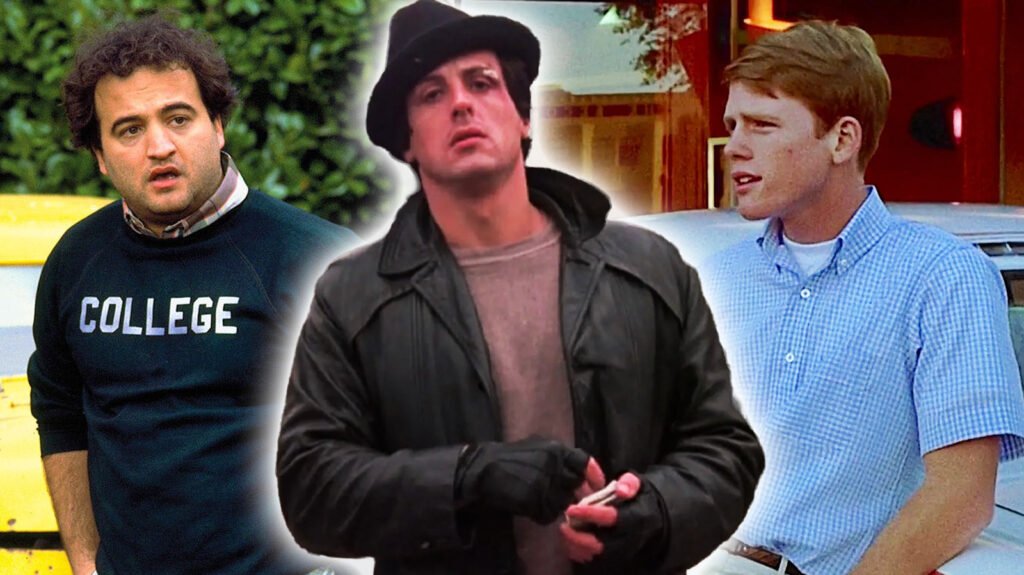
It’s no great secret that Netflix is far from the paragon of showcasing classic cinema on a streaming platform. True, it has some notable standouts, some of which we’ve compiled ourselves, but Netflix’s real priority is its pervasive library of original movies and series, as well as more contemporary fare it licenses from studios. HBO Max or the Criterion Channel have many more classic, arthouse, and foreign films, while Netflix remains prioritized on its in-house fare, which the company continues to optimize for “second-screen” viewing to accommodate users on their phones or while folding the laundry.
Sadly, that means its selection of 1970s cinema is not all that vast. Making a collection of films from the era available on the platform is less a “best of” and more an “only-ones-on-there” list. But there’s a ray of hope for viewers looking for recommendations from one of cinema’s grittiest decades: The films Netflix does have on offer (seemingly out of a partnership with Universal Pictures and United Artists, from whom all films here are produced) are generally worthwhile, either for their sustained entertainment value or as historical artifacts that represent a bygone era of moviemaking, often setting the stage for new classics and cinematic trends to follow. If nothing else, they’re a good jumping-off point for continuing your cinematic exploration of the world of paranoid, racy, unflinching movies that sent a shock through Hollywood, a reverberation that endures to this day.
Here are the best ’70s movies streaming on Netflix.
Airport
 Universal Pictures
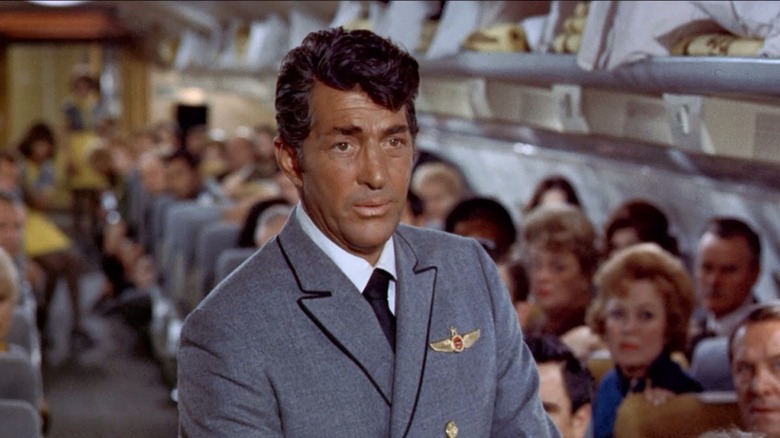
Arthur Hailey’s 1968 bestseller made for an irresistible Hollywood adaptation, and “Airport” effectively created the template for a decade of disaster-movie filmmaking that would follow. The all-star cast, the interlocking storylines converging on a single catastrophic event, the soap-opera melodrama braided with action-movie tension: All of it would be borrowed, amplified, and eventually sent up by the spoof movie that’s perhaps now better known than the source material it’s parodying, “Airplane!” But “Airport” is no spoof — just like the disaster films to follow, George Seaton plays the events of his film with an unfeigned earnestness.
The film tracks a frantic night at a fictional Midwestern airport during a blizzard, in which Burt Lancaster’s embattled airport manager is forced to contend with a stalled aircraft on his main runway Meanwhile, unbeknownst to him, a passenger has boarded a transatlantic flight concealing a bomb. Dean Martin, Jean Seberg, and Jacqueline Bisset populate a cast navigating marital discord and moral compromises, as the crisscross of characters and storylines adds manufactured weight to the 137-minute runtime.
Is “Airport” a great movie today? Well… no. The dated facets of storytelling and tension that make up this ludicrous picture come off as extremely old-fashioned and won’t strike contemporary viewers as particularly sophisticated. Its melodrama is so broad that it’s easy to see why this subgenre was ripe for parody. But it’s compelling as a genre artifact. It’s a film that believes, without irony, in the stakes of its own mechanics, in the emotional credibility of its scenario and characters, and delivers them with an impressive sense of workmanlike, practical moviemaking. It must have done something right: Along with an entire subgenre, it spawned three awful sequels.
Slap Shot
 Universal Pictures
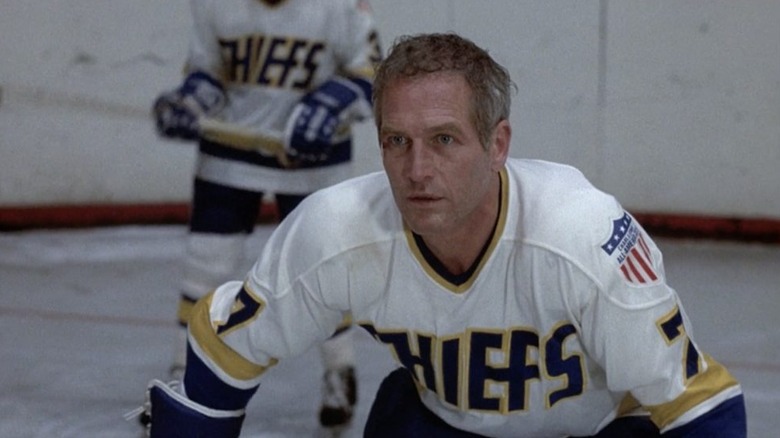
George Roy Hill made his name with crowd-pleasing prestige pictures like “Butch Cassidy and the Sundance Kid” and “The Sting.” “Slap Shot” finds him on scrappier terrain. Written by Nancy Dowd, loosely based on her brother’s experiences playing minor league hockey, the film bears some plaintive fixations beneath its laughs. Set in a fictional Western Pennsylvania mill town whose steel industry is on the verge of collapse, it fixates on a beleaguered hockey team as a lens for examining more upsetting realities: the economics of desperation and how easily violence can be turned to, seemingly out of necessity, when your material world is full of struggle and despair.
Hill once again collaborates with Paul Newman, who stars as Reggie Dunlop, the aging player-coach of the Charlestown Chiefs, who resorts to increasingly brutal on-ice tactics to boost flagging attendance and stave off the franchise’s dissolution. His team is raucous and rowdy, especially the Hanson Brothers — played by and based on real-life hockey players Jeff Carlson, Steve Carlson, and Dave Hanson — whose funny, pugnacious playstyle underscores deeper social concerns at the heart of the film.
“Slap Shot” distinguishes itself from its sports comedy peers by how stubbornly it holds onto that thread of melancholy. It takes the typical “coach guides disordered underdogs to victory” sports dramedy plotting and gives it a poignant sense of realism that recognizes the more true-to-life circumstances of living outside the sport. It’s a sharper movie than its reputation as a hockey comedy may suggest. Just don’t watch the DTV sequels.
National Lampoon’s Animal House
 Universal Pictures
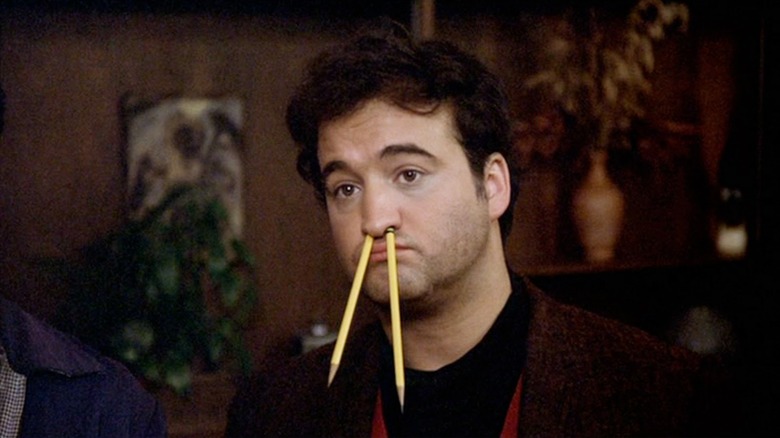
A wave of frat-house comedies and multiple generations of generally raunchy farce spawned out of “Animal House,” humor and satire magazine National Lampoon’s first foray into feature filmmaking. What would give way to an extended reign of cult-favorite feature films, including the Chevy Chase-starring “Vacation” series, began with humble beginnings in this college-set movie about a troublemaking fraternity house and the friction they run into with their prestigious peers and the domineering faculty.
It was fairly scandalous upon its release in 1978 as arguably the first real party comedy of its kind, reveling in the misconduct and debauchery of youth in a vulgar and crude fashion. But that’s just the reason “Animal House” broke out the way that it did, despite Warner Bros.’ insistence that the premise could never make for a successful movie. It spoke to a rowdy generation of young people who had grown up in a completely different America from that of their elders, one transformed by the turbulent countercultural years of the ’60s and early ’70s.
That allowed “Animal House” to flourish in its poor taste. To be certain, this is basically a strung-together selection of skits and jokes masquerading as a movie, and it has its fair share that doesn’t play in 2026 as it did nearly 50 years ago. But new viewers will be surprised to find how much of the comedy here still speaks to the enduring notion of a futile effort to mature when becoming an adult. You’ve also got a genuinely funny ensemble, including the great John Belushi, who steals the show as the absent-minded, drunken Bluto Blutarski.
Smokey and the Bandit
 Universal Pictures
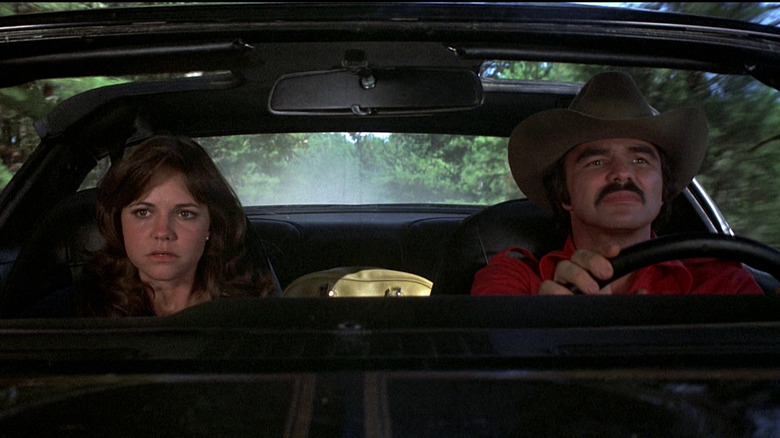
Hal Needham spent the better part of two decades as one of Hollywood’s premier stuntmen before turning to the director’s chair. His feature debut showed that the practical instincts of a career in stunts could yield worthwhile results in feature filmmaking. “Smokey and the Bandit” arrived in the summer of 1977 — the same summer as “Star Wars” — and became the second-highest-grossing film of the year. This is, of course, partially a testament to the star power of Burt Reynolds, at the peak of his career at the time, as well as an appetite for this style of story about good-natured Southern outlaws defying the authority of the law.
The premise is fairly thin: Reynolds’ “Bandit” accepts a bet to transport a truckload of Coors beer from Texarkana to Atlanta in 28 hours. This feat is complicated by the relentless pursuit of county sheriff Buford T. Justice (Jackie Gleason). Along the way, Sally Field plays Carrie, also known as Frog, a runaway bride who would kick-start a years-long romantic relationship with Reynolds and facilitate her transition into true Hollywood movie stardom.
“Smokey and the Bandit” isn’t looking to achieve much more than pure entertainment, and it succeeds on the back of Reynolds’ and Fields’ charisma, as well as some truly thrilling driving stunts. It’s got movie-star appeal to spare, and an easygoing hangout vibe despite its ticking-clock plotting. It would also spawn a series of disappointing sequels and TV movies that you’re better off tuning out in favor of the delightful charm of Needham’s original classic.
Rocky
 United Artists
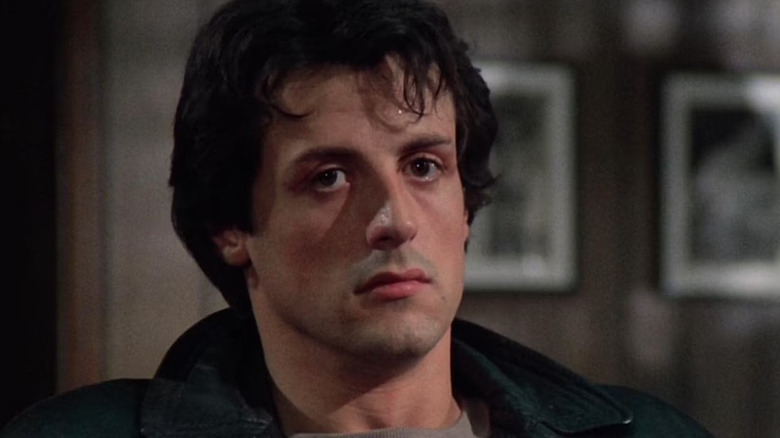
It’s a minor point of contention among some film fans that “Rocky” won Best Picture at the 1977 Academy Awards. Amid an era of newfound social cynicism toward the American government and a general climate of societal mistrust, as New Hollywood directors were pumping out grim, pessimistic dramas and thrillers, the more crowd-pleasing “Rocky” took home the award against such competition as “All The President’s Men,” “Network,” and “Taxi Driver.”
And yet, even Sylvester Stallone can tell you why “Rocky” was such a big hit. At a time when audiences were craving escapism, this sports character drama about a club fighter from Philadelphia who gets the chance to face a heavyweight champion in the ring seemed to signal a refreshing optimism — a celebration of tenacity, hard work, and ambition. Even so, one shouldn’t discount the social realism that director John G. Avildsen imbues in a potential sentimental narrative from a script written by Stallone, as the ambition of Rocky Balboa (Stallone) is born of the economic and social malaise of the everyday person struggling to keep their head above water.
To that end, it’s the reflection of contemporary hardships that make “Rocky” great, as well as a refusal to deliver audiences the truly easy ending. Rocky’s search for greatness is underlined by a sobering sense of adrift yearning for an elusive American Dream. The satisfaction comes from seeing him bask in a spiritual release from the unmoored feeling of everyday pressures and barriers that have kept him from greatness. The pragmatism with which that greatness is depicted is why “Rocky” lives on as a classic sports movie.
Rocky II
 United Artists
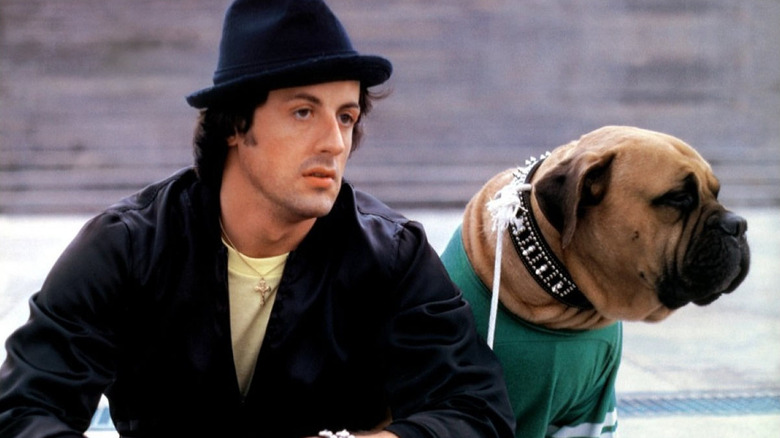
Take everything that I just wrote about “Rocky” above, make it all just a little more bland and obvious, and you’ve got “Rocky II.” This isn’t a terrible sequel by any means, as there’s care put into the continuation of Balboa’s emotional trajectory after his personal deliverance at the end of the first film, and Stallone has a sturdy directorial eye as he steps behind the camera for this entry (and the ones following). But “Rocky II” can’t consistently justify the continuation of this story, especially when the narrative trajectory puts Balboa on the exact same path as the first film.
Yes, “Rocky II” is focused on a rematch between the champ Apollo Creed (Carl Weathers) and Rocky, with the former looking to restore his unconquerable reputation and the latter still looking to prove himself after losing the climactic fight in “Rocky.” In the process, “Rocky II” leans more into the traditional elements of a boxing movie than the first film, which was far more interested in Rocky’s socioeconomic circumstances. This one is well and truly about a sport and about winning the fight, with Stallone’s follow-up script losing some of the texture of the world and the character that made “Rocky” such a classic.
That said, this is still a perfectly entertaining sequel with solid formal chops that make it sufficiently watchable, including a final fight hard-hitting enough that Stallone needed surgery after filming. Stallone continues to carry ample charm as the title character, Weathers feels natural in returning to one of his most iconic roles, and Talia Shire helps maintain the true heart of the franchise as Adrian, affording the film its most poignant emotional moments that most closely recall the highs of “Rocky.”
High Plains Drifter
 Universal Pictures
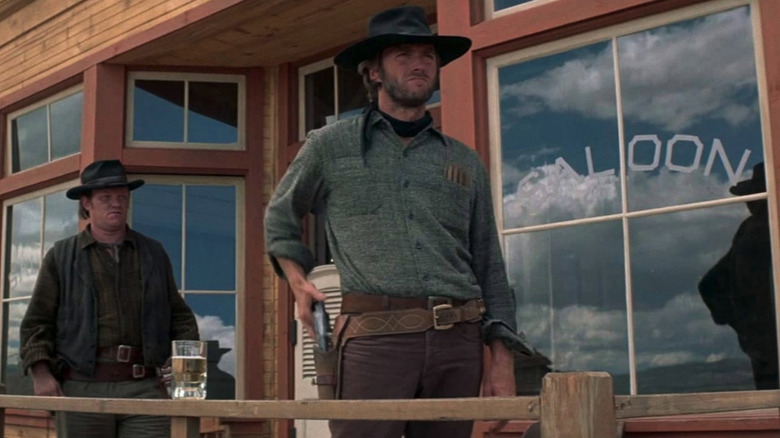
Clint Eastwood entered the directing phase of his career with something to prove. “High Plains Drifter” would be the second film he helmed himself, once again donning the cowboy hat and spurs familiar to audiences who had recently seen him rocket to global stardom via Sergio Leone’s “Dollars” trilogy. He fulfills a similar persona here: a stoic, nameless stranger who rides into town and gets involved in an existing conflict that he influences to his liking.
But “High Plains Drifter” is a good deal meaner than any of the Leone movies, and more sadistic than any of the succeeding Westerns Eastwood would go on to star in and direct throughout his career. The Stranger here is painted as the Devil incarnate — a Biblical reckoning for a town that previously murdered a U.S. Marshal with little remorse. Eastwood’s presence suggests a spiritual judgment and revenge, manifesting as a ghostly figure that takes ownership of the settlement and its people, and then ultimately leaves them fighting for their lives against their adversaries.
But that’s what makes “High Plains Drifter” great. Eastwood would never get quite this antagonistic again — indeed, John Wayne even wrote Eastwood an angry letter expressing his distaste for the film’s truculent depiction of the Old West. But there’s an honesty in that and a bravery in Eastwood’s decision to use his movie-star power to deliver a troubling veracity of life in an earlier time in our country, which wasn’t defined by valiant heroism as in many of Wayne’s classical genre entries, but by an apathy toward such moral blustering in a time when survival and goodness were nothing close to hand-in-hand.
American Graffiti
 Universal Pictures
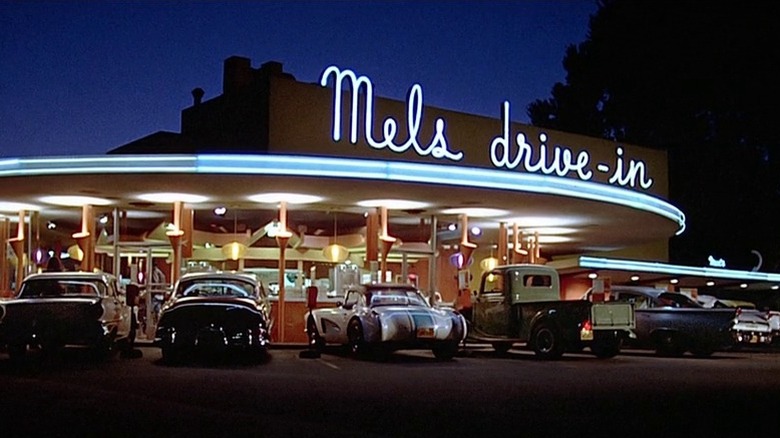
By 1973, George Lucas had already stumbled out of the gate with his clinical debut, “THX 1138,” a science-fiction picture that found a warmer reception on home video than in theaters. His second feature would be a stark pivot: a low-budget ensemble piece produced by Francis Ford Coppola, set over the course of a single summer night in 1962 Modesto, California, as a group of teenagers hovers on the edge of adulthood. Universal was convinced the film would be a bomb, so little faith did executives have in the finished picture that they pushed for substantial cuts. Lucas wouldn’t budge, and “American Graffiti” went on to become one of the most profitable films in history (relative to its cost).
The film tracks several characters simultaneously through that long night, their stories loosely braided as they cruise the Modesto strip beneath amber neon and the persistent signal of Wolfman Jack’s (the real-life iconic DJ playing himself) radio show. Richard Dreyfuss is the center of orbit, wrestling with a college acceptance letter as though it were a gallows summons. Ron Howard, Paul Le Mat, Cindy Williams, Mackenzie Phillips, and a young Harrison Ford round out a gifted and charismatic ensemble that all naturally capture the blissed-out wave of early ’60s California youth culture.
But what really gives “American Graffiti” its staying power is the elegiac quality Lucas buries beneath its nostalgic exterior — as a 1962-set movie filmed in 1973, Lucas understands precisely what his characters don’t: the future. As the title cards close the film, the runtime is reframed as a farewell to a certain American innocence and adolescence that was already a decade removed by the time it hit theaters. It’s one of the great coming-of-age movies, and a movie about a lost cultural naiveté.