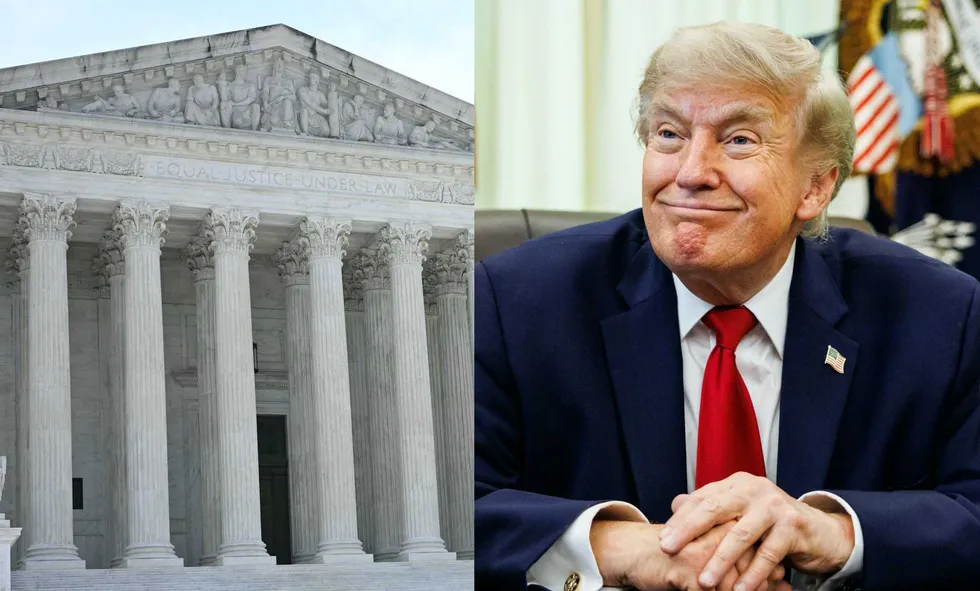


The Supreme Court has delivered a brutal blow to President Donald Trump, striking down his bid to end birthright citizenship for millions of Americans.
Two of his own hand-picked justices turned on him in a case which made him the first sitting president ever to attend Supreme Court arguments.
So important to Trump was removing the fundamental constitutional right that he had signed an executive order to try to overturn it on the first day of his return to office.
But on the very last day of the court’s term, in a6-3 vote, the court ruled that Trump lacked the authority to override the citizenship protections guaranteed under the 14th Amendment.
Trump-appointee Amy Coney Barrett ruled to strike down Trump’s executive order. So too did fellow Trump pick Brett Kavanaugh, even though he disagreed with the majority view that Trump’s executive order violated the constitution.
The pair signed on to the judgment of the chief justice, John Roberts, and the liberal justices Elena Kagan, Sonia Sotomayor, and Ketanji Brown Jackson.
But the ultra-conservative wing of Clarence Thomas, Neil Gorsuch and Samuel Alito dissented, signaling they would have overturned a century and a half of citizenship rights.
The 14th amendment states that all persons born or naturalized in the United States “are citizens of the United States.”
Writing for the majority, Roberts said there was “scant evidence” for the administration’s “revisionist view” of birthright citizenship.
The ruling represents a stunning judicial setback for Trump, who is still fuming over the court’s decision earlier this year to strike down his tariffs.
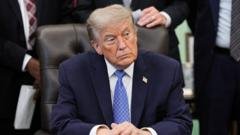
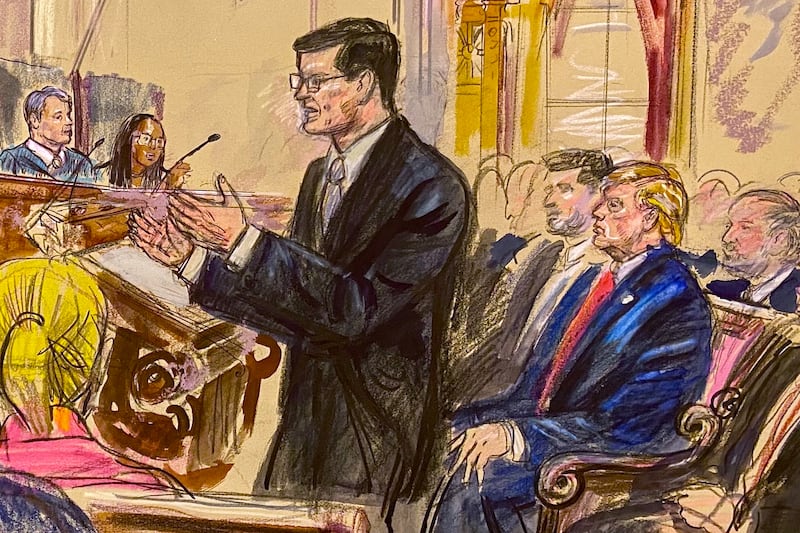
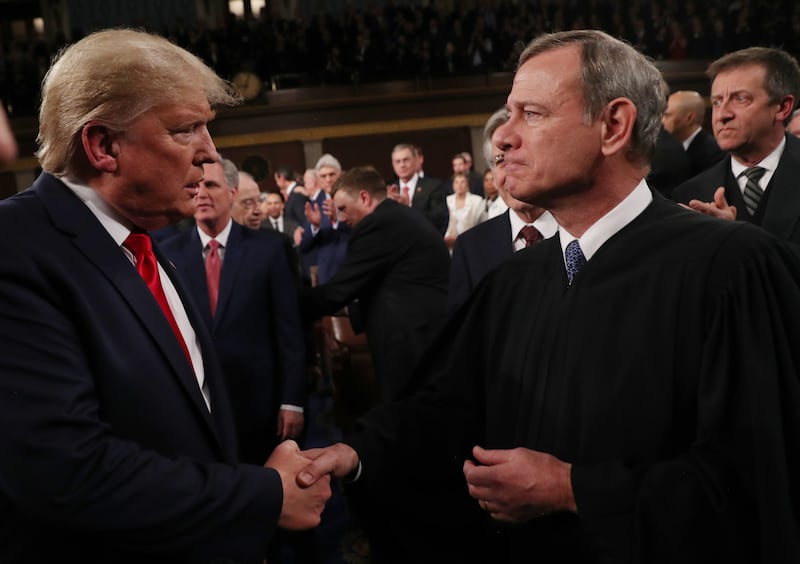
In a sign of how much was at stake, Trump made the unprecedented decision to sit in on oral arguments, staring down the court’s nine justices as they quizzed his Solicitor General D. John Sauer.
However, the president left the hearing abruptly after less than 90 minutes of watching several of his own handpicked justices including Amy Coney Barrett and Neil Gorsuch—tear Sauer’s arguments apart.
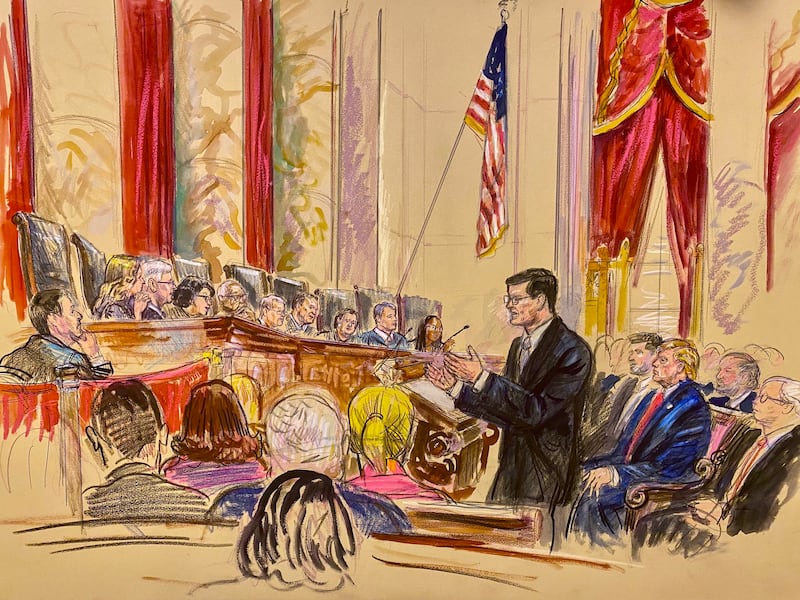
Chief Justice John Roberts, a George W. Bush appointee who had created presidential immunity for Trump while he was out of office, also had a mic-drop moment when Sauer tried to make the point that “we’re in a new world where eight billion people are one plane ride away from having a child who’s a U.S citizen.”
“It’s a new world. It’s the same Constitution,” Roberts replied.
Tuesday’s decision bookmarks a years-long legal and political battle over birthright citizenship, a right that has been recognized since the Supreme Court’s landmark 1898 decision in United States v. Wong Kim Ark.
The 1898 decision largely established that babies born in the US are legally citizens. However, the Trump administration argued the 14th Amendment only applied to former slaves.
That would mean babies born to individuals who are not “domiciled” are not citizens under the amendment.
Sauer argued the reinterpretation was justice given the threat of unchecked immigration and “birth tourism”.
However, much of the Supreme Court bench seemed unconvinced by the administration’s argument.
Barrett, for example, spoke about the historical understanding of the 14th Amendment, which was adopted in 1868 after the Civil War.
Gorsuch added to the pressure Sauer faced, asking the seasoned solicitor general: “Do you think Native Americans are birthright citizens under your test?”
“Ah, I think… so,” he replied, somewhat unconvincingly. “I’ll have to think that through.”
Had the Supreme Court upheld the president’s order, the ACLU estimated it would have stripped some 250,000 babies of their U.S. citizenship and some 4.8 million people over the next two decades.
Asked about the looming decision on Monday, Trump said it was the Supreme Court, so he would have to accept their decision while blasting birthright citizenship as “very bad” and “destructive” for the U.S. and falsely claiming no other country allows it. Among those which do are Canada; Texas Republican senator Ted Cruz is a well-known recipient of that country’s birthright citizenship.
Trump has stated his false claims about it repeatedly since the court took up the case, and ramped them up as he braced for defeat. A furious Trump acknowledged the decision was unlikely to go his way earlier this month, telling reporters it would be a “disgrace” if the court didn’t rule in his favor.
“Birthright citizen is done by no other country, no other country in the world the way we’re doing it—we’re a laughing stock,” Trump said, ignoring the fact that dozens of countries confer citizenship at birth with no conditions.
“And if the Supreme Court approves that decision, they have done a great disservice to the United States of America.”