


We’re halfway through the 2026 Major League Baseball regular season, and hopefully fans are enjoying it, because it might be the last baseball they see for a while. And it’s partially their own fault.
The collective bargaining agreement between the league’s owners and the MLB Players Association expires at the beginning of December, and negotiations are expected to be contentious. In fact, the two sides have already exchanged preliminary proposals and based on the response from both sides, they are very far apart. And not moving closer.
MLB’s official account on X posted Thursday afternoon about their proposal to reconstruct the structure of the league in order to make owners more money, and predictably, the players aren’t happy about it.
In a remarkable combination of inaccurate weaponized propaganda, the post claims that “Ultimately the game is about hope,” which is both nonsense and inaccurate. “Too many fans in too many markets have too little hope their team has a fair chance to win,” it continues.
MLB’S SALARY CAP PROPOSAL WON’T FIX THE LEAGUE’S NON-EXISTENT COMPETITIVE BALANCE PROBLEMS
“Fans overwhelmingly support a salary cap and floor like in the other leagues because they don’t believe a $446 million spending gap from top to bottom is a fair fight,” the post reads. With the “fans” portion of the sentence purposefully in bold.
“Our proposal levels the playing field while sharing baseball revenue with the players 50/50 as we grow the game together. Further, revenue from all local media will be centralized and shared equally, which will allow MLB to address local market blackouts. We look forward to working with the MLBPA during the bargaining process to continue improving the game for the fans.”
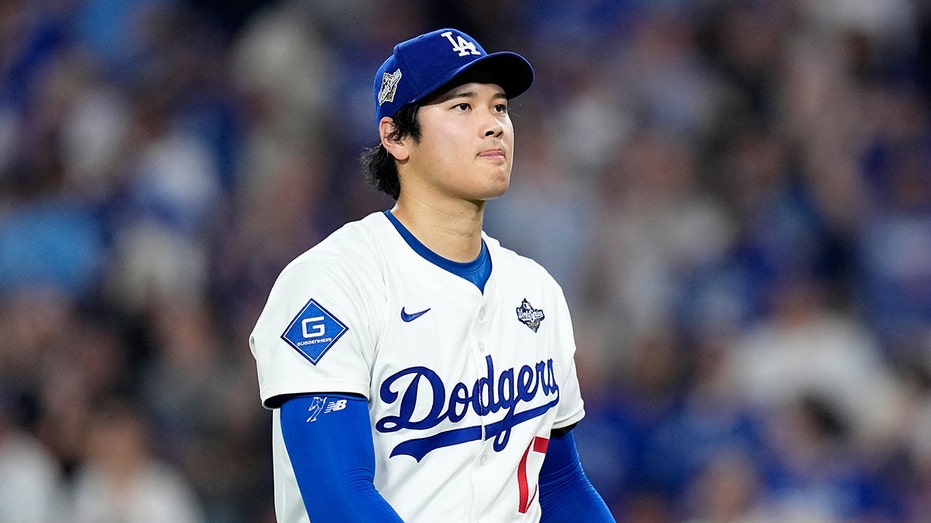
And this is why fans themselves might shoulder some of the blame for the inevitable lockout. Because the wailing and gnashing of teeth about the Los Angeles Dodgers has allowed the league and its owners to make the claim that fans care how revenue in MLB is distributed. They don’t. But they’re taking advantage of fans’ lack of awareness about the current structure of the sport and the misplaced rage toward LA to accomplish their own ends.
Fans want their teams to win. Owners want their teams to be more profitable. Players want to maintain or grow their percentage of total revenue and avoid artificially limiting their value on the open market through a form of sports socialism. “Level the playing field” is great marketing for Zohran Mamdani, not so much for a competitive enterprise. Which is why siding with ownership in this negotiation makes little sense.
The latest details in the proposal add several details that don’t change the overall picture, while providing little benefit to players. Free agents changing teams can sign for up to five years only, for a maximum of 15% of the team’s payroll, increasing 5% each year under contract. The “Cornerstone Player Provision” would allow teams to retain their own players by giving them…one whole extra year.
This protects bad front offices by limiting the downside on longer contracts. While hurting players who aren’t able to use market forces to sign longer-term deals. There’s little incentive for players to stay in their home, ostensibly smaller, market, for only one extra year of guaranteed salary, if they can still get five years from a better organization, like, say, the Dodgers. Then there’s the other problem: small-market teams will still be run by cheap owners. Whatever the floor is, the Marlins will spend at the floor. As will the Pirates and so on. So stars will leave anyway, because ownership will do whatever it can to minimize costs.
That’s the problem with the supposed “$446 million spending gap” isn’t the top end, it’s the bottom. Per Spotrac, the Dodgers’ total payroll obligations are $350 million. The Marlins is $67 million. That’s not $446 million, it’s $297 million. Obviously still large, but the league knows fans will see the larger number and get even more upset. Big numbers are meaningful. Just ask the NFL, which has less scoring per game than baseball, but uses a ridiculous scoring system to convince fans otherwise.
The Marlins receive an estimated $60 million to $70 million in revenue sharing distribution quite literally right now. That doesn’t include stadium revenue, television revenue, merchandise sales, concession sales, parking revenue, or advertising revenue. So why is their payroll so low? Because ownership is currently allowed to spend as little as possible with little fear of existing rules enforcement from MLB. The Marlins aren’t meant to be a competitive organization, they’re a profit maximizing enterprise.
Then there’s the other side of this, the supposed lack of “hope” and competitive balance under the current format. Let’s take a look at how some of the big market teams and the “hopeless” small market teams are faring as of Thursday afternoon.
The Dodgers and Yankees are in first place in their respective divisions. And that’s about it.
The New York Mets, who’ve spent as much on payroll as any team in baseball over the past five years, are 34-46, 14.5 games out of first place, nine games out of a wild-card spot, and effectively dead and buried. The Boston Red Sox, one of the league’s signature franchises, are even worse. They’re 32-46, 15.5 games out of first, and quite literally have the worst record in the American League.
Then there’s the Los Angeles Angels, who play in the second-largest media market in the country. They’re 34-48, and all but guaranteed to finish with yet another year under .500. Second-largest market, zero playoff appearances since 2014. In San Francisco, another giant (pun intended) market with no competition, the Giants are 33-46 in fourth place.
The Chicago Cubs are in third place. The Texas Rangers, who play in Dallas, the fourth-largest media market in the country, are in fourth place and under .500. The Astros, who play in the massive Houston market, are 39-43. Second place in the AL East isn’t the big-market Toronto Blue Jays, it’s the Tampa Bay Rays.
That’s the other side of this. The small-market Brewers are once again running away with the NL Central. The White Sox, the “other” team in Chicago, are in a tie for first place with the Cleveland Guardians. The Padres are once again in playoff position in the tiny San Diego market. The Marlins, Pirates and Nationals are all in playoff contention. The Giants and Mets aren’t. In fact, the combined record of the Dodgers, Yankees, Mets, Angels, Rangers, Astros, Red Sox, Giants, Phillies and Cubs is 396-401.
Small market teams, the Brewers, Guardians, White Sox, Rays, Cardinals, Padres, Mariners, Pirates and Marlins, are 383-331. That’s a .495 winning percentage compared to .536.
Some of these organizations are actively trying not to win! And they’re still winning!
The financial details of the proposal are even worse. It’s not an actual 50/50 split, as they claim, because it takes billions in ancillary revenue off the table first. In actuality, the proposal would take roughly $550 million out of players’ pockets. A substantial portion of the “salary” cap is taken up by player benefits and amateur bonus pools. Meaning that owners get to reduce their overall costs while claiming to spend more on salaries.
ZERO BS. JUST DAKICH. TAKE THE DON’T @ ME PODCAST ON THE ROAD. DOWNLOAD NOW!
Not to mention that if a floor system is feasible, why can’t teams also spend more without being forced to? Yes, more revenue sharing from TV deals would give the Marlins more income, but why not just increase that percentage then, without resorting to a cap?
“After making a series of proposals to reduce player compensation by billions of dollars, eliminate fundamental rights with a salary cap, and destroy the amateur entry process, Major League Baseball and team owners are now attempting to distract from the true impact their plan would have on baseball,” the players association said in a statement.
And they’re right. Just a few months ago, Rob Manfred said the Dodgers were good for baseball. Now they’re the villain, when it comes time for owners to make more money. Had the Blue Jays gotten Miguel Rojas out in the ninth inning of Game 7, a player making around $5 million per year, none of this would be happening anyway. Not to mention how quickly fans forget how much they enjoyed making fun of the “choker” Dodgers in 2021, 2022 and 2023.
Baseball doesn’t need fixing. A salary cap won’t fix it. These proposals are not about “improving” the game or hope, they’re about making owners richer. And there’s zero, less than zero, reasons for fans to support it or be used as pawns in the league’s propaganda war.