




Britain’s Underbelly Is on the Ballot
The decline of British high streets is finally compelling a political response.

Britain is a country where political discussion is carefully stage-managed. The government, the national broadcasters, the legacy press, and the courts all in their own ways try to fetter political discussion, especially around issues of immigration and crime. This is particularly the case when these two issues overlap.
Since the 1960s, the British government has introduced a range of laws intended to manage the tensions of multiculturalism, which emerged after the earliest waves of postwar mass immigration. Unsurprisingly, the public did not especially like the advent of multiculturalism and mass-immigration. The state, however, decided that the correct response was to implement a range of laws intended to suppress public discontent and censor political speech. Various laws around race relations, public order, and access to welfare were introduced between the 1960s and ’80s, and they remain on the statute book today, criminalising speech and suppressing political discussion in person and online.
But occasionally these structures crack under the pressure of public opinion and political reality. One area where this has happened is regarding the seedy underbelly of modern Britain, where immigration, organized crime, and degraded high streets overlap.
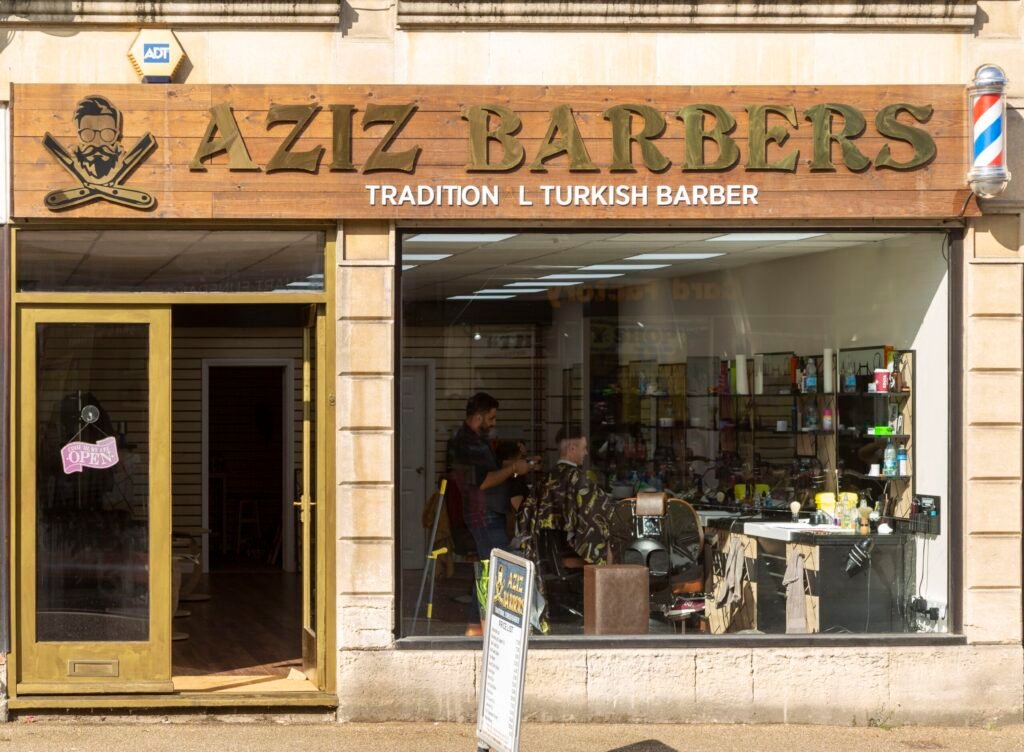
For years, people wondered why “Turkish barbershops” kept on appearing on British high streets, with seemingly zero customers, often in areas with no Turkish population to speak of. Who is paying the bills? How do these shops function, why do they only take cash payments, who is running them, and who allowed them to open? Two to three years ago, those asking these questions were confined to forums or social media, as the mainstream press tended to ignore something so mundane. Sometimes these online murmurs made it onto the right-wing TV channel GB News, where accusations of money laundering made it onto the airwaves, but often they were ignored, dismissed as a function of a post-pandemic boom in male grooming, or reasoned away because there are low barriers to entry to setting up these shops, and they served a clear customer demand.
But a series of criminal investigations made the issue impossible to ignore at the highest level. The Evening Standard reported in 2025 that
over the past three years, several major crime rings have been linked to London barber shops. Hammersmith barber Tarek Namouz, who owned Boss Crew Barbers, was sentenced to 12 years in prison for sending £11,000 to fund terrorist activity in Syria in 2022. A people-smuggling plot was also uncovered at a barber shop in Colindale the same year. Gul Wali Jabarkhel was jailed for 10 years after offering lorry drivers thousands of pounds to illegally bring people into the UK across the Channel.
Meanwhile, former barber Hewa Rahimpur was sentenced to 11 years behind bars for buying boats for up to 10,000 migrants so they could cross the Channel into the UK. He had run a barber shop with a friend in Lewisham before he began selling sweets and tobacco from a kiosk in Ilford.
Elsewhere, CSG Barbers in Lewisham was exposed to be an illegal hideout and DIY casino used by two Albanian brothers running vast amounts of cocaine from London up into the Midlands in March 2022.
For nearly a year, the “Eddie line” led by brothers Edmund and Edward Haziri ran drugs up to Swadlincote, north-west Leicestershire and east Staffordshire. The brothers were ultimately both jailed for 15 years, alongside eight others connected to the drug’s line.
This is just one flavor of the sort of criminal activity that has been taking place through shopfronts in London alone. The problem is arguably worse in poorer parts of the country, tucked away from the public eye. The South Wales town of Porth, with a population of only 6,000, finds itself with over a dozen of these shops, much to locals’ confusion. The situation in neighboring Welsh town Blackwood is similar, and tensions between rival-owned barbershops erupted into public violence, with a mass brawl including stabbings taking place last year. Swinging machetes in the street is not the expected behaviour of a British barber. Indeed, many investigations into these businesses have found that the owners are linked not just to the drug trade in the UK, but terrorist financing and illegal immigration.
Barbers are not the only businesses involved, though they have attracted the most attention. Vape shops and mini supermarkets have been used for criminal enterprises as well, according to the BBC, which has published a number of reports into this phenomena since the National Crime Agency launched a nationwide investigation into criminality on the high street last year.
The issue is far more sinister than drug trafficking or smuggling illegal cigarettes, however, as serious as those issues are. A local council worker in Dudley, in England’s West Midlands, revealed that girls as young as 11 were being sexually abused in high street shops in the town, with cases of abuse and exploitation happening for years. Information collected by the local Trading Standards body—a local government enforcement agency—found that children were being lured to secret locations from the shops to collect cigarettes and vapes before being assaulted or abused. This is reminiscent of the rape gang scandal which has taken place up and down the country for decades, and is a sign that similar forms of child exploitation continue to this day.
This is a modern British tragedy. It sits at the intersection of a number of policy failures the country has experienced. Some of these failures are more mundane than others. As consumer habits changed, British town centers in poorer parts of the country went into decline. Once-busy high streets fell empty as people preferred to shop out-of-town or online. The heavy taxation and regulation of cigarettes and vapes has encouraged a booming black market. These are trends which are seen across the world.
But a succession of poor decisions have been taken which have accelerated the degradation of so many town centers. In a rush to avoid negative headlines around empty high streets, cash-strapped local councils have allowed these shops to operate, turning a blind eye to their activities as long as they pay their business rates. As upwardly mobile Brits left declining, post-industrial towns, many of the remaining houses have been requisitioned by the government to house illegal immigrants, refugees or homeless people that the state has various legal responsibilities to protect.
With underpowered local enforcement bodies, a welfare state that subsidizes criminality, and a political class wary of addressing the effects of decades of unwanted immigration, these towns have become a petri dish for the development of a seedy and grisly underbelly to the country. Largely hidden from view, it is where some of Britain’s poorest and most lost people interact with slum landlords and immigrant gangs, far away from the authorities and polite society.
But as mentioned earlier, something is starting to crack. While the picture is bleak, what were once the subject of posts on Reddit and X are now the focus of national crime investigations. Politicians across the political spectrum seem to have realised that public anger cannot be put back in its box. The rapid hardening of the public consensus on immigration, in particular, is testament to this. It is as if a new permission structure has been created, opening up a much broader and more radical range of solutions.
Despite the Labour Party’s likely leftward tilt following Prime Minister Keir Starmer’s leadership woes this spring, his potential challenger, Andy Burnham, has been at pains to say he supports policies which would significantly curtail welfare access to migrants and make it easier to deport even legal immigrants in Britain. Britain’s problems will not be solved overnight, nor will the country’s faded high streets burst into bloom tomorrow, but if things which were only sayable on corners of social media are driving policy and law enforcement two or three later, then maybe the light at the end of the tunnel is closer than we think.
The post Britain’s Underbelly Is on the Ballot appeared first on The American Conservative.