




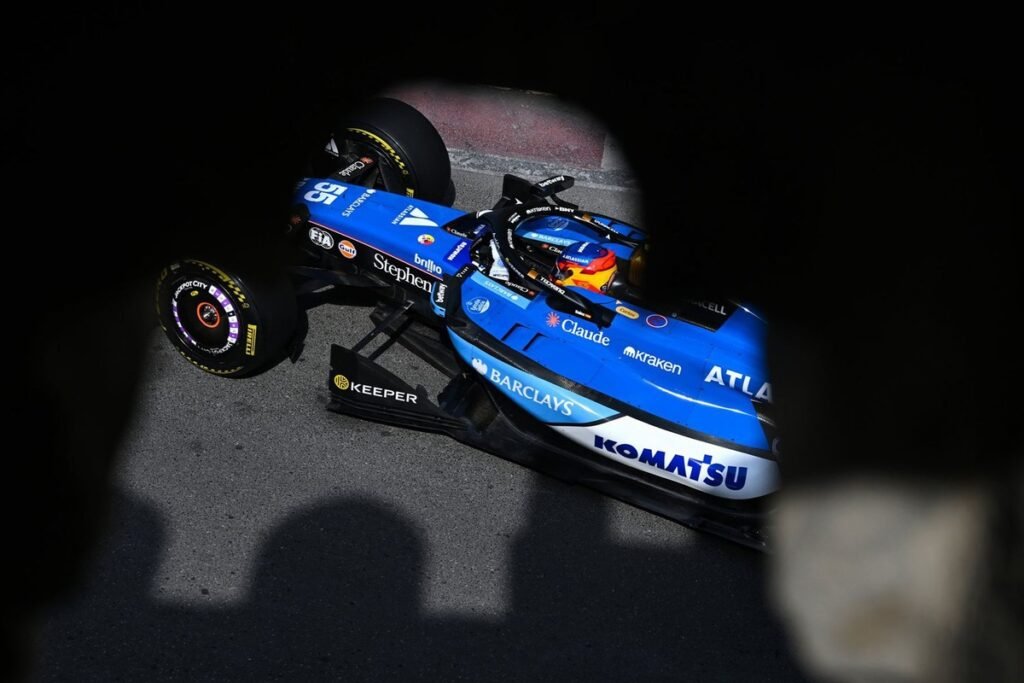
Williams’ 2026 car had infamously been overweight after Formula 1 switched to a new technical ruleset, but a brand-new chassis introduced at the Azerbaijan Grand Prix has provided substantial performance.
Carlos Sainz was consistently quick in Baku, finishing 11th in Q1, then ninth in the next two segments of qualifying. Williams had never done so well this year – its best results had been Sainz’s 10th place in sprint qualifying in Montreal and Alex Albon’s 11th position in Monaco.
“I knew this track would suit us. I knew that with an upgrade maybe we could fight for better positions than recently. But the reality, and if I’m very honest with you, I think Q3 is a bit of an overachievement,” said Sainz, who ended up copping a five-place grid penalty.
“Today as a team we nailed the tyre strategy, we nailed the run plan; I nailed the laps, honestly. I’ve done some serious laps today, on the limit. I’m happy to show them because this year I’ve done some good laps and they’ve gone unnoticed for P17 or P16.”
This analysis is cause for caution as to the upgrade’s intrinsic potential. Both drivers expect next week’s Sepang round to provide a verdict in high-speed corners, which are non-existent in Baku.
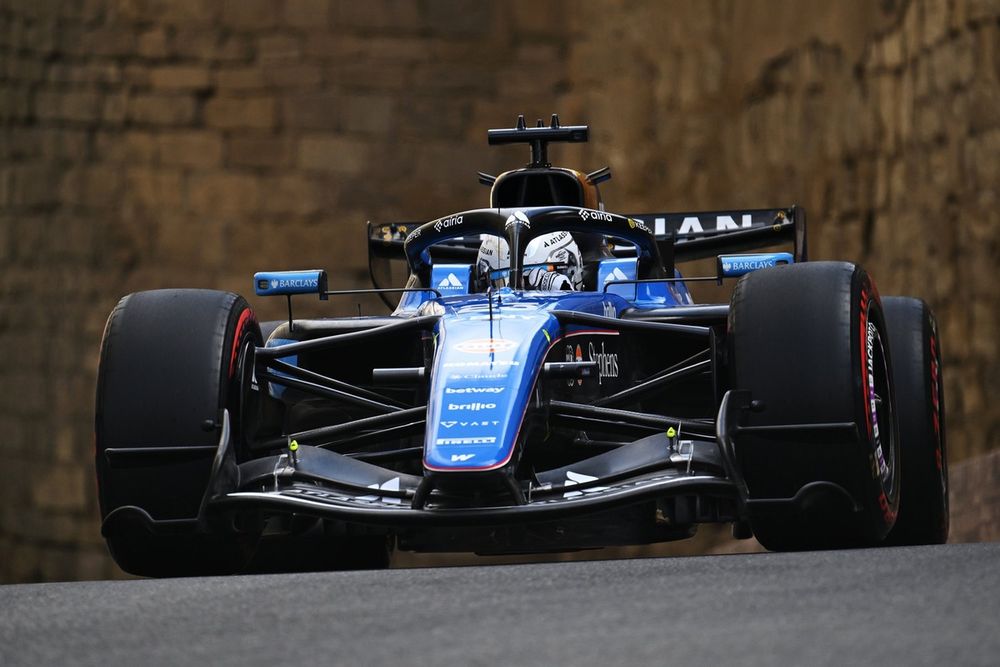
Alexander Albon, Williams
Photo by: Sam Bagnall / Sutton Images via Getty Images
“The car feels relatively similar, but instead of the team telling you you’re P18, P19, you’re a few more spots ahead,” Albon said after qualifying in 13th, which he blamed on being “just slow on the straights”, an issue he was at a loss to explain.
“What will be interesting to us is, in my opinion, this track is the best track for our car of the season. It just suits the track. I want to see in Malaysia and Singapore – longer corners, corners that we don’t normally like – how it goes.”
“Honestly the car hasn’t changed in feel, it’s just quicker,” Sainz added. “We have underlying balance [issues] that we need to work on for next year’s car, that will not go away until we redesign the car. So we’re just working with a car that, both Alex and I, we are not loving so far.
“But it is quicker because it’s lighter, it also has a bit more load and it is allowing us to maybe show a bit more. So let’s see; we need Malaysia for you guys to see where realistically we are. I think in Malaysia we’ll take a step back.”
Amid a tough campaign for Williams, which hasn’t scored any points since Monaco, Albon hailed the team’s effort – “That’s normally a big project, a six-month project for most teams,” he said of the new chassis – and rejoiced that this would open the door to more aero-focused work on the upcoming 2027 car.
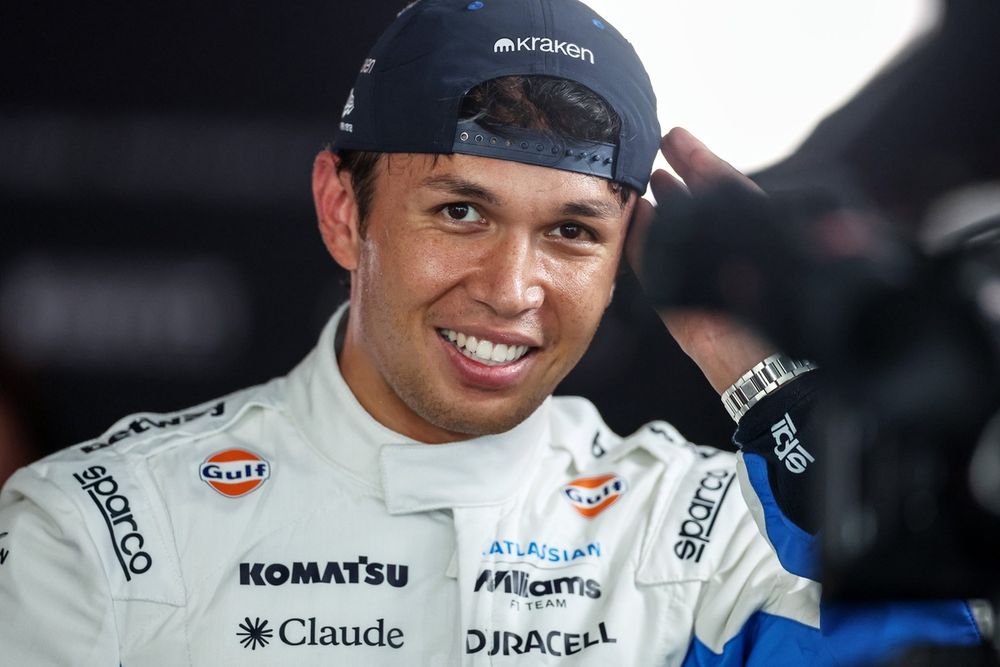
Alexander Albon, Williams
Photo by: Alastair Staley / LAT Images via Getty Images
“I’m glad that we’ve got the foundations now, where we’re not just talking about weight the whole time,” he said, “and now every upgrade that comes onto the car is not a mixture of weight and aero, it will just be aero, which is what we need going forward into next year.”
So is this quite a confidence boost, Motorsport.com inquired?
“Yes,” Albon pondered. “We knew exactly what it would deliver, and it’s delivered, so it’s not like we’re jumping up and down and being like, ‘Yes, we’re back’. It’s more like we’ve hit our targets, which in itself is important to do.
“I’m glad that we’ve got a car now that we can hopefully challenge the midfield at tracks that suit us. We still need big aero upgrades, and that will likely come more towards next year’s car.”
Additional reporting by Ronald Vording