



Where’s the Hype For America250?
We’re not the nation we were just 50 years ago.

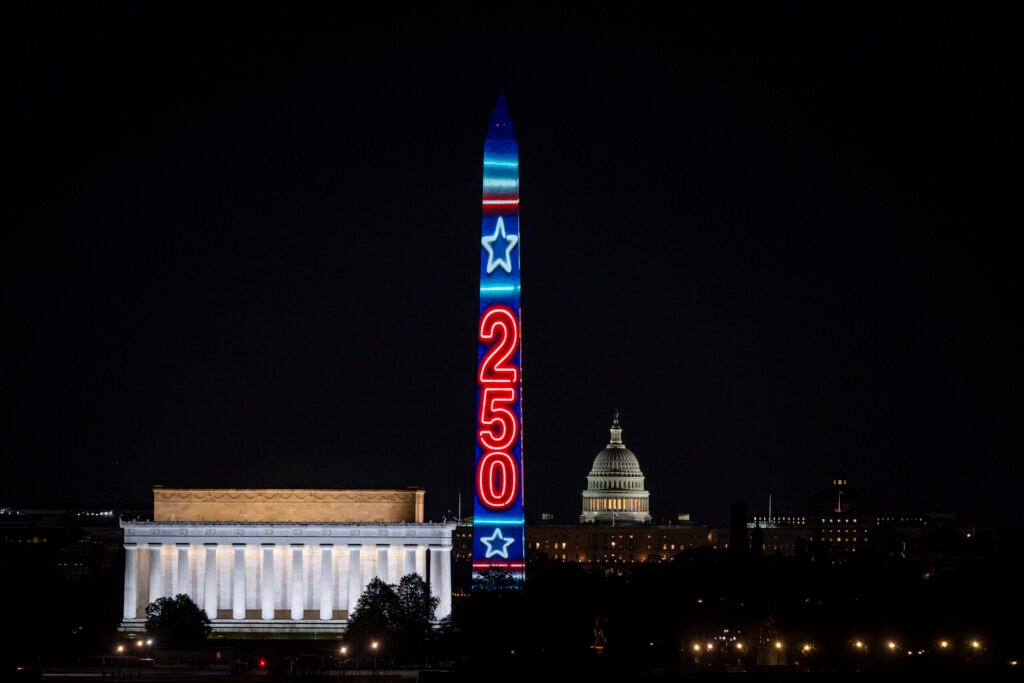
America has a big birthday this summer, but the nation doesn’t seem that hyped for it. The Bicentennial 50 years ago was a huge event, with TV networks running specials to honor the occasion and small towns across the country organizing massive spectacles. One had to live under a rock to not notice it. But times have changed.
That’s not to say there’s nothing planned for the Semiquincentennial. Boston and a few other cities have notable events planned for the week leading up to July 4th. The Trump administration has a UFC fight and an IndyCar race planned for this summer to celebrate America250.
But it all seems to not register much with the public.
So why isn’t America that thrilled with celebrating itself?
On X, I was given a range of very angry responses to this inquiry. The most popular: America refuses to celebrate its big birthday because everyone hates Trump or half the country hates America for either woke or right-wing reasons. Others blamed the poor economy for why they’re not feeling super patriotic.
None of these really explain the lack of enthusiasm, especially considering the time when America celebrated the Bicentennial. Our economy was terrible, crime was rising to unbearable proportions, Americans were cynical about politics following Watergate, President Gerald Ford generated little enthusiasm, and the country was still reeling from the end of the Vietnam War and the political upheaval of the ‘60s. It was a grim era for America, and yet people still went all out to celebrate their nation.
There are two sets of reasons for the lack of enthusiasm. One relates to the immediate cause of poor planning. The second deals with deeper, long-term issues with the country.
Rosie Rios, chair of America250, the main committee responsible for celebrating the holiday, was appointed by the Biden administration. The committee has done a bad job of getting Americans pumped for the occasion, with few events and paltry promotion. The Trump administration formed its own committee, Freedom250, to do different events. That group put on this month’s prayer event in DC and plans to host the UFC fight on the White House lawn, the Great American State Fair in DC, a celebration on the Fourth, and the IndyCar race in August. This committee also backs patriotic educational assemblies at schools across the country. Freedom250 at least tried to put on events Americans would care about. America250 dropped the ball. If Kamala Harris had won, it’s possible America would be even less aware that we have an important birthday this summer.
But the lack of enthusiasm isn’t entirely the fault of the federal government. After all, the hoopla around the Bicentennial wasn’t the work of the federal government alone. State and local governments pitched in, as did private citizens and businesses.
Major social changes account for this missing factor today.
In the 1970s, we had a monoculture. Most of the country watched the same TV channels, read the same newspapers, listened to the same radio stations, etc. It was easy to promote a big event like the Bicentennial to the public. All it took was advertising in the places Americans watched and read. The infinite entertainment options available now have eroded that monoculture. With the exception of the Super Bowl, it’s hard to think of a shared cultural event for the nation. And even the Super Bowl now has dueling halftime shows.
There’s also the “Bowling Alone” effect. We’re less involved in our communities, spend far more time alone, and lack the public spiritedness to put together events. July 4th parades were once a trademark of Americana. But they’re in decline. Last year, fewer Americans even did cookouts for the holiday. When Americans don’t interact with those around them and seclude themselves in their own private spaces, there’s less push to make a spectacle of Independence Day. Atomization makes it harder to bring the community together.
Patriotism, overall, is in decline. A 2025 Gallup poll found less than 60 percent of Americans say they are extremely or very proud to be American. From 2001 to 2016, that figure remained above 80 percent. It began to drop during Trump’s first term and has trickled further down ever since. Declining patriotism is most pronounced on the Left and among the young. Only 36 percent of Democrats and just 41 percent of Zoomers express high levels of pride in their country. A 2025 YouGov poll found less than half of Americans are “very proud” of their country, with similar low levels of patriotism among the youth and Democrats.
Americans are still patriotic, at least relative to the rest of the world. But the drop is noticeable and likely contributes to the lack of interest in the Semiquincentennial. The record number of foreign-born living in America, many who lack any deep attachment to this country, is a probable factor. But there are plenty of native-born Americans who no longer feel pride in seeing the Stars and Stripes.
That’s a testament to the left’s triumph over how we think of U.S. history. Just three percent of Americans mention our nation’s history when listing reasons they are proud of the country. That may not be surprising when we see how our history is taught. Howard Zinn and the 1619 Project encouraged Americans to see our history as a shameful chronicle of racism, genocide, slavery, and capitalistic exploitation. The left took this history to heart, which explains their lack of patriotism. But it’s also seeped into the youth. This is the picture they learned of the country in high school and college. We see the fruits of this worldview in the decline of pride.
America will still celebrate our 250th anniversary, but the festivities will underwhelm. We’re no longer the country we were in 1976, when we could still plan a birthday for our nation and together make a big show of it. Those days are gone. The most we can offer is the UFC fight and the rest of the Freedom250 schedule. It’s better than nothing.
The post Where’s the Hype For America250? appeared first on The American Conservative.