Skip to content








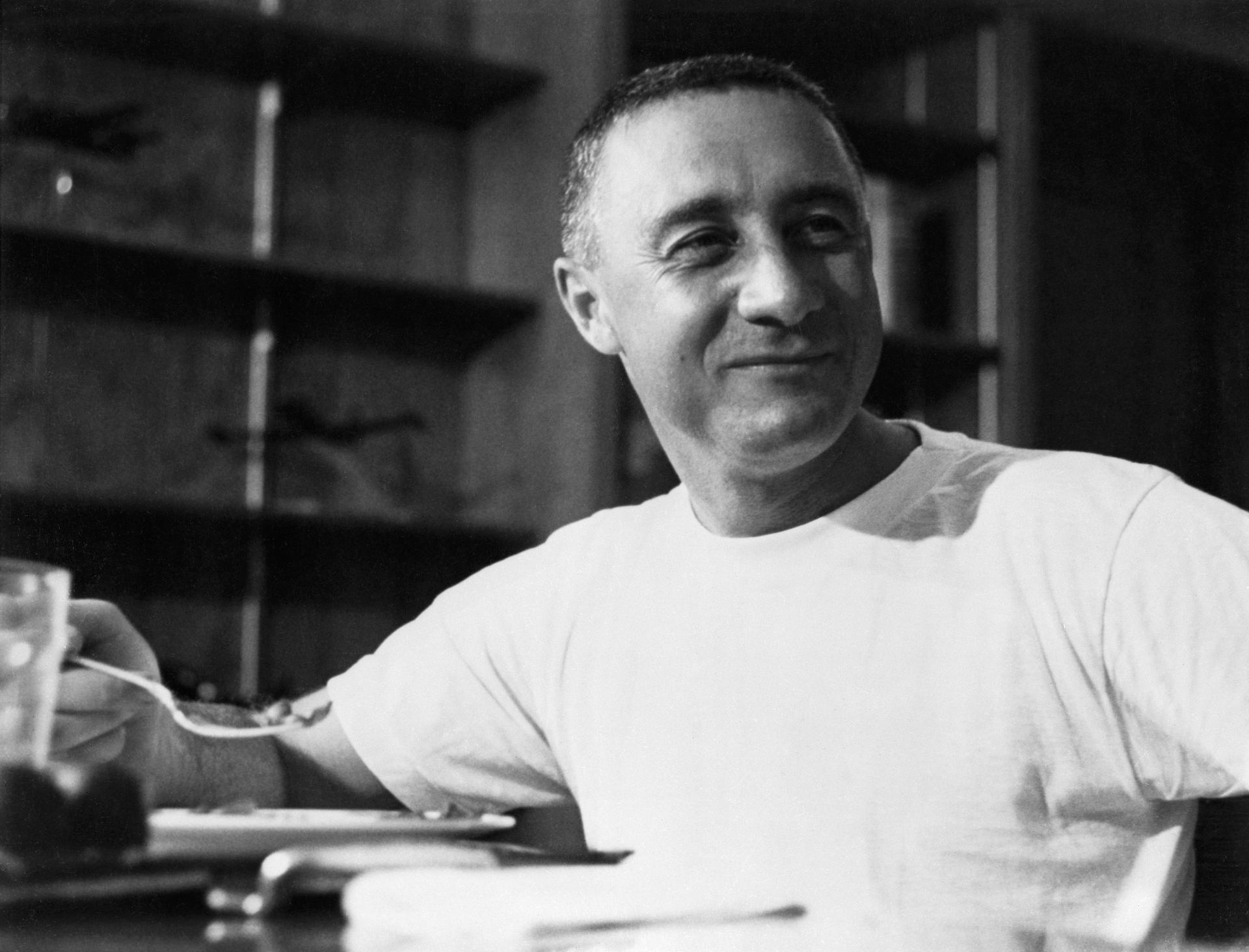
Today marks the 100th anniversary of the birth of Virgil I. “Gus” Grissom, born April 3, 1926, in Mitchell, Indiana. As one of NASA’s first seven astronauts, he became America’s second astronaut to fly in space when he launched aboard the Liberty Bell 7 spacecraft on July 21, 1961, just weeks after Alan Shepard’s historic first Project Mercury spaceflight.
In this photo, Grissom is seen enjoying a meal aboard the recovery ship, USS Randolph, following his 15-minute suborbital mission. Although the flight itself was smooth, the situation turned dangerous after splashdown when the capsule’s hatch blew prematurely and the spacecraft began flooding with water. Grissom escaped, but his spacesuit also filled with water as the recovery helicopters attempted to save his sinking spacecraft. He was successfully rescued, but the Liberty Bell 7 sank to the ocean floor.
Grissom made history again in March 1965 as the first NASA astronaut to fly in space twice, serving as commander of Gemini III, the first crewed Gemini mission, alongside John Young. Reflecting on this test flight, he wrote, “To our intense satisfaction we were able to carry out these maneuvers almost exactly as planned… The longer we flew, the more jubilant we felt. We had a really fine spacecraft, one we could be proud of in every respect.”
One year later, in March 1966, NASA announced that Grissom had been selected to command the first Apollo mission, with crewmates Edward White and Roger Chaffee. On January 27, 1967, tragedy struck during a preflight test at Cape Kennedy when fire swept through the command module. Grissom, White, and Chaffee lost their lives in an accident that stunned the nation and shook NASA to its core.
Just weeks before the tragedy, Grissom wrote: “There will be risks, as there are in any experimental program, and sooner or later, we’re going to run head-on into the law of averages and lose somebody. I hope this never happens, and… perhaps it never will, but if it does, I hope the American people won’t think it’s too high a price to pay for our space program.”