





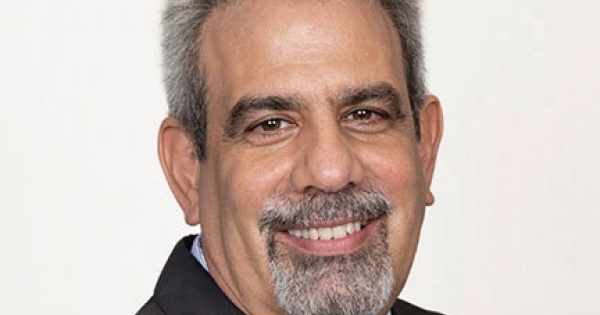
Kamil Al-Awadhi occupies one of aviation’s most consequential intermediary positions. As the International Air Transport Association’s regional vice president for Africa and the Middle East, he represents airlines across a region of global hubs, fast-growing markets and persistent structural constraints. His task is not to run a carrier but to improve the conditions in which many carriers operate, making the case for regulation, infrastructure and charges that support safe, competitive connectivity.
He took up the role in 2021 after more than three decades in aviation. Most notably, he served as chief executive of Kuwait Airways, giving him first-hand experience of the financial, political and operational pressures faced by a national airline. Earlier responsibilities spanned safety, security, quality management and enterprise systems. His academic grounding, including engineering studies in aircraft maintenance management and an MBA in aerospace management from Toulouse, reinforces a career built across both the technical and commercial sides of the business.
That breadth shapes his agenda at IATA. Africa and the Middle East cannot be treated as one uniform aviation market. Gulf hubs possess world-class infrastructure and powerful network airlines. Parts of Africa still contend with high taxes, weak connectivity, blocked airline funds, uneven safety outcomes and limited implementation of liberalization commitments. Al-Awadhi’s value lies in moving between those realities without reducing either to slogans.
His public priorities have consistently included safety, connectivity, sustainability and cost competitiveness. Each is interdependent. Better airspace management reduces delay, fuel burn and emissions. Rational airport and government charges make marginal routes more viable. Common standards and effective regulation build confidence. The liberalization of African air transport can widen opportunity, but only if governments translate agreements into permissions, infrastructure and predictable rules.
Al-Awadhi also serves as a translator between airlines and states. Governments understandably see aviation as a source of revenue, strategic influence and national pride. Airlines see a thin-margin system in which poorly designed fees or fragmented regulation can erase route economics. Because he has led an airline, his advocacy carries operational credibility. He can explain not only that a policy is burdensome, but how it changes schedules, fleet deployment, ticket prices and investment decisions.
The sustainability challenge makes that dialogue more urgent. The region is expanding capacity while the global industry pursues net-zero carbon emissions by 2050. Sustainable aviation fuel, more efficient aircraft, air traffic modernization and credible carbon frameworks will require cooperation far beyond individual carriers. IATA’s regional office must keep ambitious policy connected to technological and commercial reality. Al-Awadhi’s engineering and management background is particularly relevant here.
His leadership is best understood as enabling rather than theatrical. When industry representation works, passengers rarely see it. They experience safer operations, more direct routes, fewer regulatory frictions and prices that reflect genuine cost rather than avoidable inefficiency. Al-Awadhi has made those underlying systems his field of influence. In a region where aviation is both infrastructure and economic strategy, that quiet work helps determine how widely the benefits of growth are shared.
One persistent issue illustrates the value of his approach: blocked airline funds in markets where carriers cannot repatriate ticket revenues. To a government this can appear as a foreign-exchange measure; to an airline it becomes trapped working capital and a reason to reduce capacity. IATA’s role is to quantify the consequences, maintain dialogue and help authorities find orderly solutions. Al-Awadhi can frame the matter through the practical decisions an airline chief executive must make, not only through institutional principle.
He must also hold together members with different interests. A Gulf network carrier, an African start-up and a European airline serving the region will not agree on every policy. Credible representation depends on identifying common ground while speaking honestly about uneven performance within the industry itself. Al-Awadhi’s mandate is strongest when advocacy is paired with accountability on safety, consumer confidence and climate. That balance turns IATA from a lobbying voice into a partner governments can use.
ADVERTISEMENT