



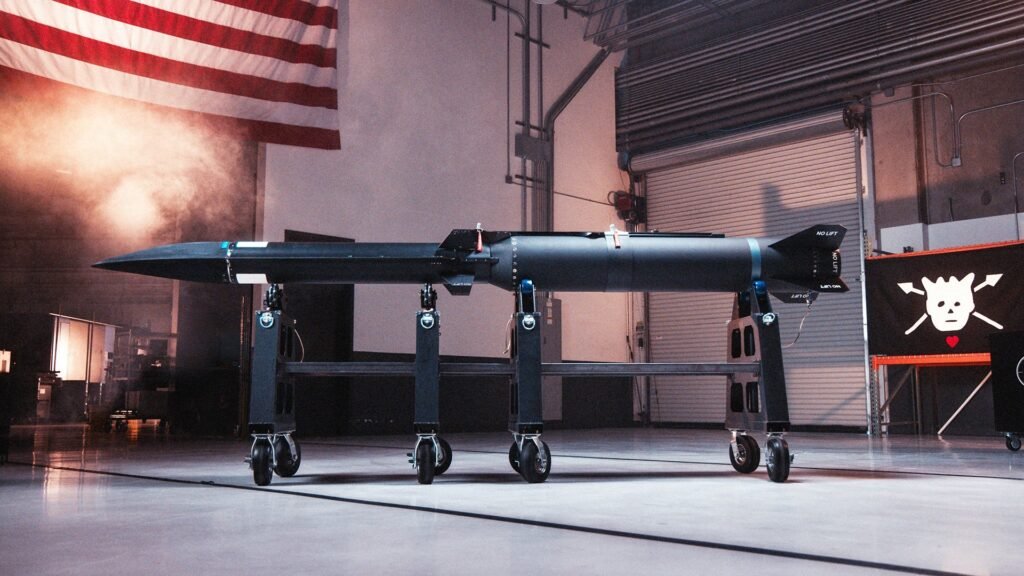
Castelion, a startup begun by former SpaceX employees, has provided the first view of its Blackbeard hypersonic weapon. The first look at what has been billed as a lower-cost missile comes as the company announces that it has secured $1 billion in new financing, which it says will help get its first hypersonic weapon into production as part of its ambitious manufacturing strategy. While hypersonic weapons have very attractive qualities, they are extremely expensive and that cost will likely keep them from being bought in large quantities or used against wider target sets. Castelion is focused on trying to shift that, building hypersonic capabilies that can be bought in large quantities and used more freely, even if they have reduced performance.
Blackbeard Unveiled
pic.twitter.com/MXX1uMO0P8
— Castelion (@Castelion) August 20, 2026
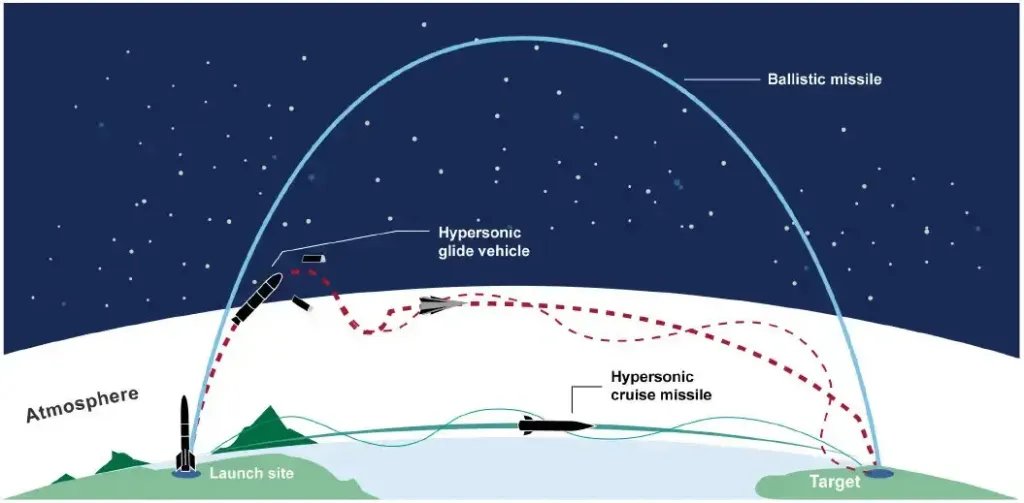
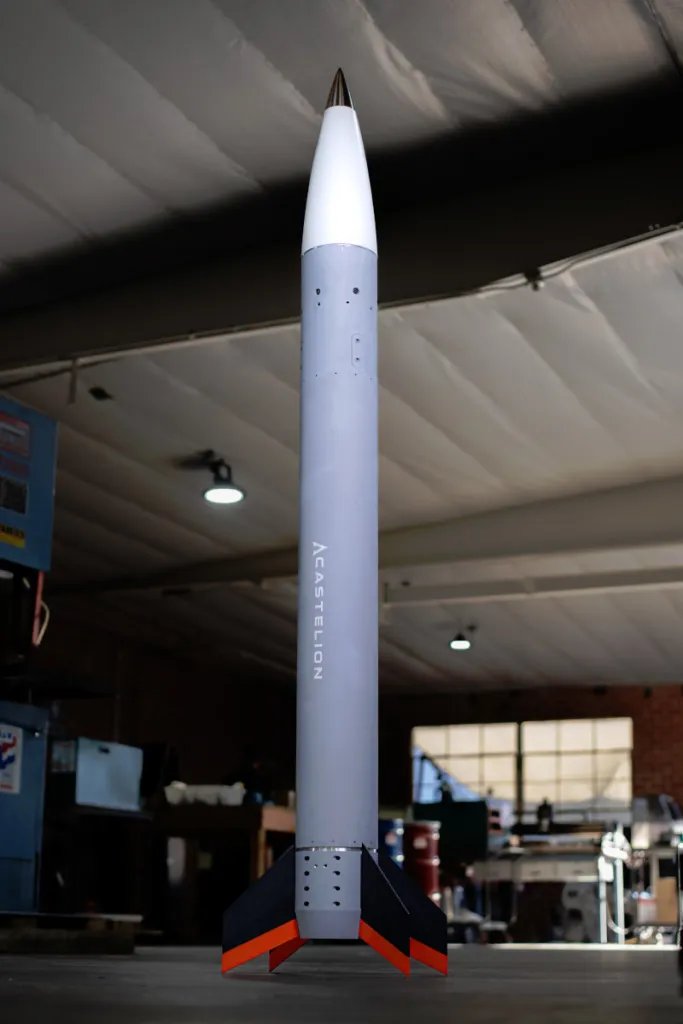
A profile photo at the company’s headquarters reveals a weapon with a ballistic missile-like booster, on top of which is mounted an unpowered hypersonic glide vehicle (HGV). The booster brings the HGV to the desired velocity and altitude before releasing it toward its target. The concept is in contrast to air-breathing cruise missiles capable of traveling at hypersonic speeds. Hypersonic speed is generally defined as anything above Mach 5, which larger ballistic missiles also reach in the course of their flights. More precise performance figures for Blackbeard are lacking, but Castelion has previously hinted it could hit targets out to just under 500 miles.
Both stages of the weapon have cruciform fins, while the HGV features a prominent ‘chine’ line along the length of it body, and a slightly beaklike nose. The trolley on which the weapon is mounted provides some idea of its overall size. The blue stripes seen on each stage normally signify that a munition is an inert, non-explosive round utilized for training or tracking purposes. This would indicate real (unarmed) missile rather than a dummy or mockup.
The company has previously said that it was aiming to have a more finalized Blackbeard design by 2027, so there is still potential for more design changes to come. We have reached out to Castelion for more information.
Castelion has previouly released images of various missiles with very different, far more simple designs, which it has said “are representative of the low-cost internally developed test vehicles we use to enable rapid subsystem design iteration and to ground our performance models in real-world test data.”
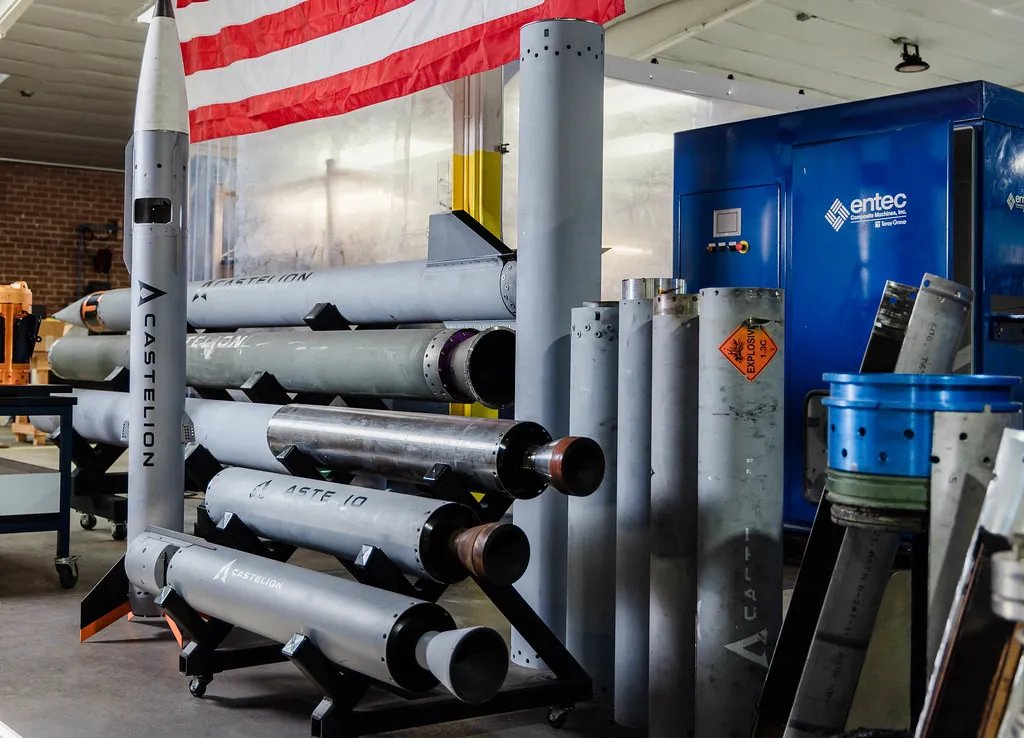
Some of these earlier experimental configurations also look to feature tail sections that are at least heavily inspired by, if not lifted directly from Standard-series surface-to-air missiles as used by the U.S. Navy and other navies globally.
Castelion yesterday also announced it had received Series C financing, comprising $800 million in equity financing and $250 million in committed financing. The equity round values Castelion at approximately $13 billion.
The company says it will use the funds as it transitions from development and flight testing toward producing Blackbeard in significant quantities.
Castelion claims the weapon is the first hypersonic strike system to be designed from the outset to be substantially less expensive and easier to manufacture at scale than traditional high-end missile systems.
“Deterrence depends on unapologetic American strength; highly capable weapon systems that adversaries fear produced in quantities they can’t imagine at a price taxpayers can afford,” Castelion CEO and co-founder Bryon Hargis said.
The company says Blackbeard has gone from a clean-sheet design to a program of record in less than four years, with fielding targeted for 2027. Castelion has also secured more than $500 million in U.S. military contracts over the past 18 months.
A major part of the company’s strategy is its Project Ranger campus in Sandoval County, New Mexico. Castelion describes the roughly 1,000-acre facility as the largest dedicated hypersonic missile manufacturing site in the United States. The company previously committed more than $250 million of its own capital to infrastructure at the site and says it will now invest hundreds of millions of dollars more to expand production capacity.
That emphasis on manufacturing is central to how Castelion distinguishes Blackbeard from many existing hypersonic programs. The company has designed the weapon and its production processes around the expectation that large numbers will eventually be required.
“There’s a manufacturing renaissance underway and this round turbocharges American production of Blackbeard,” Hargis said. “Designed in California, built in New Mexico, supplied from small and large businesses across the United States; Blackbeard is an example of what America can do when private capital and Government work together.”
In May of this year, the Pentagon outlined plans to acquire at least 10,000 Blackbeard missiles, as well as a similar number of lower-cost cruise missiles, over the next three years.
These framework agreements are part of a larger effort to rapidly expand U.S. reserves of long-range, standoff weapons and, at the same time, strengthen the defense-industrial base so manufacturers can keep producing those weapons at a high rate over the long term.
The U.S. Army has made clear it is interested in employing Blackbeard in a ground-launched mode, as you can read more about here. Army budget documents confirm it is pursuing Blackbeard aggressively, but through a phased approach that offers multiple off-ramps. The service has previously talked of firing Blackbeard from new uncrewed launcher vehicles, as well from existing M142 High Mobility Artillery Rocket System (HIMARS) launchers. How many Blackbeard missiles are compatible with each of these launch systems is unclear.
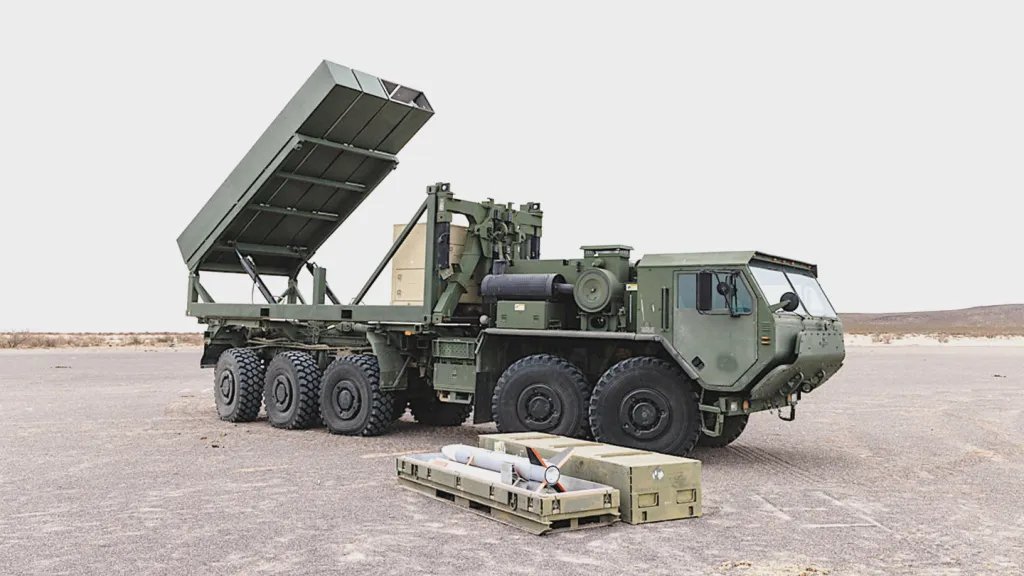
“The mission of Blackbeard Ground Launch (GL) is to attack/neutralize/suppress/destroy using hypersonic missile delivered precision fires (seeker based) against time sensitive moving targets and hardened targets at a much-reduced cost per missile than currently exists in the Army inventory,” the Army stated in its proposed budget for the 2026 Fiscal Year. “Blackbeard Ground Launch (GL) is an affordable, mass-produced hypersonic weapon designed for mid-range precision. The Army will leverage advancements in technology, materials, and cost-effective production methods to provide superior capabilities through fast, iterative design cycles, flexible hardware development, and modern manufacturing practices.”
Meanwhile, earlier this year, Castelion announced receipt of a contract from the Navy to integrate Blackbeard onto the F/A-18E/F Super Hornet carrier strike fighter and transition the system to an early operational capability in 2027. The will involve extensive system safety and certification testing, flight testing, and other integration activities related to carrier-based operations. This development may well be connected with halting plans for an air-launched, air-breathing hypersonic anti-ship cruise missile. A version of Blackbeard could also find its way onto Navy ships and submarines, as well as ground-based launchers, as we have discussed in the past.
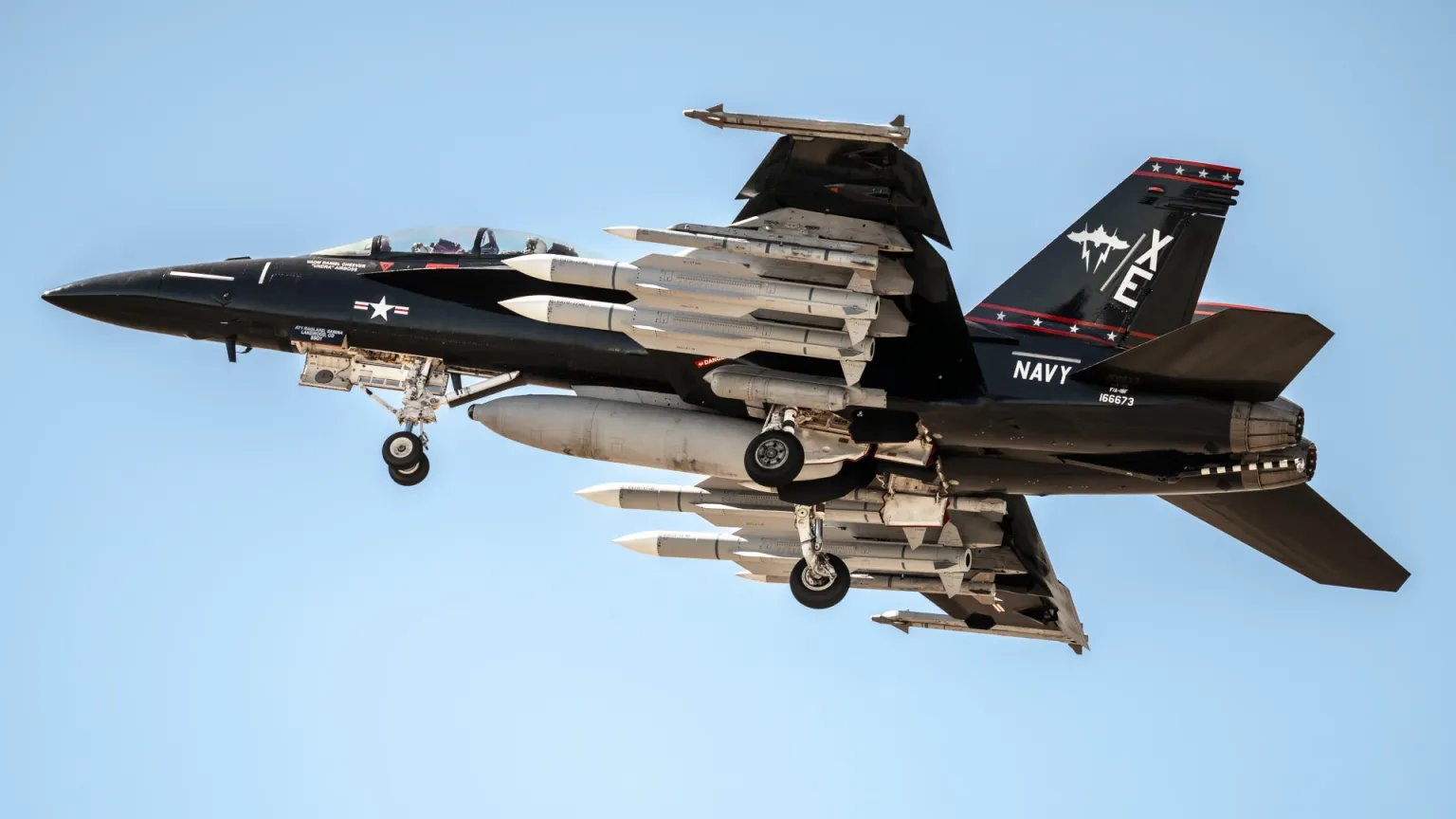
In fact, the Army has also said that the ground-launched version of the weapon that it expects to receive will leverage an “existing air-launched, extended-range Blackbeard design,” without providing more information.
The U.S. Air Force has also awarded Castelion contracts in the past in relation to long-range strike weapon concepts, and TWZ has previously reached out to that service for more information.
Regardless, Castelion’s ambitions extend beyond Blackbeard. The company says it has been developing a much longer-range precision strike weapon for several years and will now accelerate its development and testing. That system is intended to reuse technologies, components, and manufacturing techniques developed for Blackbeard.
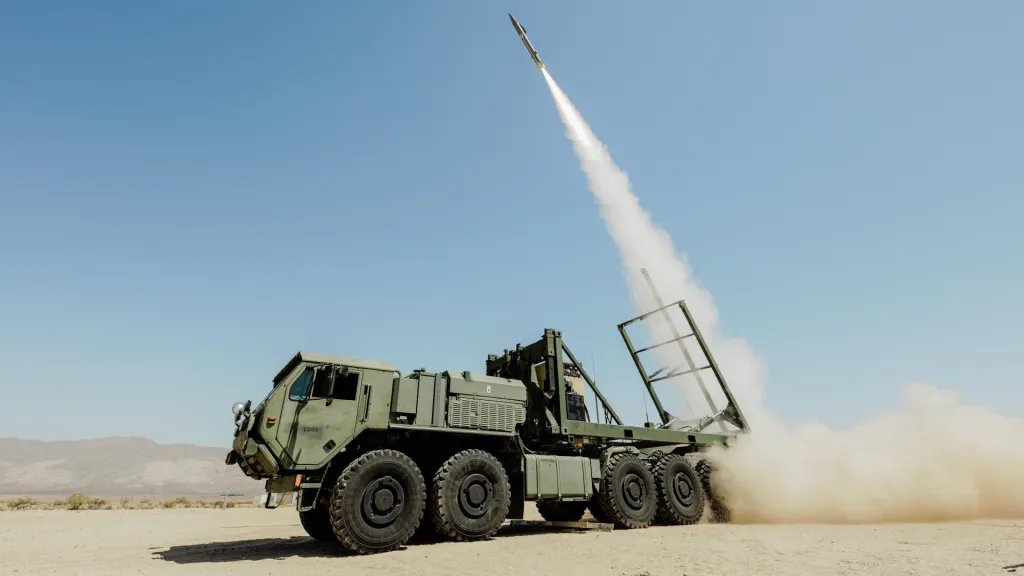
With a huge demand signal from the Pentagon, Castelion is also working on defensive systems based on the same development and manufacturing philosophy. The company says those efforts are focused on lowering costs, increasing production rates, and providing greater magazine depth for air and missile defense.
The strategy responds to the fact that the U.S. military’s growing interest in hypersonic weapons has been accompanied by persistent questions about production capacity and cost. Hypersonic systems are technically demanding, but the ability to manufacture them in meaningful numbers is ultimately just as important as demonstrating that an individual weapon can fly.
Castelion is betting that a different approach to development and manufacturing can change that equation.
“Castelion is at the forefront of defense manufacturing in the nation,” said Tom Ochinero, chairman and founding partner of Interlagos Capital, which provided some of the equity financing. “They’re building the capabilities to produce thousands of hypersonic weapons a year, something the U.S. has never seen before.”
This reflects a steadily growing U.S. military-wide push toward lower-cost precision munitions that are relatively simple to manufacture, while also drawing on non-traditional defense contractors to develop and produce them. Such efforts are widely viewed as essential to building up stockpiles in an economically sustainable manner ahead of a major contingency, such as a large-scale conflict in the Pacific with China, and ensuring a steady supply of weapons throughout a prolonged war.
The next test of this model will be whether Castelion can translate its relatively rapid development timeline into sustained production at the scale it is promising. With Blackbeard targeted for fielding in 2027 and a new generation of longer-range and defensive systems already in development, the company is positioning itself as much as a defense manufacturer as a missile developer, but this remains very much an unproven concept in this notoriously tricky area.
The new view of Blackbeard at Castelion’s headquarters offers a glimpse of the hardware at the center of that effort.
Contact the author: thomas@thewarzone.com
The post This Is The New Blackbeard ‘Cheap’ Hypersonic Weapon appeared first on TWZ.