Skip to content







The UK Biomess
Wishcasting is not a viable energy policy.
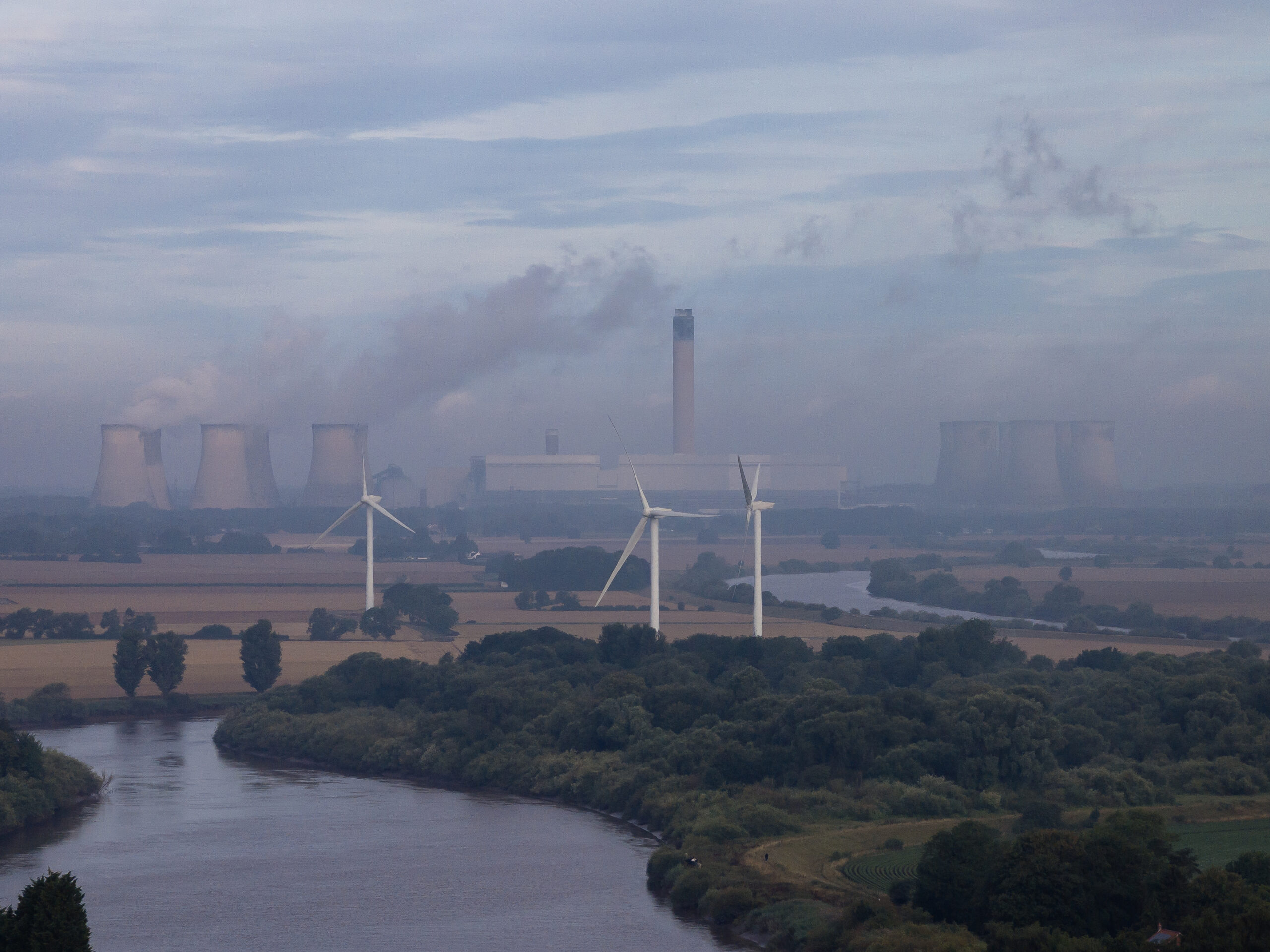
“The emission factor for biomass shall be zero.” Thus spoke the EU, in its Emissions Trading System Directive, the cap-and-trade law that went into effect in 2005. And zero it has been for the purposes of energy and climate policy, net-zero accounting, and ascertaining whether a power producer qualifies for “renewables” subsidies.
But thermodynamics, chemistry, planetary physics, and other stubborn corners of reality are subject neither to repeal nor to gaming, not even by Brussels. And one of those stubborn corners is in North Yorkshire, England, site of the 2.6 gigawatt Drax Power Station, a biomass (primarily wood-burning) facility that for 10 straight years has been the UK’s number-one emitter of CO2, while receiving an average of £766 million per year (more than £2 million per day) in public subsidies for being “green” (post-Brexit UK having taken with it the EU’s fanciful way of making certain emissions disappear from the public record, if not from the atmosphere).
But Drax hasn’t simply been the largest emitter. It has been so by a significant factor. In 2024, its CO2 emissions exceeded those of the next four largest emitters combined, those four being two steelworks, a refinery, and a combined-cycle gas power plant that is the largest of its kind in the UK and the second largest in all of Europe. In fact, Drax’s 2024 emissions (13.3 million tons’ worth of CO2 equivalent) exceeded those of the six most-emitting natural-gas plants put together. And the installed capacity of those six gas plants adds up to roughly 8.4 gigawatts, 3.25 times that of Drax. Taking installed capacity as the point of comparison, this means that Drax vis-à-vis those gas plants is generating less than a third the electricity per ton of CO2 equivalent emitted.
Nevertheless, installed capacity doesn’t indicate the amount of energy a power source actually produces, which can vary for multiple reasons. Solar, for instance, generates electricity only a quarter of the time on average, since night makes up half of the diurnal cycle and since half of the daytime hours over the course of a typical year are affected to some degree by cloud cover. So solar has what is called a “capacity factor” of 25 percent. This means, for instance, that 8 megawatts of installed solar will yield only 2 megawatts of electricity production over the course of an average year (some days more, some days less, some days barely any at all). With onshore wind, you get a capacity factor of roughly 34 percent, about a third of your installed capacity over the course of the average year (again, some days more, some days less, some days not at all, depending on whether and how much the wind is blowing). The capacity factor of nuclear, by comparison, is above 90 percent, because nuclear is what’s called a dispatchable power source, generating electricity on demand, day or night, winter or summer, and regardless of weather conditions. Its only downtime is generally related to routine maintenance. All of which is to say that talk of installed capacity can be—and sometimes is—rhetorically misleading. And at any rate, the examples in this paragraph all involve emissions-free sources of electricity production.
Where fuel-based production and emissions are concerned, it’s most accurate to compare not installed capacity or even capacity factors but, rather, emissions per unit of energy produced. (This is partly because the capacity factors of such power plants can be significantly influenced not by physical limitations, as with wind and solar, but by policymaker discretion—i.e., how much or how little those policymakers want to use this or that type of power source.) As noted, in 2024 the Drax biomass plant emitted 13.3 million tons of CO2 equivalent, while producing 14.6 terawatt hours of energy. By comparison, in 2022 the Pembroke Power Station, a 2.2 gigawatt combined-cycle natural-gas plant in Wales, emitted 5.3 million tons of CO2 equivalent while producing 15.3 TWh. This means Drax emitted nearly a million tons of CO2 per TWh, whereas Pembroke emitted slightly more than a third of a million per TWh.
These differences are mostly owing, again, to stubborn thermodynamics, chemistry, and the like. Natural gas has an energy density (55 megajoules per kilogram) far greater than that of wood pellets (17.3 MJ/kg) and even torrefied—i.e., roasted—wood pellets (23 MJ/kg). In fact, where the energy density of fuel sources is concerned, natural gas is bested only by hydrogen (142 MJ/kg) and fissile uranium (79 million MJ/kg). Unfortunately, hydrogen has thus far proved very difficult—and therefore uneconomical—to extract, transport, store, and use at scale, and nuclear energy has many opponents, despite its exponential and emissions-free power potential.
Where energy density and impurities are concerned, biomass is down there with coal. Wood pellets are a bit better than lignite, the soft, “dirty” brown coal that has a high moisture content. Torrefied wood pellets are in the ballpark of bituminous coal. And both kinds of pellets are well worse than anthracite, the “black,” cleaner-burning coal. As a consequence, biomass emissions are worse than those associated with burning both gas and coal. According to the Partnership for Policy Integrity, biomass power plants emit 1.5 times the CO2 of coal-fired plants and three to four times that of natural-gas plants per unit of energy produced.
So how is it that a biomass plant like Drax can belch carbon emissions to dwarf those of steelworks and refineries while having its emissions erased from cap-and-trade calculations and while also qualifying for hundreds of millions of pounds per year in “renewables” subsidies? First, for the record, wood of course is renewable, like dung, another premodern fuel source that burns dirty. But the belief that burning biomass can in fact be carbon neutral rests on a simple logic—which is to say an oversimplified logic, one that is certainly at odds with the doom-laden rhetoric that has long surrounded talk of carbon emissions.
The idea is that all the CO2 released in the incineration of a tree’s worth of biomass will be “resequestered” by the growing tree that has been planted to take its place, and—what’s more—that the CO2 being released was itself recently sequestered, so its return to the atmosphere even at such volumes is not excessive in the way that smaller volumes of fossil-fuel emissions would be. It’s a perfect bit of yin-yang harmony. Yet incinerating that tree’s worth of biomass is a matter of seconds, or at most minutes, in a 2.6 gigawatt facility, whereas it takes decades for the average tree to grow to maturity, or even just to the height at which it too is cut and fed to the boiler. So you end up with large amounts of CO2 being released rapidly and then only slowly, on a multidecadal scale, being resequestered. Even assuming this resequestration will truly happen—after some future date when biomass burning is phased out and new trees begin reabsorbing, over decades, all the excess CO2 previously spewed into the environment in the name of harmony—do we really have the time to spare?
The rhetoric of climate alarm, ripe with warnings of imminent tipping points being reached without the immediate and significant reduction of CO2 emissions, would seem to argue against the wisdom of intensifying the release of CO2 as part of a spew-now-resequester-later scheme—even one that, through the magic of bureaucratic fiat, is deemed green. CO2 is CO2, whether it comes from an SUV or an incinerated spruce, and whether it was sequestered in recent decades or not. And if CO2 is the problem, Mother Earth, on the brink of her tipping point, will find biomass emissions no more congenial than those of anything else. The yin-yang promise that things will start righting themselves later, decades hence, seems dubious in the context of constant warnings that humanity—any day now—will functionally run out of “later.” One is forced to ask, Which is it: no tomorrow, or time and emissions to spare?
We must assume it’s the latter if we’re to retain any faith in Brussels and in those who, like UK policymakers, take their guidance from it on these issues. But even then we run into another stubborn corner of reality: math. Cap-and-trade being an economic scheme, and the biomass carbon-neutrality exclusion being predicated on the idea of investing in future resequestration, it’d be nice if the numbers at least made sense in their own investment terms. But they don’t.
Taking it on faith that the saplings of the future will, on a one-to-one basis, be able to resequester the CO2 emitted from the burning of individual trees today, what of the excess emissions that result from the burning of biomass instead of, say, natural gas? Again, per unit of energy produced, biomass emits three to four times the CO2 that natural gas does, an opportunity cost or inflationary element that makes recovering your measure of emissions decades from now akin to getting back pence on the pound, assuming your goal is really to reduce CO2 concentrations overall (or at least not add to them gratuitously). At best, in the manner of digging a hole only to fill it in, you can hope to get today’s pound back decades later. No loss, no earnings. Nothing accomplished. Trees harvested, trees burned, trees planted to be harvested and burned anew, all to achieve nothing in the way of changing overall CO2 concentrations. You’re right back where you were decades prior. This gives a different and unflattering meaning to the phrase carbon neutrality.
Would it not make more sense—mathematically as well as environmentally—to burn a cleaner fuel and maybe plant some trees? You’d be putting significantly less CO2 into the atmosphere than you are by burning biomass (both per unit of energy produced and in absolute terms), and you’d also be starting the process of taking excess CO2—not just what you’re putting in now—out of the atmosphere through means of forestation. In a sense, you’d be earning interest, actually accomplishing something, making progress toward mitigating an environmental problem. But to do so one would have to get over the reflexive binary that says fossil fuels are only ever environmentally bad and biofuels only ever better. The energy stored eons ago in natural gas burns cleaner and more efficiently than the energy stored lately in trees. To burn the latter at scale anyway, emitting three to four times the CO2 in the process while subsidizing the effort as something green, is to dirty up the atmosphere in the name of cleaning it. It doesn’t seem to make a bit of environmental sense.
But perhaps there’s a strategic reason to burn biomass—something to do with energy security, self-sufficiency, and a decreased reliance on imports. As of 2024, for instance, 12 percent of Finland’s electricity sector was powered by biofuels (same as the UK’s), which makes sense in a heavily forested country. And to whatever extent Finland cares about emissions (whether the real and therefore pernicious ones or the ones the EU nullifies by fiat and then perversely incentivizes, which in the case of biomass are one and the same), it’s notable that more than 80 percent of Finland’s electricity sector that year was both emissions-free and locally sourced: 39 percent nuclear (recently expanded), 25 percent wind, and 17 percent hydro. And of that, the bulk of it (the nuclear and hydro) was dispatchable. Given this, it’s not surprising to learn that electricity production in Finland grew 19 percent from 2020 to 2024, and its electricity imports dropped 29 percent in that same period, to a paltry 4 percent. That’s energy security and self-reliance.
In the UK, we find a different story playing out. Although natural gas, in 2024, still accounted for 37 percent of the country’s energy supply and 30 percent of its electricity generation, domestic natural-gas production dropped 73 percent from 2020 to 2024, with half the gas used in the UK being imported as of 2024. Gas’s contribution to electricity production dropped more than 20 percent in that time, and nuclear’s dropped nearly as much—output from both, it should be said, decreased in absolute as well as relative terms. Wind output grew by about 10 percent, but coincidental with all of this—and hardly surprising—there was a 24 percent drop in electricity production and a 206 percent increase in electricity imports from 2020 to 2024, with imports topping 12 percent of the electricity consumed in the UK in 2024.
Is biomass some kind of exception to these trends, a bastion of UK energy security and self-sufficiency? Not in the least. Ninety-nine percent of the biomass burned at the Drax Power Station is imported, mostly from North America, which compounds not only the UK’s reliance on imports but also the CO2 problem associated with Drax’s emissions. Upstream of the power station itself, there’s the large-scale cutting and harvesting of North American forests, the industrial-scale processing of that wood into pelletized form, and the transporting of that material across the Atlantic. This isn’t just the sensible “waste not, want not” use of forestry scraps and deadfall, something that—given its modest scale—might be considered tangentially green (if not in terms of forest ecology itself, but that’s another matter). No, this is a dirty, extractive, far-flung operation that arrives on UK shores having already made its own significant contribution to CO2 emissions, before Drax even does its thing.
All of this—the move away from reliable, dispatchable, relatively clean if not emissions-free energy like natural gas and nuclear (both of which can be had within the national domain); the expectation that intermittent, weather-dependent, and therefore unreliable wind will be able to fill the gap created; the need to increase electricity imports when the preceding proves incorrect; and the “greening” and subsidizing of a fuel, biomass, whose emissions exceed those of coal—looks inevitably like the work of policymakers more interested in pantomiming climate progress and energy security than in actually making gains on either front. As both energy and climate policy, this is a travesty, its chief accomplishment being to serve as a negative example for policymakers elsewhere.
Drax’s subsidies are scheduled to be reduced starting next year, and the station’s power output will drop commensurately. Yet it’s expected that Drax, even while operating below typical capacity, will remain the UK’s top emitter for the balance of the decade. Assuming that comes to pass, Drax will have enjoyed that greenwashed honor for roughly 15 straight years.
Beyond that, there’s talk of an eventual biomass phaseout, which—from an emissions standpoint—will only be a welcome development. But one thing you can say in defense of biomass is that it’s a dispatchable source of electricity generation (always available, on demand, like coal, hydro, natural gas, and nuclear). EU bureaucrats were shameless in effacing its emissions for reporting purposes, but their doing so was part of a devil’s bargain that let them use such dirty fuel (no fossils!) to keep the lights on while they struggled to somehow replace dispatchable power with emissions-free but intermittent power. The ruse made it seem on paper like they’d preserved reliability while also making measurable strides toward carbon neutrality, and that ruse was apparently enough to satisfy many (including, over the years, policymakers in both Conservative and Labour governments) who were eager to believe, and who wouldn’t know on a nightly or even yearly basis that gratuitous amounts of CO2 were being sent aloft to flatter their beliefs.
The post The UK Biomess appeared first on The American Conservative.