




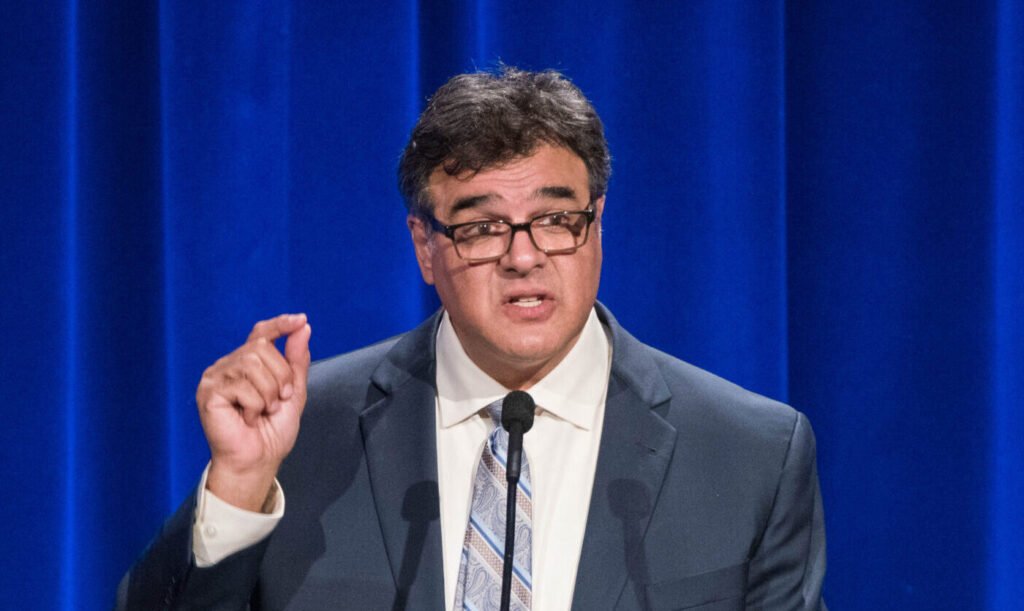
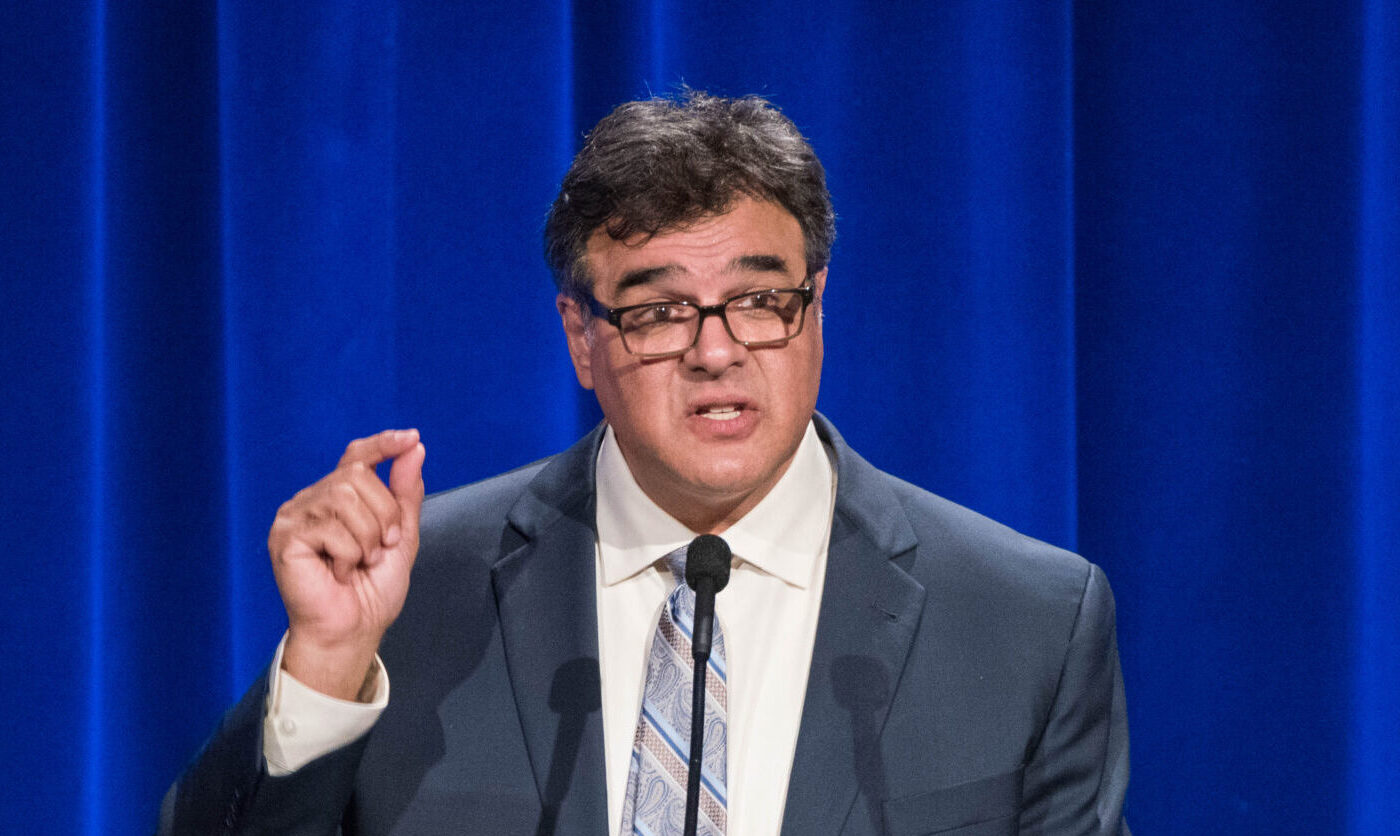
Nearly two decades after he exposed the CIA’s secret torture program—and paid for it with a prison sentence—the former intelligence officer John Kiriakou has suddenly attracted massive viral engagement on social media platforms. He spoke with The American Conservative correspondent Harrison Berger about the surge of attention, in a wide-ranging conversation on government secrecy, CIA propaganda, and the U.S. security state under the Trump administration.
You’ve gone viral on TikTok and Instagram, overnight almost, mostly among Gen Z, people my age, who now suddenly have a particular interest in what you have to say. I’m wondering why you think that is.
I’m thrilled by that. I’ve actually asked a couple people why that is, because I’m not entirely sure myself. And a couple people have, without skipping a beat, come right out and said, it’s because you tell the truth and that there was a price that came with telling the truth and people respect that, which makes me very, very happy.
Maybe on a less serious note… I’m kind of proud of my storytelling abilities. Some of them are fun and people on the internet cut them up into edits and make lasers shoot out of my eyes and give me the Alvin and the Chipmunks voice. I don’t know if that’s it or not. I think on a more serious note, it’s that I have consistently told the truth.
I remember making a decision in December of 2007 when I was getting ready to go on that Brian Ross interview on ABC News and I decided, and I even said this to my wife at the time, I’m going to tell the truth no matter what he asks me and just let the cards fall. And then, fast-forwarding another exactly seven years, I was six weeks before being released from prison. I was able to call my wife every other day for 15 minutes. I called her one day in December of 2014 and I said, “How was your day?” She said it was great. And I said, “Really, what made it so great?” And she said, “Because the Senate torture report was released today and it proved that everything you said was true.” And so there’s just no better policy than to tell the truth. And I think that’s why it’s taken off.
I think Gen Z interest in your whistleblowing may also stem from what we’re seeing play out in Congress and the White House over these Epstein files, to the point where government secrecy and deep state redactions have become a meme.
When it comes to the limited files that have been released, one of the names which stands out is Kathy Ruemmler, who was the former White House Chief Legal Counsel. It was revealed in these emails her extensive connections to the U.S. deep state, even winning a CIA award personally from John Brennan—
Which, may I add, is normally given to people who are killed in the line of duty.
Who is Kathy Ruemmler and what might she have done to win a CIA award?
Yeah, I’m going to speculate here too, because I think that this is a very important story that’s not being covered. Kathy Ruemmler was the White House legal counsel under Barack Obama, the senior-most attorney in the White House. Why did she have such a close and abiding relationship with John Brennan? We can speculate as to why she had such a close relationship with Jeffrey Epstein. And you will have seen by now the numerous emails that she sent Epstein saying, “When are you in town again? Oh, next week? I want us to get together with John Brennan. Are you free? Oh, you’re gonna love John Brennan. We should get together for dinner. Oh, let me introduce you to John Brennan. He’s a real sweetheart.” Why was there this overwhelming desire to introduce Jeffrey Epstein to John Brennan? And why did Kathy Ruemmler have this relationship with John Brennan?
So here’s my speculation. In 2009, the New Yorker magazine broke a major story in that they reported on the existence of what was then called “the Tuesday morning kill list meeting,” a meeting at the White House chaired by John Brennan, who at the time was the deputy national security advisor for counterterrorism. They would come up with a list of people to be killed that week by the CIA, people who had not been charged with crimes, people who had not faced their accusers in a court of law. The teams would fan out around the world, they would kill their targets, and then they would go back to the White House the next Tuesday and get their list from that Tuesday morning kill list meeting. Well, John Brennan was chairing that. Kathy Ruemmler would have been the final legal authority in the White House to approve those assassinations. And I think she was into it and that’s why they became friends. I’m wondering if it was Epstein that wanted her to broker this introduction to John Brennan.
Now we also know from this latest tranche of Epstein files that Epstein’s attorneys reached out to the CIA and to the NSC and asked for some sort of a letter, some sort of documentation proving that Epstein had ties to the CIA. We don’t know that he did. I think he did, my belief is that he did, even if they were incidental, even if transactional. And so I’d like to now know what the story is about John Brennan, and God knows he hasn’t said anything at all about Jeffrey Epstein. There’s a story here.
The only information we get from that organization is whatever the CIA will choose to leak to the public, or, very rarely, like in your case and Edward Snowden’s, from brave leakers who risk their freedom to tell us what the security state tries to keep secret from the American public. One of the most secretive parts of the CIA is a branch within the special activities center called the Political Action Group (PAG). CIA leaders and station chiefs are generally revealed in their obituaries and through other reporting, but since the 1980s, not a single PAG officer has been identified to the public. So what is that group, and why is it so secretive even compared to other branches of the CIA?
The group is essentially the CIA’s lead clandestine propaganda arm. It’s the group that is able to put propagandists in place around the world, keep them funded, and then supply to them the propaganda to be released. It used to be called the Active Measures Group. But when the iron curtain came down, it changed its name like everything else did. But you’re right. This is the group that would be working with or would be financing NED. that would be working with, or financing the Democratic and Republican National Committee’s international groups. And you run into them every once in a while overseas. I ran into both of them in Kuwait. And I mean weeks after the war ended in 1991. There wasn’t even any food and half the country was on fire, but the DNC and the RNC are there and they’re flush with money. So, you know, there was always this carefulness to not propagandize the American people, right? They always had to ensure that what they were doing was outwardly focused. It was focused on foreign minds and foreign voices and foreign media outlets and personalities. But Barack Obama changed all that with the National Defense Authorization Act of 2011.
It’s kind of a funny story, the NDAA. It was changed for the strangest reason. We’ve got these propaganda outlets aimed at Cuba called Radio Martí and TV Martí. I know with 100 percent certainty, because I did a study on it for the Senate Foreign Relations Committee—we know that nobody in Cuba watches TV Martí and nobody in Cuba listens to Radio Martí. Sometimes they’re jammed, usually not. The only time that Cubans actually watch or listen to them is when they’re playing baseball games because the games are in Spanish. The Dish Network, that satellite TV company in the U.S., picked up Radio and TV Martí in the southwestern corner of Florida to beam at Cuba.
But there was this little slice of territory right on the coast of Florida, around Fort Myers, where Dish networks subscribers could get TV Martí. Well, that’s illegal. You can’t propagandize the American people. And so members of Congress wrote an amendment, lifting the prohibition on propagandization of the American people, just so the Dish Network could continue to carry TV Martí. Well, there was broad fallout from that decision. Now the CIA can propagandize the American people, the CIA can plant pro-CIA stories in the American media, which, as you noted a few minutes ago, they do with their preferred stenographers at the Post and the Times and elsewhere, and it’s perfectly within the confines of the law. That law should never have been amended, never. Because now, even as Americans, we don’t know what’s true and what’s false. So we don’t know what originated at the CIA just to try to win our minds.
I want to move on to another organization that you have not been a part of, but that you are very familiar with due to your time in Afghanistan, which is the DEA. Most people really don’t think of it as related at all to the CIA or even serving some of the same purposes, but they really seem to when you look at what they do, particularly with their involvement in the Afghanistan War. Afghanistan, during the course of that war, became the global hotspot for heroin production. The DEA would publish reports during that war saying that all of the heroin production was caused by the Taliban… rather than the Northern Alliance and the various tribes that we were allied with in the region who, it turns out, were actually the ones growing all the heroin, including, for instance, the brother of Afghanistan’s President Hamid Karzai, who was on the CIA payroll. We now know that all these reports the DEA published were fake. What does that reveal about the role of that organization abroad?
You know, that’s actually a more complicated question than might appear on the face of things. And I’ll start with a little bit of background. So many of your viewers will have seen the television series Narcos on Netflix. And one of the themes in Narcos is just as the DEA is gonna move in for the arrest, they’re gonna grab Pablo Escobar, the CIA station chief steps in and just screws up the whole operation because the CIA doesn’t care about drug interdiction. They cared about communism or terrorism. That was always true. And the CIA had for the most part, a very difficult, contentious relationship with DEA, but not always because what you just said, this cooperation, this clandestine cooperation between the CIA and DEA on drugs is also true.
When I was the senior investigator in the Senate Foreign Relations Committee, I was there from 2009 to 2011. I told John Kerry, who was the chairman at the time, that I wanted to go to Afghanistan and do an in-depth study on heroin poppy. When the Taliban were running the country in the year before 9/11, Afghanistan produced literally zero heroin poppy. There was a fatwa that was issued by the Taliban forbidding the cultivation of heroin poppy. By 2009, Afghanistan was producing 93 percent of the world’s heroin, So I flew out there and I told the Pentagon in advance, of course, that I was coming and that I wanted to investigate this and fly down to the heroin-producing areas.
They didn’t like that at all. Not at all. So I fly into Kabul, there’s a helicopter waiting for me and it takes me to Bagram Air Base, and in Bagram they give me this briefing. And I made them fly me first to Kandahar, and then Lashkar Gah, where we had a little State Department outpost called a PRT. And when we got to Lashkar Gah, I insisted that we get in a jeep with security and a translator and we just drive into the poppy fields until I could find a heroin poppy farmer. I wanted to talk to him. And so sure enough, we find a poppy farmer out there cultivating his fields. And we pull up and he’s very nervous. And I asked what in retrospect was a very naive, silly question. I said, “Why do you grow poppy when instead you could grow things that have two growing seasons like onions or pomegranates or tomatoes?” And he says, “The Americans told me in 2001, that if I told them where the Arabs were hiding, I could grow all the poppy I wanted.” And I said, “What Americans told you you could grow the poppies you wanted?”
As soon as that second question came out of my mouth, my military handler grabbed me by the collar and said, “We gotta go, we’re under threat,” and pulled me back to the Jeep and we took off. So I get back to Washington and I write this paper and I include this information. I never got that paper published. John Kerry killed it because the CIA told him to. That was one of the most egregious cases where I saw the CIA and DEA working together in direct opposition to the best interests of the United States.
The post The TAC Interview: John Kiriakou on Epstein, Propaganda, and Heroin appeared first on The American Conservative.