









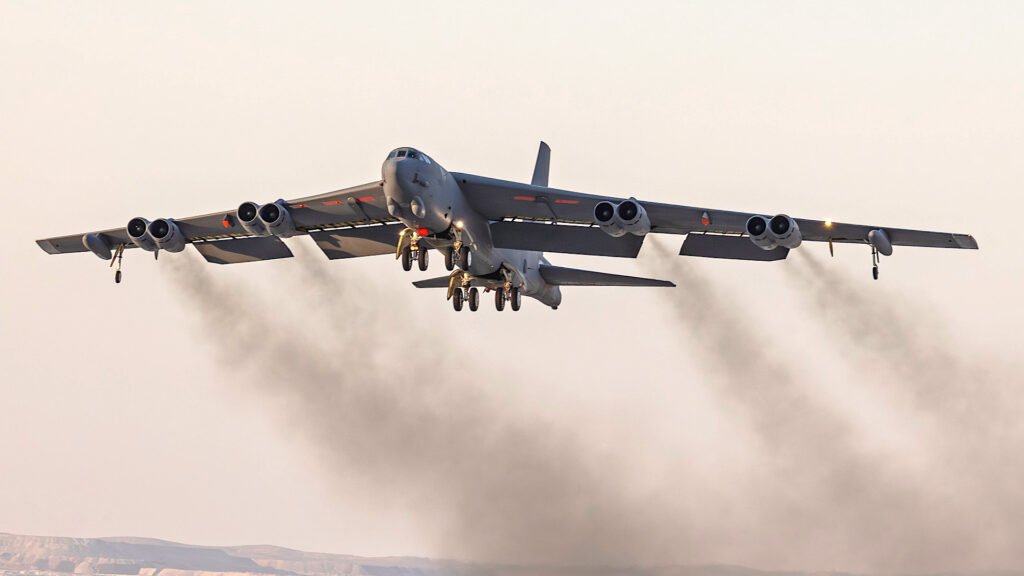
U.S. Air Force officials say critical engine and radar upgrade programs for the service’s B-52H bombers are continuing to show improvement after years of delays and growing costs. However, there are substantial demands placed on the relatively small fleet, including a major need for a certain number of the jets to be available at any one time, tied to the nuclear strike mission. This, in turn, creates additional challenges when it comes to planning how to get those upgrades into service on operational aircraft.
Each of the Air Force’s B-52H bombers, 76 of which are currently in inventory, is set to get eight new Rolls-Royce F130 engines and a new AN/APQ-188 active electronically-scanned array (AESA) radar. These upgrade efforts are known as the Commercial Engine Replacement Program (CERP) and Radar Modernization Program (RMP), respectively. The bombers are also set to receive a host of other upgrades and modifications, inside and out, and will come out of this entire process redesignated as B-52Js. The modernized aircraft are expected to keep flying through at least 2050.
As noted, CERP and RMP have faced serious setbacks in recent years. The original RMP schedule expected flight testing to start in 2024 and that the new radars would be flying on operational bombers by 2027. The Air Force only took delivery of the first B-52 with an AN/APQ-188 in December and is now looking at reaching initial operational capability toward the end of the decade. CERP has yet to start flight testing, and its initial operational capability timeline has slipped from 2030 to at least 2033. In both cases, the delays have come along with millions of dollars in cost growth.
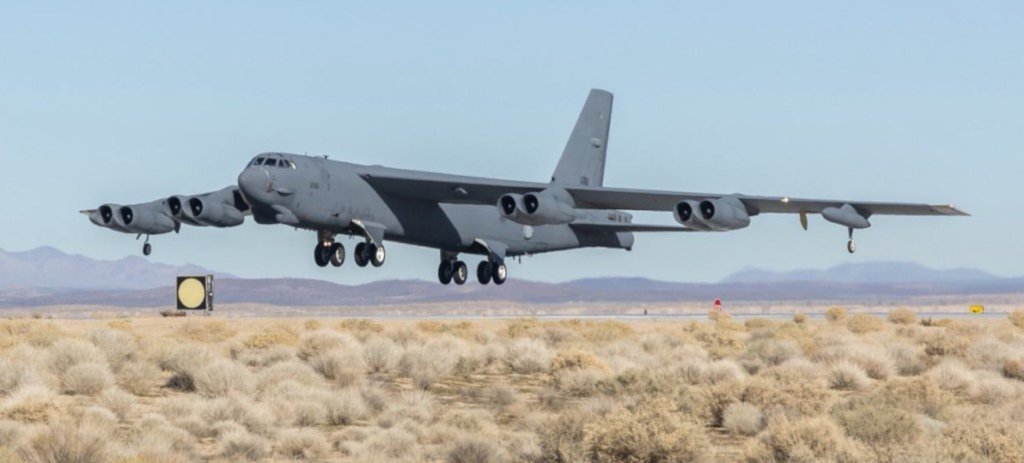
“Boeing has already looked at some schedule improvement that we’ve seen. But, for example, the RMP jets have already been modded and moved out to Edwards [Air Force Base in California]. So we’re working that,” Air Force Gen. Dale White said at a roundtable at the Air & Space Forces Association’s (AFA) annual Warfare Symposium on Wednesday. “So you’re seeing a lot of progress on this.”
White is the Direct Reporting Portfolio Manager for Critical Major Weapon Systems, a role established last August to create a “single empowered leader” to manage top-priority Air Force weapon systems programs.
“The challenge with B-52 that I think everybody forgets, it’s such a small fleet that has such a tremendous requirement in terms of readiness,” White added. “You’ve got to have a certain number on the ramp. That’s a requirement.”
A key factor here is that a portion of the B-52 fleet contributes to the air leg of America’s nuclear deterrent triad. There is the possibility now that nuclear capability could be restored to all B-52s following the expiration of the New START arms control treaty with Russia earlier this month. Dozens of the bombers were converted to a conventional-only configuration to comply with that agreement.
This is compounded by the B-52 fleet’s mission-capable rate, which has been hovering between 50 and 55 percent in recent years. This imposes additional limits on the number of bombers available for real-world mission taskings of any kind at any one time, which are then magnified by the relatively small fleet size. There are B-52Hs in storage, and bombers have been reactivated to make up for attrition in the past. However, the size of that reserve is also small, and returning them to service is a complex and costly process.
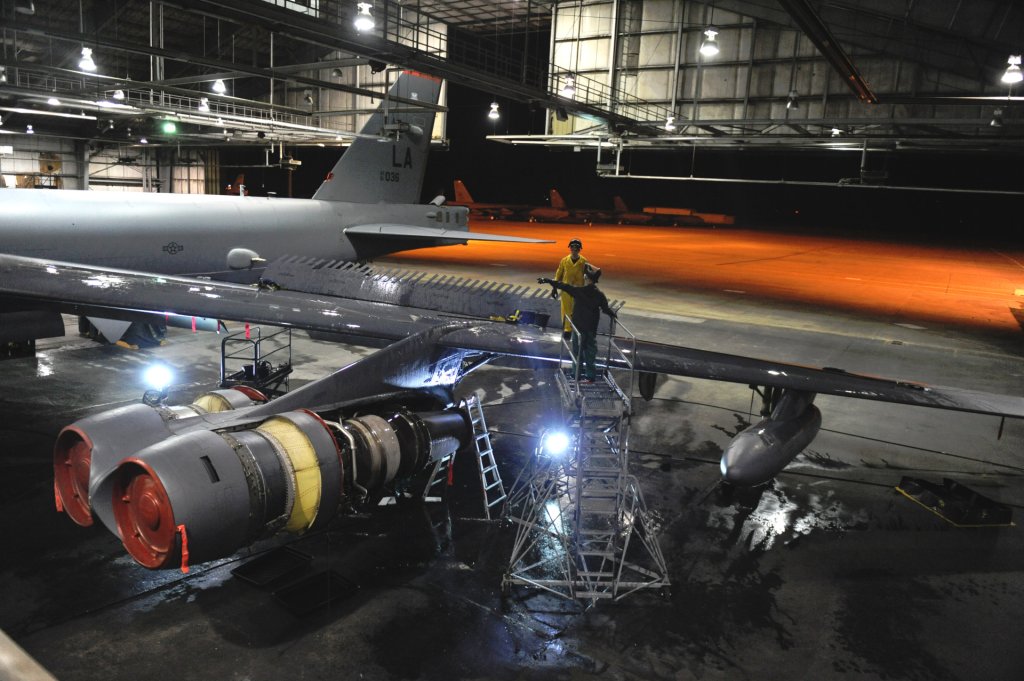
“Now that we’re turning the program around and we’re starting to make some good progress,” the question becomes, “how do you get these through the depot while at the same time meeting the operational requirements?” Gen. White explained. “That choreography, I think, is going to be tough.”
William Bailey, a member of the Senior Executive Service who is currently performing the duties of the Assistant Secretary of the Air Force for Acquisition, Technology, and Logistics, was also at the roundtable. He said he had already seen work underway at Tinker Air Force Base in Oklahoma that will help to answer these questions. Tinker is where B-52s, as well as a host of larger aircraft types, go for depot-level maintenance. That is also where the majority of the upgrade work is expected to take place.

They are “looking at, as those aircraft come through for depot [maintenance], looking at what kind of changes will be made associated with CERP and RMP. You have that actual aircraft come through the depot before you’re going to see it for CERP,” Bailey said. “So you get to go ahead and image those areas. Take a look at what’s the structure you’re working with already. And so the team is doing that now, getting ready for the day that shows up.”
Bailey added that officials in charge of the modernization efforts are in direct and regular contact with Air Force Global Strike Command (AFGSC) about the timelines for making B-52s available for upgrades. AFGSC oversees the bulk of the Air Force’s bomber fleets.
Bailey and Gen. White said yesterday that they were not aware of any changes to the previously stated initial operational capability timelines for CERP and RMP.
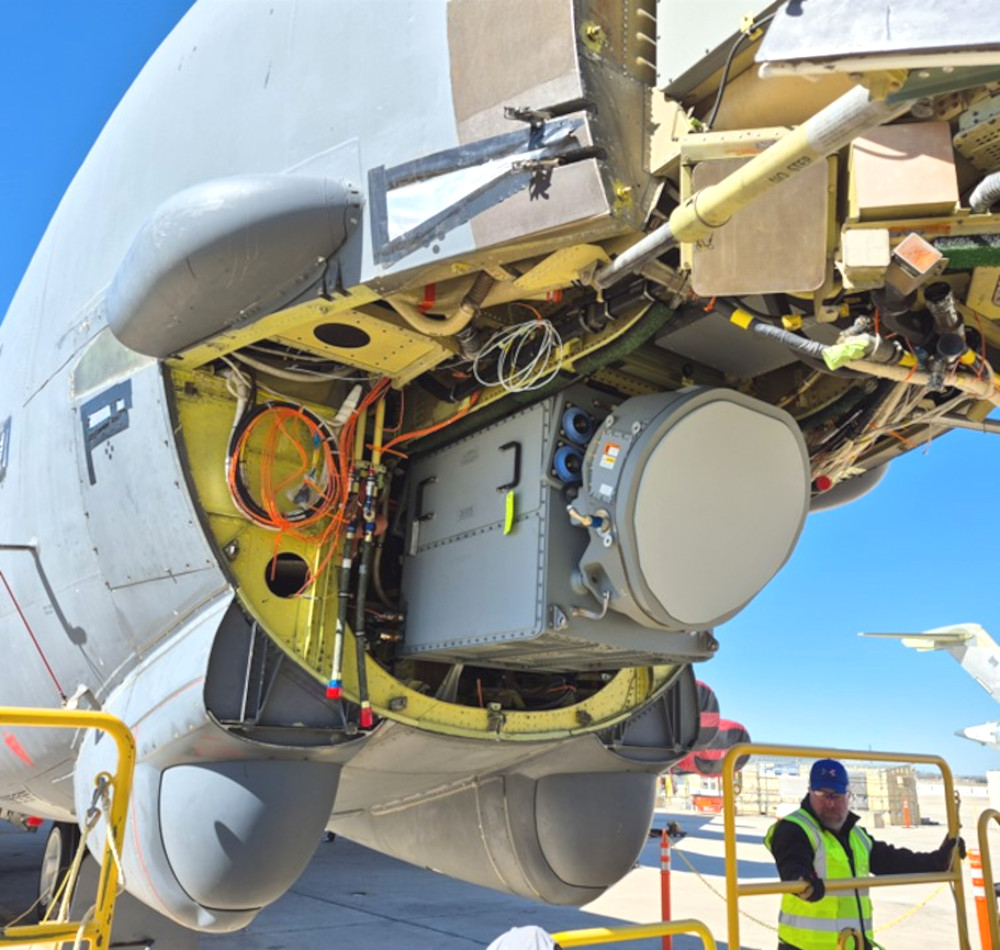
As mentioned, the Air Force received the first B-52 with the new AN/APQ-188 radar last December. At that time, the goal was to begin flight testing at Edwards this year, but it’s unclear if that has now begun. After delivery, the Air Force had said that the bomber would need to complete a series of tests on the ground first. Boeing had performed an initial round of system functional checks before delivering the aircraft to Edwards.
When it comes to CERP, Rolls-Royce confirmed to Defense One earlier this week that the first batch of F130s intended for integration on an actual B-52 is set to be delivered to the Air Force next year. Beyond the F130s themselves, the bombers will get new twin-engine pods and other modifications as part of CERP. The exact timeline for the start of flight testing after that is unclear. The engines will go first to the Arnold Engineering Development Complex (AEDC) in Tennessee. On Tuesday, Rolls-Royce had also announced that the F130 had successfully completed altitude and operability testing on the ground at AEDC.

The Air Force remains committed to CERP, RMP, and the rest of the B-52 upgrade effort, which it sees as essential to ensuring the bombers remain operationally relevant for decades to come. TWZ has previously explored the particularly important new target acquisition and identification capabilities, as well as secondary electronic warfare capability and improved situational awareness, that AN/APQ-188 AESA radar is set to give the bombers. The radars will also offer reliability and sustainability benefits over the aging, mechanically-scanned AN/APQ-166.
The new F130 engines will also give the B-52 major boosts in range and performance, as well as greater fuel efficiency and reduced maintenance demands compared to the Pratt & Whitney TF33s that power the bombers now. The TF33 was originally designed in the late 1950s and has been out of production since 1985, which has made sustaining them increasingly costly and time-consuming. The range and fuel economy benefits will also translate to reduced demand for aerial refueling support for upgraded bombers.
Overall, the CERP and RMP upgrade efforts look to be making important progress, but challenges remain for bringing the entire fleet up to the much-improved B-52J standard.
Contact the author: joe@twz.com
The post Small B-52 Fleet Size Creates Challenges For Engine, Radar Upgrade Plans appeared first on The War Zone.