




When I first played Moss on PSVR in 2018, it was the game that truly sold me on virtual reality. Here was an adventure with the ambition and polish of a console release that used VR to draw the player into its world in a genuinely compelling way. At the time, it felt like developer Polyarc had finally cracked how to make a puzzle-adventure really work inside a headset.
Returning to that world in Moss: The Forgotten Relic, which brings both previously VR-exclusive adventures together in a single ‘flatscreen’ package, was both a pleasure and a test of whether these games could actually hold up as conventional ports. While some of their original immersive magic is inevitably diminished, their heart remains entirely intact.
The Forgotten Relic contains the entire saga, with Moss: Book I, originally released in 2018, and its DLC, The Twilight Garden, as well as the more expansive Moss: Book II from 2022. The first is a fairly traditional tale about finding courage and answering the call to adventure, while the sequel broadens the story’s depth and builds on its gameplay mechanics considerably.

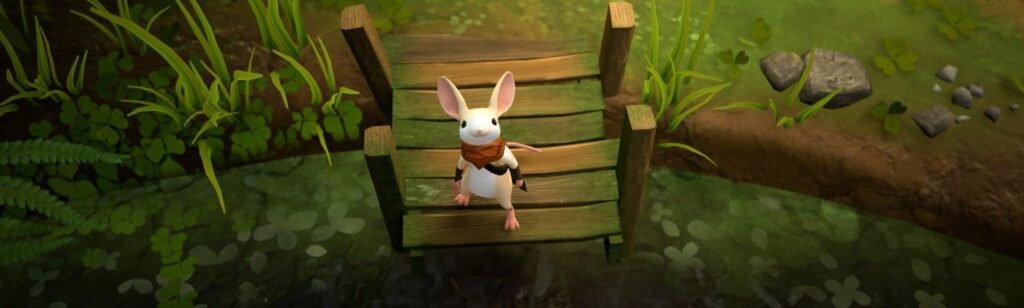
While players can no longer lean into its exquisite fantasy dioramas, peer around its scenery to spot hidden treasures or reach directly into the world to help Quill, Moss’s adorable mouse heroine, the titles survive the transition from VR on the strength of their environmental puzzling and narrative storytelling, helped by reworked controls and dynamic camera tracking.
The game unfolds as a fairytale read aloud, with the player entering its pages as the Reader, a mysterious presence resembling ‘No-Face’ from Studio Ghibli’s Spirited Away that accompanies Quill on her journey. Players control Quill through platforming sections and combat while manipulating features in the environment as the Reader to solve puzzles.
These interactions were naturally more tactile in VR, making the player feel like a benevolent giant hovering over Quill’s miniature world. On Switch 2, the same actions are performed by holding ZR and manoeuvring the right control stick to grasp and move objects like rune-covered blocks and heavy doors, allowing Quill to navigate obstacles and progress.

The most satisfying puzzles require coordinated teamwork, with the Reader rearranging parts of the environment while Quill climbs, jumps and fights her way through. Enemies can even be possessed and repositioned to activate switches or attack other foes, occasionally requiring you to control Quill with one control stick and a commandeered enemy with the other.
Moss’s environments resemble miniature stage sets as Quill travels through leafy woodland burrows, quaint mouse settlements, crumbling castle interiors and jagged mines. Each new room presents itself as a fixed diorama with hidden scrolls tucked into corners and environmental details that hint at puzzle solutions and mark climbable surfaces.
Many of its settings function as compact puzzle boxes, requiring you to survey the space, taking stock of switches, platforms, and patrolling enemies before working out the correct sequence of actions. Book II expands both the scale and visual ambition of these environments and is far more confident about layering its mechanics together to satisfying effect.

Locations in the sequel range from lush conservatories and mechanical forges to a spectacular ruined castle whose opulent interiors have been fractured into impossible shapes. Walls become walkways, portals rearrange perspective and puzzles increasingly require Quill to switch between weapons and combine several abilities at once.
In place of cutscenes, players leaf through illustrated pages of a large tome between playable sections as a narrator recounts events aloud, shifting skilfully between the voices of its colourful cast of characters. Even transitions between rooms are accompanied by the soft turn of a page, neatly reinforcing that Quill’s adventure is unfolding inside a living storybook.
Compared to its excellent puzzling, Moss’s combat is relatively shallow. Quill can slash with her sword, dodge and receive healing from the Reader, but there is little strategic depth beyond attacking and evading clearly telegraphed blows from wave after wave of samey mechanical beetles and other familiar foes in what feels more like tests of endurance, not skill.

Book II expands her arsenal with a throwable chakram and a weighty hammer. These weapons also feed back into the puzzle design; their charged abilities can activate mechanisms, break obstacles and aid in traversal. Its handful of boss battles are livelier and borrow from the strengths of its puzzle design as Quill and the Reader must work in tandem to best foes.
The Forgotten Relic is rarely demanding, with puzzles that require a little thought but are unlikely to ever leave players stuck for long. The adventure maintains a breezy, approachable pace throughout, while its warmth, inventive mechanics and storybook charm make it the kind of family-friendly experience that almost anyone can pick up and enjoy.
In the years since Moss’s original release, VR has neither displaced traditional consoles nor attracted the mass audience once expected of it. While Quill’s adventures may have been conceived around a headset and are best experienced within one, their jump to Switch 2 and other consoles feels like a worthwhile act of preservation and accessibility.

Performance is consistently smooth, while the re-release benefits from improved visuals and a useful ‘Skip Combat’ option for players who would rather focus on the puzzles and story. Its sweeping soundtrack complements Moss’s fairytale settings, while the excellent narration and character voice work lend the adventure much warmth and personality.
Moss: The Forgotten Relic loses some of the immersive wonder that made its VR origins so memorable, but its charming world, clever puzzles and lovable heroine shine through. Shallow combat and limited enemy variety are bugbears, but don’t detract too much from a breezy, beautifully presented adventure-puzzler that deserves a wider audience.