





In 2018, Blizzard launched Diablo III: Eternal Collection on Switch, which marked the publisher’s first release on Nintendo hardware since the N64 and the debut of the legendary franchise for Nintendo’s audience. That port was an impressive feat back then, and Blizzard has now decided to one-up it with Diablo IV: Age of Hatred Collection for Switch 2.
Including all base game and expansion content released for Diablo IV so far (it launched elsewhere in 2023), this port proves to be an impressive and comprehensive package that no fan of action RPGs should miss.
Diablo IV is set in the world of Sanctuary, an earthlike environment that exists as a kind of holding ground for humanity amid the ongoing war between heaven and hell. A group of treasure hunters in an old ruin inadvertently cause the return of Lilith, the creator of Sanctuary and daughter of one of the Prime Evils of Hell. You (“the Wanderer”) then get pulled into the conflict between Lilith and the Horadrim, an ancient and weakening group of warriors and mages formed to combat the Prime Evils.

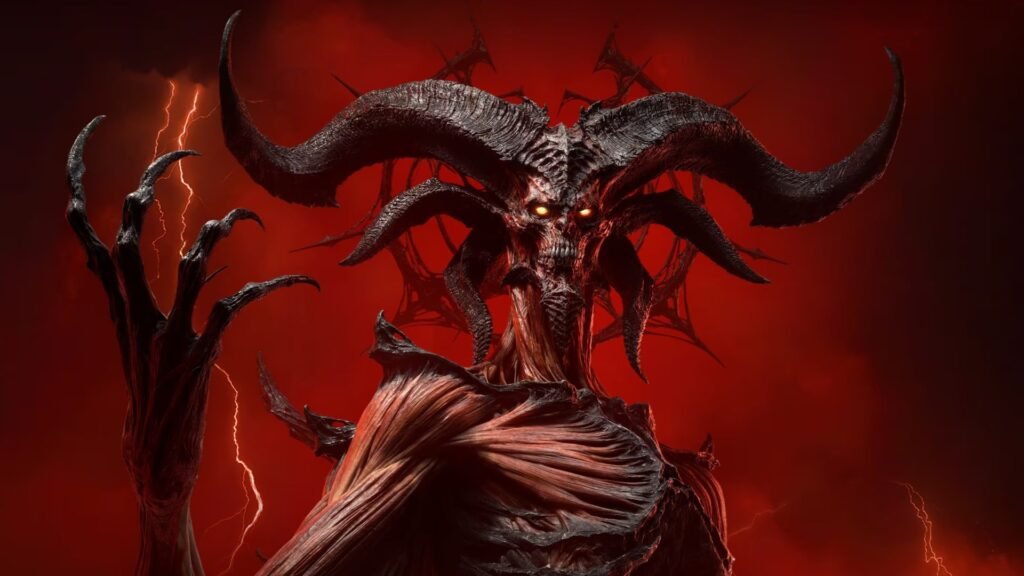
Although storytelling isn’t exactly the strong suit here, it’s overall a rather compelling tale that feels a cut above the efforts of previous series entries. Lilith herself is a scene-stealing and charismatic villain who embodies the ‘neutral evil’ archetype in the somewhat morally grey motivations of her ongoing mission.
Meanwhile, the supporting characters of the Horadrim get a fair amount of meaningful development throughout their conflict with Lilith and her followers, leading to an overall satisfying conclusion that tees up the expansions well. Though I’d never suggest buying Diablo IV for the story alone, I’d also say you are doing yourself a disservice if you were to just mash through the cutscenes or skip the campaign entirely.
Gameplay falls right in line with the typical ARPG genre tropes where you create a character from one of a few distinct classes and slowly make them your own over the course of a lengthy campaign through developing their skill tree and kitting them out with gear that best supports the build you’ve chosen. The main campaign acts as a solid way of getting the lay of the land, issuing you various quests and sidequests to complete that ease you into the gameplay loop and give you plenty of room to experiment with your build as you gradually put it together.
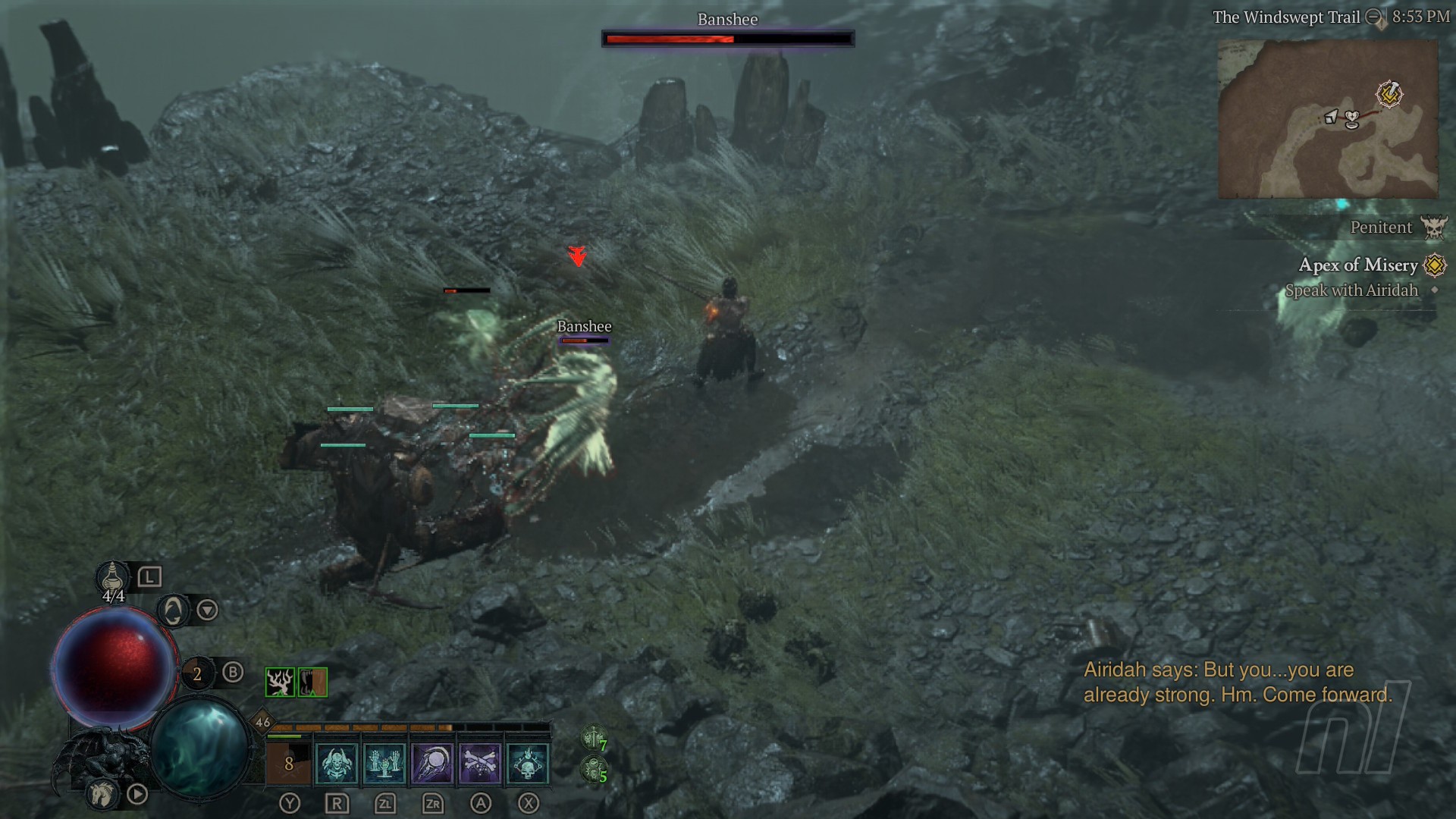
Basically, it boils down to going out into the wilds and delving into dungeons where enemies drop pieces of loot left and right. Most of it is junk to your build, but every now and then a piece drops that offers an incremental improvement on something you’re currently wearing. Then you run back to town, sell or salvage all the junk, and use the proceeds to either buy even better equipment or to make modifications to your current kit.
It’s an addictive gameplay loop, especially given that you’re either levelling up or finding a good new piece of loot every few minutes. There’s no telling when the next reward is gonna hit for you, enticing you to go just a bit further and do ‘just one more’ quick dungeon run.
The eight classes alone offer some wildly different takes on the core combat, and this is only compounded by how each class can be built in a variety of ways through the versatile skill trees. Experimentation here is encouraged, especially given that you’re not permanently locked into any decision—skill points can be reallocated at any time, giving you lots of room to try out weird new ideas as you find gear and come up with synergies.

Because it’s approaching spooky season, my preferred class for this run was the Necromancer, and I opted for a build that relied heavily upon a small battalion of autonomous skeletal and undead minions who do all the fighting for me.
The big change that Diablo IV makes compared to its predecessors is the removal of independent ‘zones’ and the introduction of a fully connected open world. The enormous map is littered with a collection of villages and hubs issuing quests, and while the main story will expose you to some of these on a surface level, there’s a lot more to dig into if you want to immerse yourself further and go for full completion. There are all kinds of optional dungeons and collectables to find out in the wilds, world bosses and random events to trigger that offer memorable encounters and huge rewards, and engaging with all of this will slowly fill out a checklist for the region that leads to account-wide passive buffs.

It’s engaging, but it sometimes feels like the open world is there more as a relic of an earlier development build than something that meaningfully contributes to the experience. Many of the most lucrative and meaningful activities are instanced and feel rather separate from the world itself, and once you reach endgame, the infinite grind tends to coalesce around a small amount of endlessly repeatable activities which again have nothing to do with the open world.
On one hand, this is disappointing given the open-world potential for the franchise; it’s always felt like exploration has been of lesser importance in the gameplay loop, and it would’ve been interesting to see what distinct ideas could come from a Diablo that puts more of a primary focus on its exploration.
Still, the idea of an enormous open world to traverse feels a bit at odds with the identity of an ARPG and the repetitive activities at the heart of one, and I can’t say that I fault the developers for choosing to pivot away from it more in the many post-launch patches and updates.

The base game itself can take a couple of hundred hours to clear in its entirety, and that’s only where the fun begins. This Switch 2 release includes both the Vessel of Hatred and Lord of Hatred expansions, which together will roughly double the base game’s playtime and content. Not only do these expansions offer their own new regions and campaigns, but also new class options and endgame activities to scale up the things to tackle as you’re grinding your newest character up to the pinnacle of their power. Suffice to say, these expansions offer a refinement and extension of the systems the base game built; if you enjoyed the initial campaign at all, you’ll have a great time with these when you reach them.
Regarding the visuals, Diablo IV opts for a much ‘heavier’ art style than the World of Warcraft-esque colourful style of Diablo III. Here, the world overall has a more photorealistic look to it and there’s overall a more looming feeling of dread and despair as you navigate shadowy crypts and foggy forests. The moodiness fits the game’s tone very well, and there’s a lot of great little detail in things like the reflections of torches off cave walls and the descending shadows of cages swinging above.
All this performs reasonably well, with quality and performance modes available to mildly tweak settings to your liking. Quality mode shoots for 30fps/1440p in docked mode and 30fps/1080p in handheld, while also giving you the benefits of things like higher quality textures and some ray tracing. Performance mode switches to 40fps/1080p in both modes in exchange for a slightly simpler-looking image.

In my experience, performance mode was the clear winner, especially if you play a lot in handheld. The 30fps mode struggles much more with consistently hitting its performance target, and even when it does, the image quality still isn’t close to more powerful hardware. Meanwhile, the only drawbacks I found in the performance mode were with a lot of enemies on screen at once, in which case their individual animations were reduced and movement could look a little claymation-esque.
Sure, there are visual trade-offs, but the fact that you can play a version of Diablo IV that performs well, looks this good, and can be played in its entirety on the go is quite enticing. Blizzard impressed me before with the Switch 1 port of Diablo III several years ago, and its work here really goes to highlight the leap in quality of games that can now run on Nintendo hardware.
It’s important to highlight that this is an online-only game—losing a connection will result in you being booted back to the game’s home screen until you can get back online. Though it is somewhat disappointing that Blizzard didn’t include an offline mode here as it did with this game’s predecessor, internet connectivity is also a more core part of the design across the various seasonal activities and world events. Those with spotty connections will want to keep this in mind, as the internet requirement does limit the contexts in which you can play it on a portable console.
Diablo IV: Age of Hatred Collection is an enjoyable and addictive RPG experience that feels like a good fit for the hybrid platform. Some minor missteps aside, the moody art style, addictive loot system, enormous amount of content, and near-infinite replayability make this one an easy recommendation to anyone looking for a good ‘time sink’ for their library.
The debate will always wear on about where this one belongs in the overall series hierarchy, but it’s tough to argue that this isn’t one of the best modern examples of an ARPG. Online-only is something to consider, but Diablo IV offers some of the best bang for your buck on the system.