Skip to content







With 18 examples of the OA-1K Skyraider II delivered to the U.S. Air Force’s Special Operations Command (AFSOC), the service is now looking forward to demonstrating the aircraft’s unique rapid-deployment capability later this year. AFSOC also says it plans to add laser-guided Advanced Precision Kill Weapon System (APKWS) rockets to the OA-1K’s armament options and is looking at boosting standoff capability in the form of Red Wolf mini cruise missiles. All of this comes at a time when the Pentagon is looking to cut back OA-1K numbers amid concerns surrounding its survivability and utility in a high-end fight, specifically with China, which stands today as the U.S. military’s pacing threat.
Lt. Col. Robert Wilson, chief of the AFSOC Armed Overwatch Requirements Branch, briefed journalists, including from TWZ, on the latest plans for the OA-1K ahead of the Special Operations Forces (SOF) Week, taking place from today in Tampa, Florida.
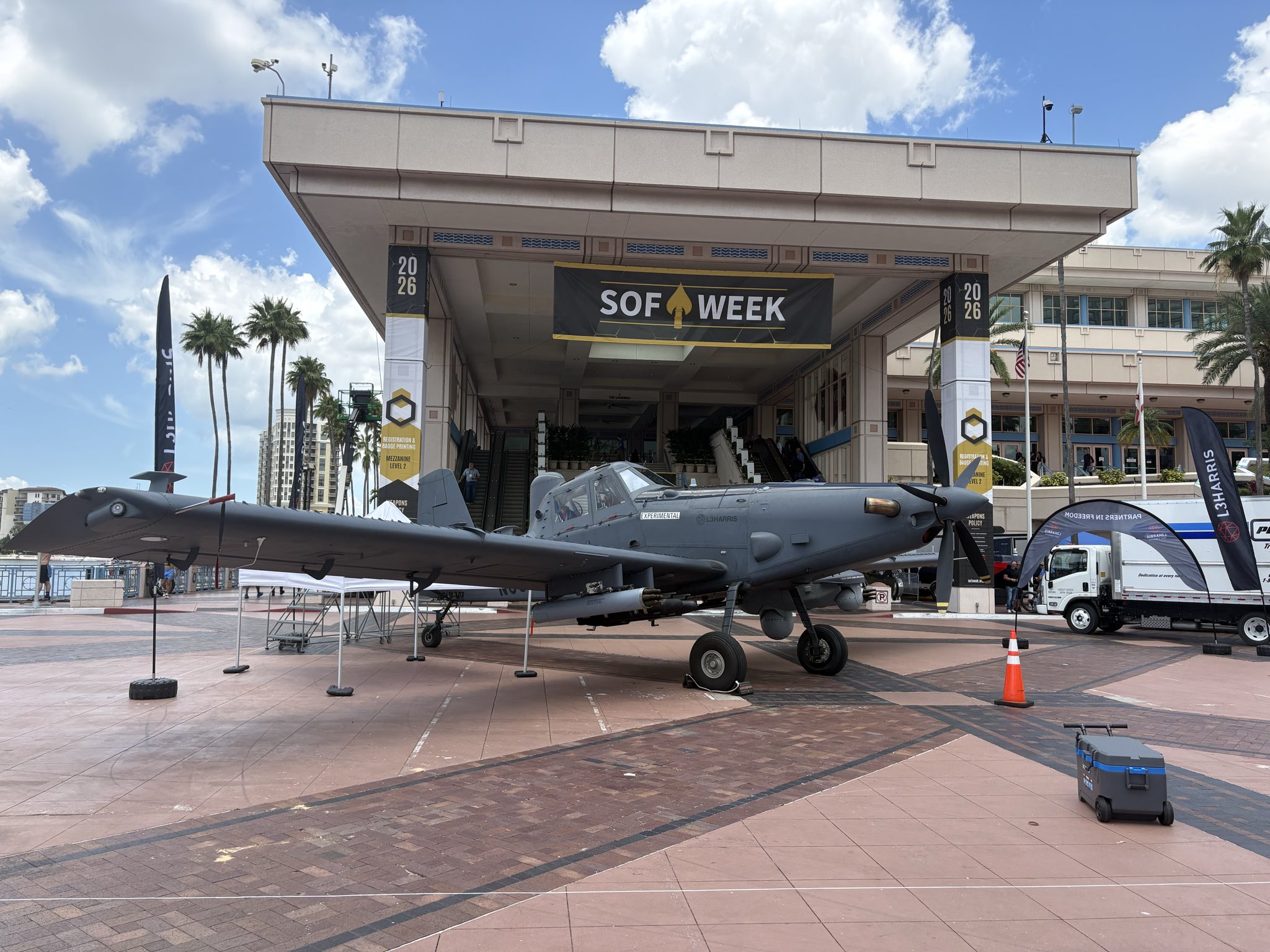
Beginning with an overview of the program, Lt. Col. Wilson stressed that the OA-1K — a militarized derivative of the popular Air Tractor AT-802 crop duster — is not viewed as a replacement for legacy platforms like U-28 (which he previously flew) or the MC-12. Instead, it is “a new, purpose-built solution for today’s complex environments.”
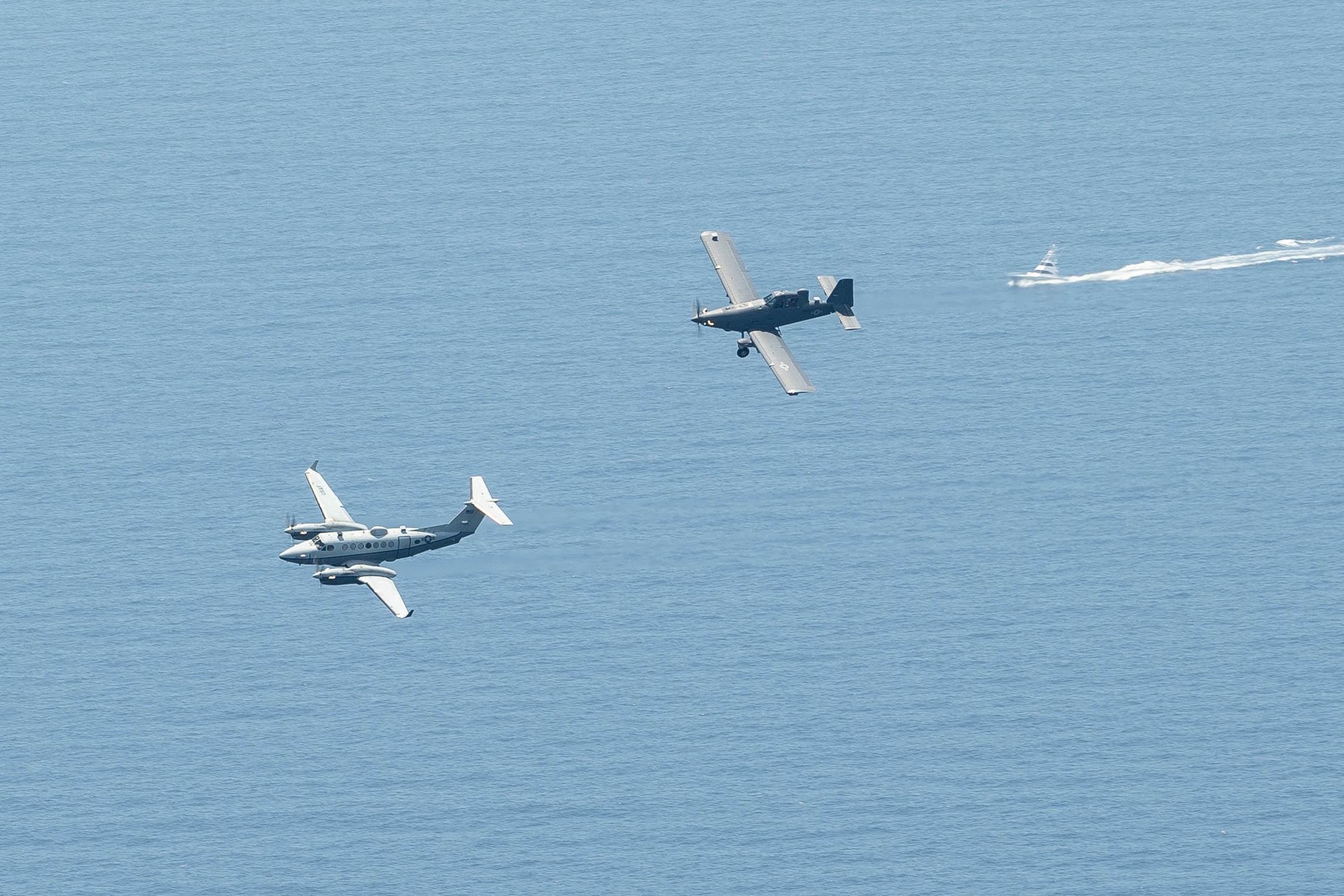
The thinking behind the Skyraider II reflects the transition from the Air Force’s focus on counter-terrorism operations in the post-9/11 period to a more complex threat picture. Now, the service has to be more prepared to fight against a much wider range of adversaries across the spectrum of conflict.
As Wilson explained, “the OA-1K represents a new era for AFSOC, with the flexibility to support not only counter-terrorism-like missions, but also crisis and contingency response, competition with more advanced adversaries, and even aspects of full-on conflict. To meet this wide range of mission sets, OA-1K is a multi-role capability platform that is essentially a Swiss Army knife of airborne capability.”
The OA-1K multi-role mission remit therefore covers close air support (CAS), armed intelligence, surveillance, and reconnaissance (ISR), and precision strike.
At this point, Wilson explained, “we’re in the midst of production and delivery of aircraft, and we’re reaching a point where we are getting very close to demonstrating capabilities such as the weapons employment, the ability to provide ISR capability, so we’re kind of transitioning the program from what was previously developmental and conceptual to actually getting to the point where we’ll be looking to get into operational tests.”
To keep pace with changing threats, the Skyraider II has a modular design that provides flexibility for future upgrades, which could include expanded payloads, such as more advanced weapons, or more exquisite intelligence-collection capabilities.
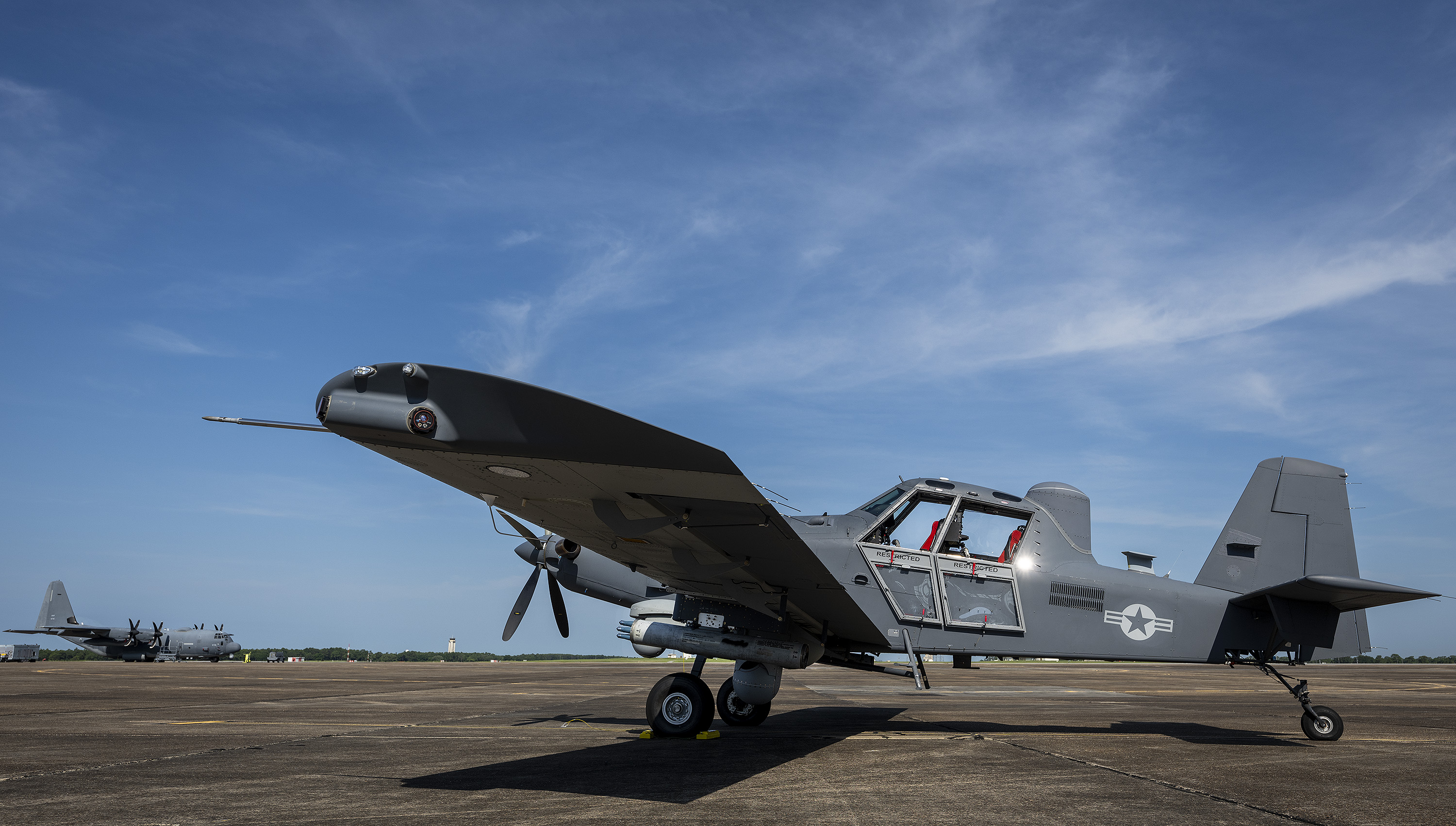
Reflecting on the potential for future enhancements in terms of external sensors and other payloads, Wilson continued: “We really think of this as levers that can be manipulated with a combination of fuel, weapons, and exquisite capabilities that can be increased or decreased based on the mission set to most effectively apply the capability to whatever mission it’s going out to accomplish that day.”
The OA-1K is also expected to enhance overall ground-force lethality and situational awareness through its provision of modern datalinks for joint integration.
All of this is expected to come with a much lower price tag than would be the case for traditional crewed aircraft.
According to Wilson, the cost-effectiveness of the OA-1K translates to a cost per flying hour of roughly $2,500. For comparison, an F-16C/D costs roughly ten times this amount per hour to operate.
“The OA-1K is one of the most affordable AFSOC platforms, which then frees up higher-end assets that are more costly, for other mission sets around the world, and that dollar amount makes it roughly 50 percent more cost-effective than even an MQ-1, which is an unmanned platform, and it’s more cost-effective than armed platforms like the U-28,” Wilson added.
In terms of fielding, AFSOC has taken possession of its 18th OA-1K and is expecting a handful more throughout the end of the fiscal year. The initial cadre of crews is still training at Will Rogers Air National Guard Base in Oklahoma, with plans to station the aircraft in the future at both Cannon Air Force Base in New Mexico and Davis-Monthan Air Force Base in Arizona.
The next step in standing up this capability will involve demonstrating the rapid deployment abilities of the OA-1K. This is something that was part of the original requirement but which is also seen as increasingly vital for SOF missions, which already demand a high level of expeditionary agility. The ability to rapidly disassemble and reassemble the Skyraider II would become even more important in a potential confrontation with China in the Indo-Pacific theater.
“With rapid disassembly and reassembly, OA-1K can be loaded into a mobility aircraft like a C-5 or C-17 for rapid worldwide deployment, supporting missions around the world at a moment’s notice, and importantly, we’re talking a matter of hours instead of days or weeks that it would have otherwise required to fly around the world wherever it needs to go,” Wilson explained.
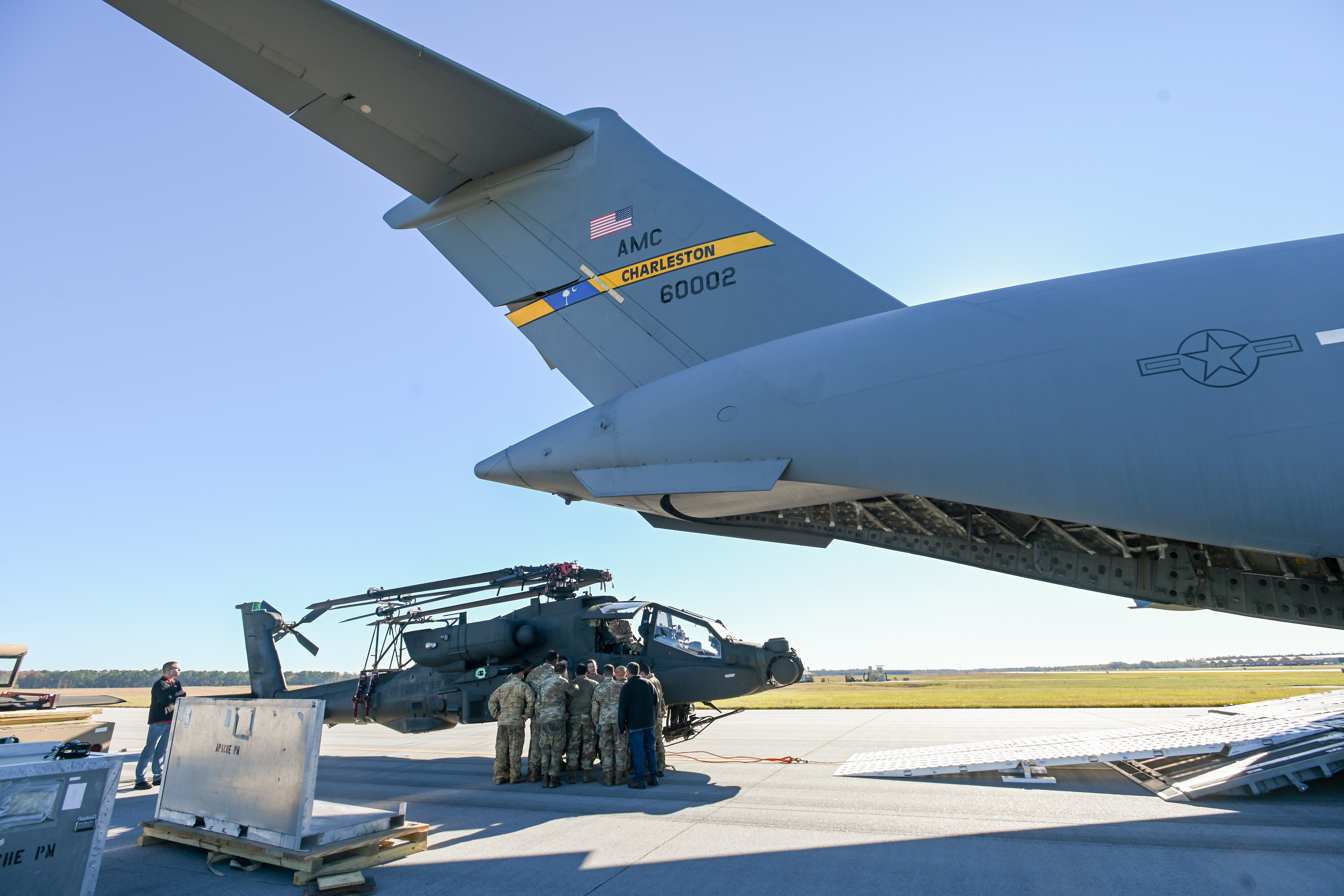
To start with, AFSOC is looking at testing this deployment capability using larger transport aircraft, primarily to maximize the number of OA-1Ks that can be moved at once, although Wilson said the exact number that will fit in a C-5 or C-17 will be determined as part of the operational test process later this calendar year.
Once deployed, the OA-1K is expected to operate “from nearly anywhere,” including short dirt surfaces, grass strips, and unimproved runways. As such, it will give the Air Force a combination of rapid deployment and austere environment capability that it otherwise doesn’t possess.
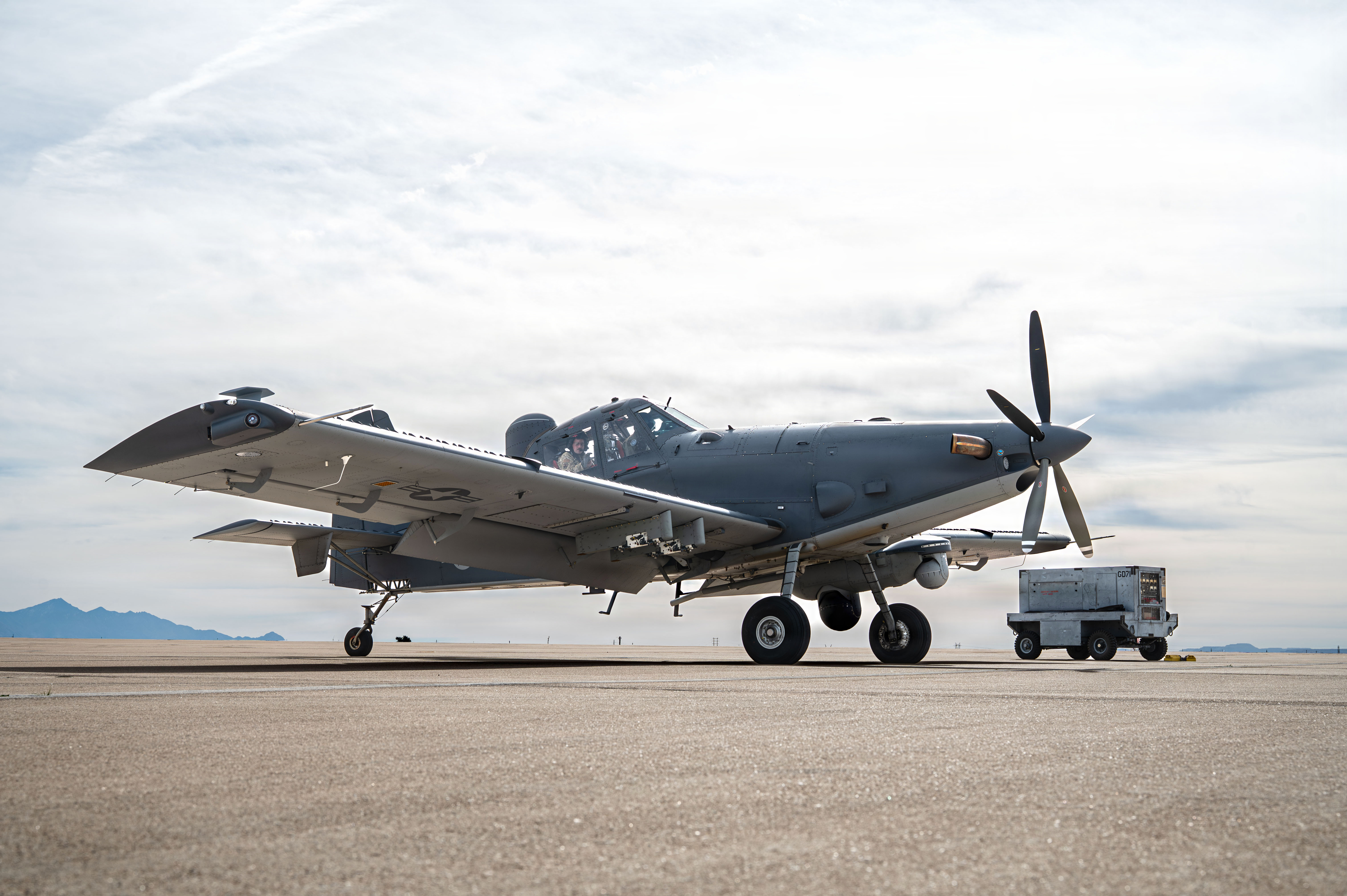
As noted earlier, there have been repeated questions about the survivability and general utility of the OA-1K in more contested environments, something that TWZ has looked at in depth in the past. But Wilson is confident that its mix of capabilities means it can still be relevant, even when facing a high-end opponent.
“First, it complicates things for the adversary because you may not have the aircraft in predictable locations,” Wilson contended. “It ensures that armed overwatch is provided for the joint force to increase their own survivability, and finally, it also ensures the persistent presence of the capability at a low cost compared to other platforms, freeing up higher-end assets for other locations.”
All of this can be achieved with a relatively tiny logistics footprint, with only a handful of contract maintainers required, and the disassembly/reassembly process can be done safely even in austere environments. Each two-person aircrew is being trained in this process, which includes conducting functional check flights in these locations before the aircraft conducts its mission. The actual process of disassembly and reassembly takes just a matter of hours.
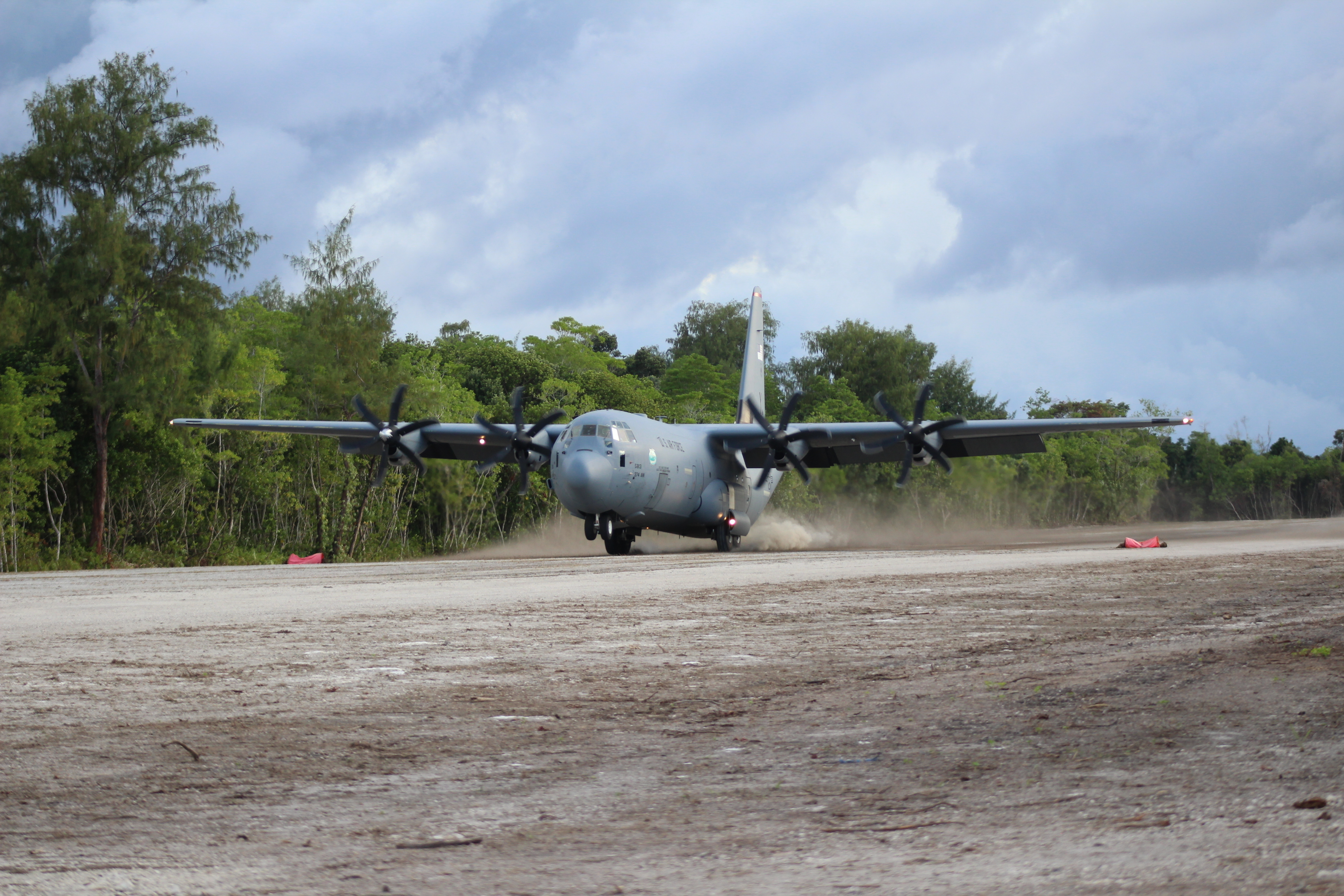
With traditional Air Force platforms, deployments can take days or weeks, not just in terms of physically having to fly the aircraft to wherever it needs to go around the world, but all the planning that’s necessary for the crews, ground support services, etc.
“We have demonstrated this capability by doing a timed disassembly and reassembly in a controlled environment in a hangar,” Wilson added. “We’ll next look to conduct the activity in an actual mobility aircraft during our operational test later this calendar year.” After that, AFSOC will look to conduct the rapid disassembly and reassembly of the Skyraider II as part of exercises, likely next year.
“Just like anything else, the more reps and sets that we accomplish, the more ready we will be whenever we need to conduct it operationally,” Wilson said.
While Wilson did not mention it by name, this mode of operating ties directly into broader Air Force plans for the Agile Combat Employment, or ACE, concept, which is designed to ensure that combat airpower can still be brought to bear in a timely way, even when conventional airbases are put out of action or otherwise held under threat — the kinds of conditions likely in a conflict with a near-peer competitor, like China or Russia. In fact, the OA-1K has a particular role to play in this sort of scenario, since it’s even questionable if more advanced platforms will be able to execute as envisioned in a major conflict under ‘ACE rules.’
Wilson is also confident that, even without recourse to these kinds of expeditionary basing tactics, the OA-1K offers a suitable degree of survivability for many different scenarios.
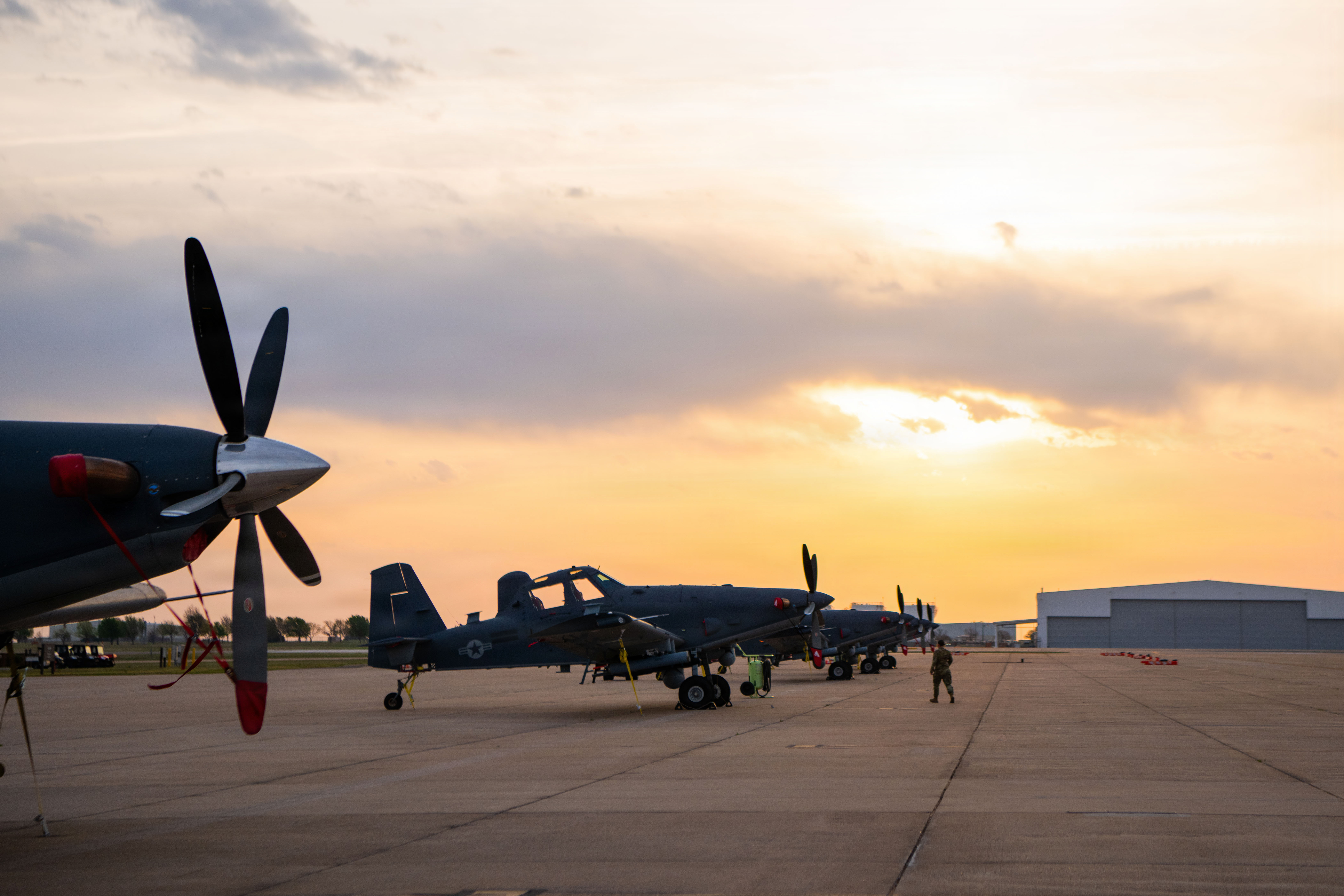
“We have a certain built-in survivability capability for the platform,” Wilson explained. “The contractor has built in cockpit and engine armor, for example, to ensure that it’s survivable, and it does have defensive systems. So I would say it does have a baseline level of defensibility and survivability, and then we are certainly working on, with funding, ensuring that it is modernized and equipped, not only for survivability, but for really any other capability for the platform as well, to ensure that it remains relevant for the future.”
As for that first operational deployment, that could occur “in the coming years,” provided that the program continues to mature as anticipated.
There are potential pitfalls ahead, not least the question about how many OA-1Ks the Air Force will eventually receive.
Wilson reiterated that the program of record still calls for 75 aircraft, but admitted that this could be a challenge to achieve. As it stands, the U.S. Special Operations Command, as the procurement agency for the OA-1K, has cut its planned purchase down to 53 airframes, citing resource constraints.
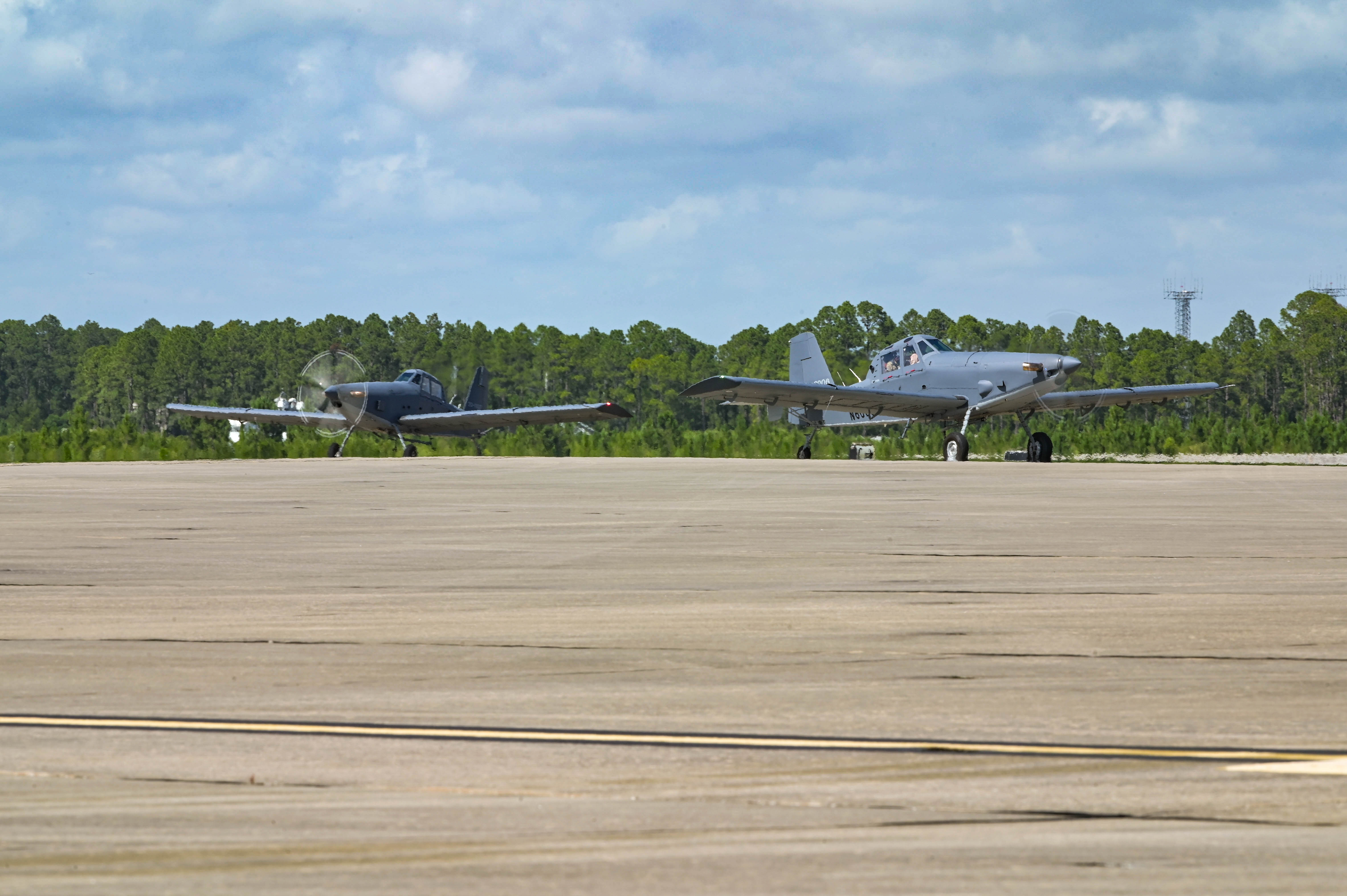
“As the capability sponsor, I would say less than 75 is not desirable,” Wilson noted. “Any decrement below that is essentially a result of resource constraints and budget limitations. We will continue advocating to ensure that we get closer and ultimately achieve that program of record, but as you can imagine, budget constraints that impact various programs have decreased the final fleet size to less than that currently.”
The prospect of a potentially smaller OA-1K fleet means that having the aircraft working alongside other platforms, including drones, may become more important. Already, however, AFSOC sees the value of crewed/uncrewed missions for the Skyraider II.
“The integration of manned and unmanned assets is something that we’re certainly looking at in terms of capability,” said.
When it comes to weapons capabilities, Wilson confirmed that APKWS laser-guided rockets are compatible with the OA-1K and are something that AFSOC wants to have as part of the ordnance options for the platform.
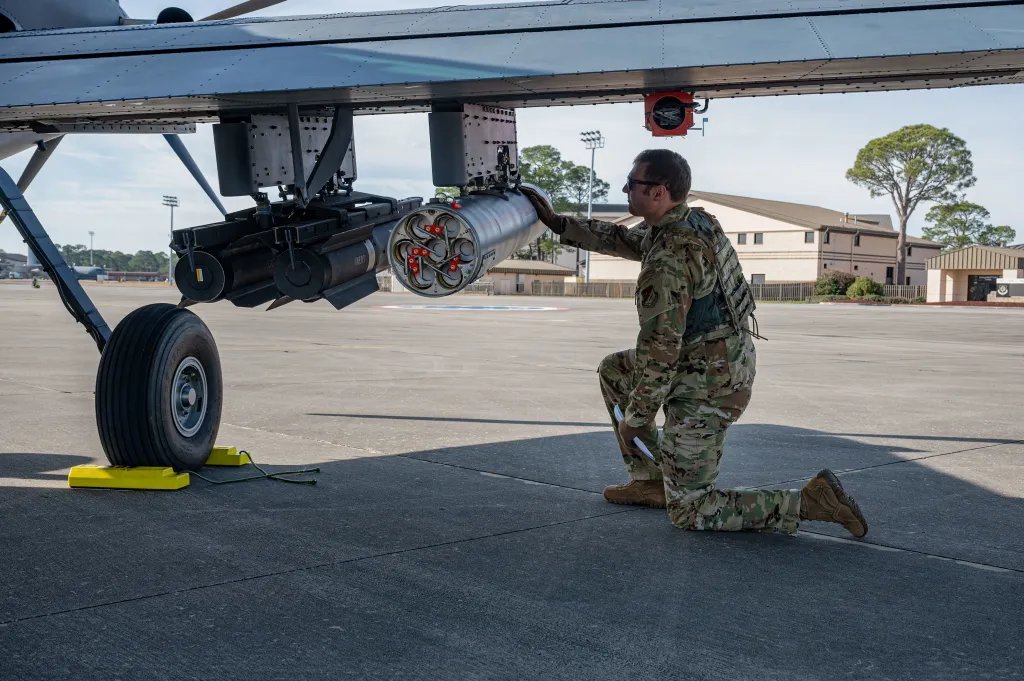
APKWS is quickly becoming a weapon of choice for a wide range of platforms, offering a low-cost, high-volume, precision weapon that is equally effective for both ground attack and counter-drone missions. APKWS was proven incredibly effective on light attack aircraft experiments that tangentially led to the procurement of the Skyraider II, working as the primary weapon for those aircraft. So it should come as no surprise that it will be integrated onto the Skyraider II. It’s actually somewhat surprising it isn’t already.
As far as the Red Wolf cruise missiles, Wilson was a little more circumspect. “That is certainly an area that we are looking to explore to allow for inclusion of that weapon into the planned set,” he said.
As we have explained in the past, adding Red Wolf, or a similar standoff weapon, to the OA-1K armory is one way of ensuring the aircraft can be more relevant and survivable, providing it with a true long-range strike capability.
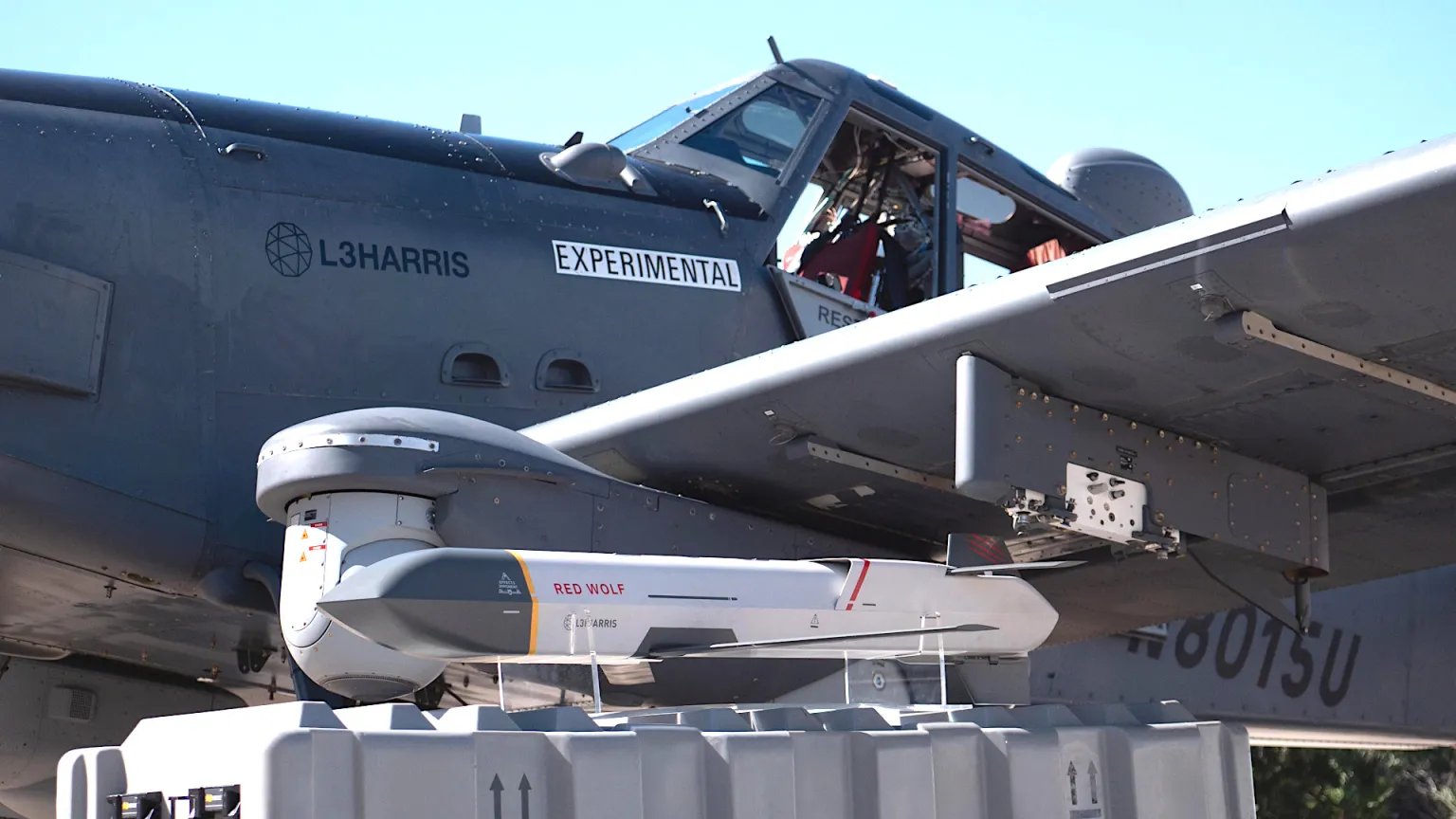
Putting aside the Red Wolf, it is also somewhat surprising that so little weapons integration work appears to have been carried over from earlier iterations of the armed Air Tractor concept, since similar versions of this aircraft have been flying for years, including in combat.
The Air Force service sees the OA-1K as far more than a light attack aircraft and more as a modular platform that will be able to be configured for irregular warfare, armed overwatch, ISR, strike, and more. Clearly, by pushing its rapid-deployment capability, the service is seeking to underscore the relevance of the aircraft in the Pacific theater. Meanwhile, recent conflicts in the Middle East — where traditional airbases were pummelled by drone and missile attacks — have demonstrated that the Air Force still has a requirement to conduct combat operations in other, less-contested environments too.
Once the OA-1K starts demonstrating its rapid-deployment capability, AFSOC hopes that the aircraft will further demonstrate that it fills a niche that no other crewed Air Force platform currently can.
Contact the author: thomas@thewarzone.com
The post Plan To Test OA-1K Skyraider II’s Rapid Deployability Outlined By Air Force Special Ops Command appeared first on The War Zone.