



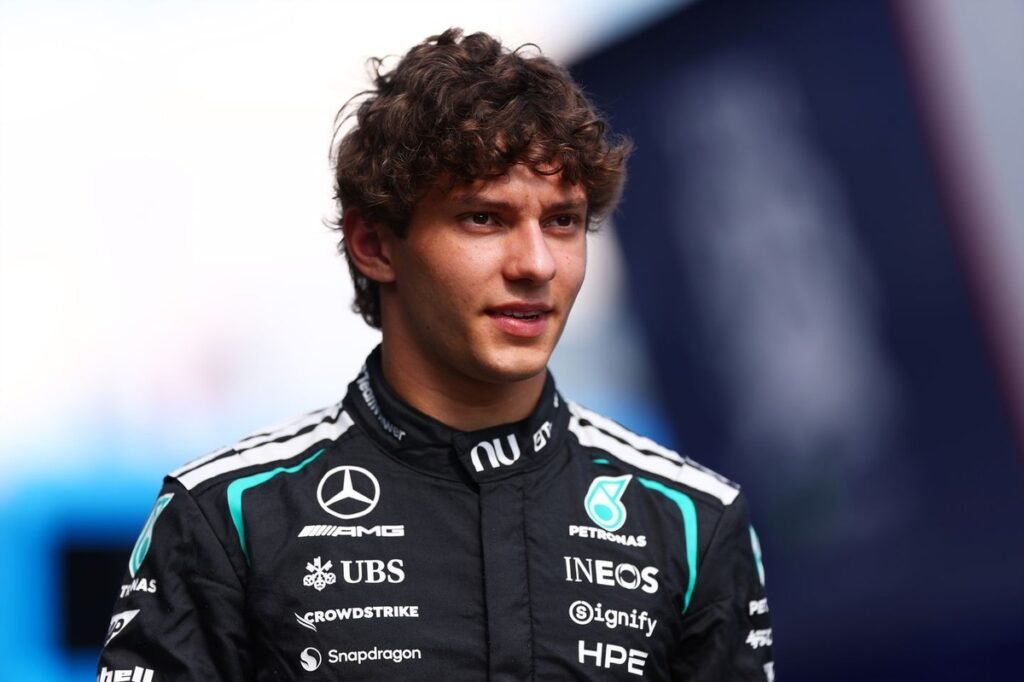
Following Friday practice at the Austrian Grand Prix, Mercedes has firmly established itself as the team to beat—led by championship leader Kimi Antonelli. The Italian topped the timesheets in both the first and second free practice sessions while also delivering the strongest long-run pace.
Traditionally, the second practice session shifts the focus towards long runs with high fuel loads, providing valuable insight into race pace and tyre degradation. Antonelli emerged as the fastest driver, finishing 0.06 seconds per lap ahead of Mercedes teammate George Russell after correcting for different tyre compounds and stint lengths.
McLaren fielded the second-fastest long-run package but already trailed by an adjusted 0.21 seconds per lap. Above all, excessive tyre degradation proved to be the reigning world champions’ biggest weakness, despite showing competitive pace at the beginning of each stint.
No sign of Ferrari: what happened to the engine upgrade?

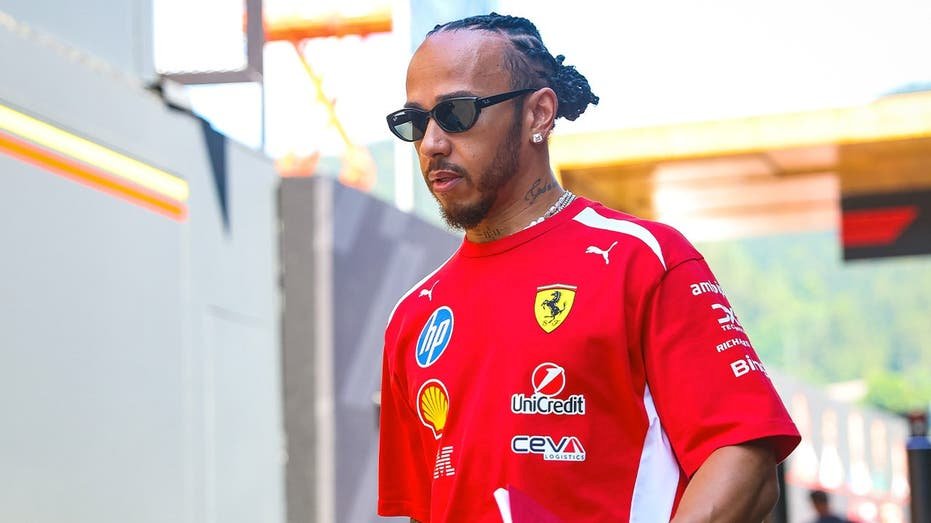
Lewis Hamilton, Ferrari
Photo by: Anni Graf – Formula 1 via Getty Images
Friday proved to be a disappointing day for Ferrari. The Scuderia arrived in Spielberg full of confidence after its victory in Spain with an upgraded chassis and introduced a new power unit update in Austria, hoping to take another step forward.
However, Ferrari fell well short of expectations over both a single lap and in the long runs. Lewis Hamilton was 0.597 seconds off the pace in the second practice session, while his adjusted long-run deficit stood at 0.51 seconds per lap.
Charles Leclerc, who handed his car over to rookie Dino Beganovic during the opening practice session, also struggled to find his rhythm. He was 0.841 seconds behind Antonelli in qualifying simulation, while his long-run deficit increased to 0.97 seconds per lap.
Notably, Ferrari lost the majority of its time through the more technical second and third sectors. The deficit to Mercedes was considerably smaller in the top-speed-dependent opening sector, although this is also the shortest part of the lap. Overall, little remained of Ferrari’s previously impressive chassis performance on Friday in Spielberg.
Just like Barcelona? McLaren once again struggles with tyres

Lando Norris, McLaren
Photo by: Marcel van Dorst / EYE4images / NurPhoto via Getty Images
McLaren showed striking similarities to last weekend in Barcelona. Oscar Piastri looked strong over a single lap, finishing 0.237 seconds behind Antonelli and ahead of teammate Lando Norris (+0.325), but the picture changed completely during the long runs.
As in Barcelona, Piastri visibly struggled with tyre degradation. His adjusted long-run deficit to Mercedes amounted to 0.50 seconds per lap—roughly three tenths slower than Norris.
Overall, McLaren suffered from tyre degradation of around three tenths of a second per lap. By comparison, both Mercedes drivers averaged roughly one tenth per lap while simultaneously producing faster lap times.
Red Bull upgrade: step forward or no impact?

Isack Hadjar, Red Bull Racing
Photo by: Sam Bagnall / Sutton Images via Getty Images
Red Bull was also under the spotlight in Spielberg. The team’s second major upgrade package of the season was expected to deliver the final step towards the front after the first substantial update in Miami had already brought significant gains. However, the anticipated breakthrough failed to materialise on Friday.
Max Verstappen was 0.550 seconds adrift of Antonelli in qualifying simulation, while his adjusted long-run deficit stood at 0.27 seconds per lap. The former world champion also struggled with tyre degradation, and the Red Bull consistently lost time to the Mercedes across all three sectors.
Nevertheless, Red Bull currently appears to be the third-fastest team behind Mercedes and McLaren. Overnight setup changes could still alter the competitive order before qualifying.
Midfield: Audi strong again, Williams and Aston Martin off the pace

Lance Stroll, Aston Martin Racing
Photo by: Sam Bagnall / Sutton Images via Getty Images
The midfield painted a familiar picture. Alpine, Racing Bulls and Audi currently appear to make up the leading midfield group, followed by Haas and Williams with a noticeable gap. Behind them sit the backmarkers Cadillac and Aston Martin.
Nico Hulkenberg once again impressed with a strong long-run performance, trailing Mercedes by just 0.80 seconds per lap. As has been the case on previous Fridays, however, the question remains whether Audi can finally convert this pace into meaningful championship points. The German manufacturer also introduced a comprehensive upgrade package in Spielberg.
Alpine (+0.83) and Racing Bulls (+0.94) also delivered encouraging long-run pace. Haas, on what is traditionally one of its strongest circuits, lost 1.27 seconds per lap to Mercedes. Williams (+1.82) and Aston Martin (+3.03) were clearly off the pace, while Cadillac was unable to complete any long runs due to technical problems.
Heatwave: could Austria become a three-stop race?

Max Verstappen, Red Bull Racing
Photo by: Mark Thompson / Getty Images
The ongoing European heatwave has also reached Spielberg and is expected to have a major impact on race strategy. Last year, the frontrunners completed the race with two pit stops, while some midfield teams managed just a single stop. Under the current conditions, however, a one-stop race in 2026 appears highly unlikely.
Friday’s long runs produced an average tyre degradation figure of 0.164 seconds per lap across the field. As a result, a three-stop strategy—similar to Barcelona—has become a realistic possibility. That said, the circuit is expected to gain grip as the weekend progresses, which could reduce tyre wear to some extent.
“We didn’t really expect such warm conditions here in Austria,” Pirelli Head of Motorsport Dario Marrafuschi told Sky. “We’ve brought the three softest compounds, and tyre degradation has been higher than anticipated.
“Before the weekend, we expected either a one-stop or a two-stop race, with two stops being slightly quicker. Under these conditions, however, we’ve measured tyre degradation of almost two tenths per lap during the long runs. At the moment, I therefore expect the race to be at least a two-stop affair.”