




Paris and Milan-Cortina delivered two sharply different Olympic spectacles, one that ignited culture-war backlash and another that leaned into heritage and national pride, a contrast some observers say mirrors the political paths of Emmanuel Macron and Giorgia Meloni.
Olympic opening ceremonies rank among the world’s most-watched cultural broadcasts, making them powerful stages for nations to project how they see themselves and how they want to be seen. “Paris tried to reinterpret tradition. Milan showcased tradition,” Hugh Dugan, an Olympic Truce advocate and former U.S. diplomat, told Fox News Digital, framing the contrast between the ceremonies as part of a broader debate over the role of culture, politics and identity in the Games.
Dugan described the 2024 Paris ceremony as “a deliberately disruptive, decentralized, urban spectacle… visually bold but polarizing,” built around a narrative collage of modern France, diversity and reinterpretation of history. He said choreography and costuming “often carried explicit social commentary,” fueling debate over whether parts of the ceremony were intentionally provocative or ideologically driven.
The 2024 Paris opening ceremony, staged along the Seine, sparked controversy after a segment widely interpreted as referencing Leonardo da Vinci’s “Last Supper” drew criticism from Christian groups and conservative commentators before organizers clarified the intent and apologized for any offense.
The moment became a flashpoint in France’s wider culture-war debate over identity, religion and the meaning of public symbolism. The Conversation reported that the ceremony triggered a national discussion over “woke ideology” and France’s cultural direction.
Emma Schubart, a research fellow at the U.K.-based Henry Jackson Society, told Fox News Digital, “The Olympics have become a stage for cultural politics as much as sport.”
She continued, “President Emmanuel Macron’s France leaned into progressive, ‘woke’ politics and post-national symbolism, while Prime Minister Giorgia Meloni’s Italy emphasized heritage, tradition and unapologetic national pride. These aesthetic choices reflect a widening divide over Europe’s cultural and political future.”
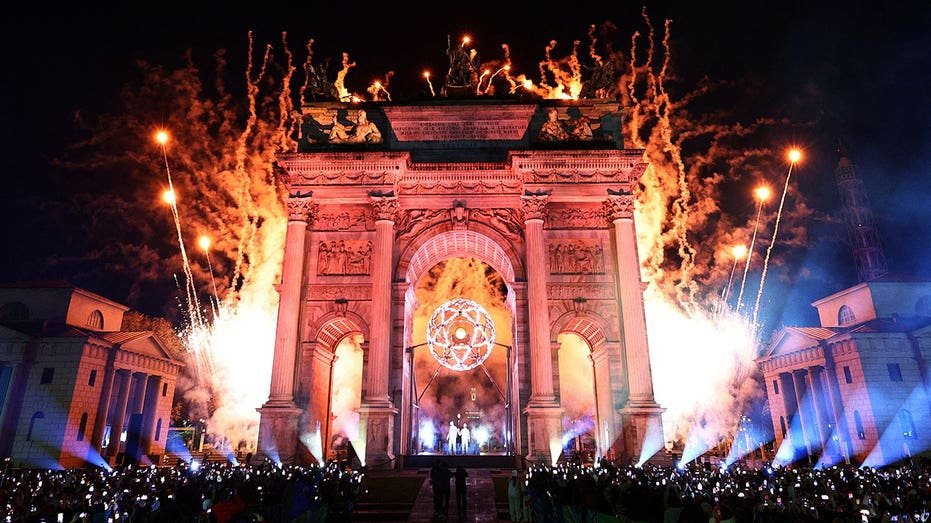
Dugan praised the Italian games, saying the Milan-Cortina Winter Games ceremony highlighted “tradition, harmony, co-existence and the Olympic truce,” emphasizing heritage, landscapes and the athlete procession over political messaging. He called the Italian approach “panoramic, heritage-driven, classical,” compared with Paris’ “maximalist, narrative-driven, experimental” style.”
IOC CHIEF LAMENTS ‘DISTRACTING’ NEWS CYCLE AHEAD OF 2026 WINTER OLYMPICS
Reporting on the Milan ceremony described it as a unity-focused event celebrating Italian culture, design and scenery while pushing past pre-Games tensions and highlighting the Olympic ideal of connection and peace. Coverage emphasized tradition and spectacle rather than ideological symbolism, with performances rooted in classical imagery and national identity.
Dugan, who recently launched a Truce Compliance Index tracking how countries observe the tradition, argued the difference reflected two distinct philosophies about what Olympic ceremonies should represent.
Paris leaned into modern identity and pluralism, he said, presenting an ambitious cultural narrative that some audiences found bold while others viewed it as politically charged. Milan, by contrast, centered its message on timeless themes tied to heritage, human connection and the Olympic truce.
The contrast between the ceremonies highlights a broader evolution of the Olympics themselves. Host nations increasingly use opening ceremonies to project national identity and values, whether through modern reinterpretation or traditional symbolism.