






Is the U.S. Involved in Israel’s War on Lebanon?
The public deserves clarity and accountability on the use of American assets.
The Trump administration’s interventions in both Iran and Venezuela have centered war powers at the heart of congressional and public scrutiny. For Venezuela, war powers resolutions narrowly failed in both chambers. Repeated congressional efforts to rein in the war in Iran fell short until just last night, when the House narrowly passed a resolution limiting President Donald Trump’s authority to continue military action without congressional authorization (although the effort will almost certainly fail in the Senate). Nevertheless, the fight has succeeded in making the American public more attuned to the constitutional and legal questions surrounding warfare and congressional authority. Now it is Lebanon’s turn.
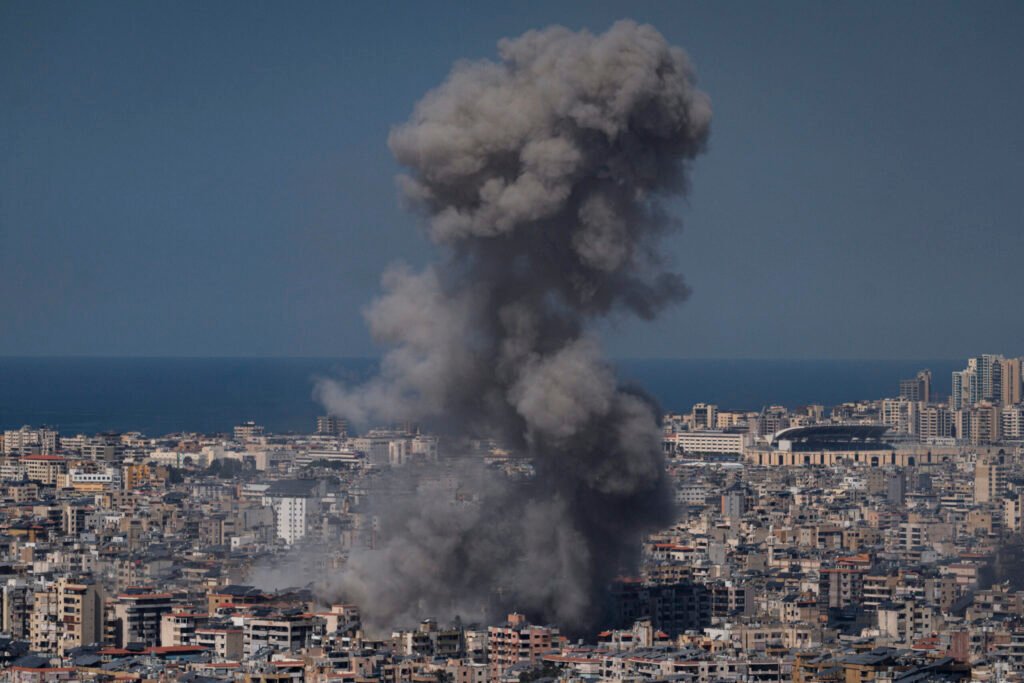
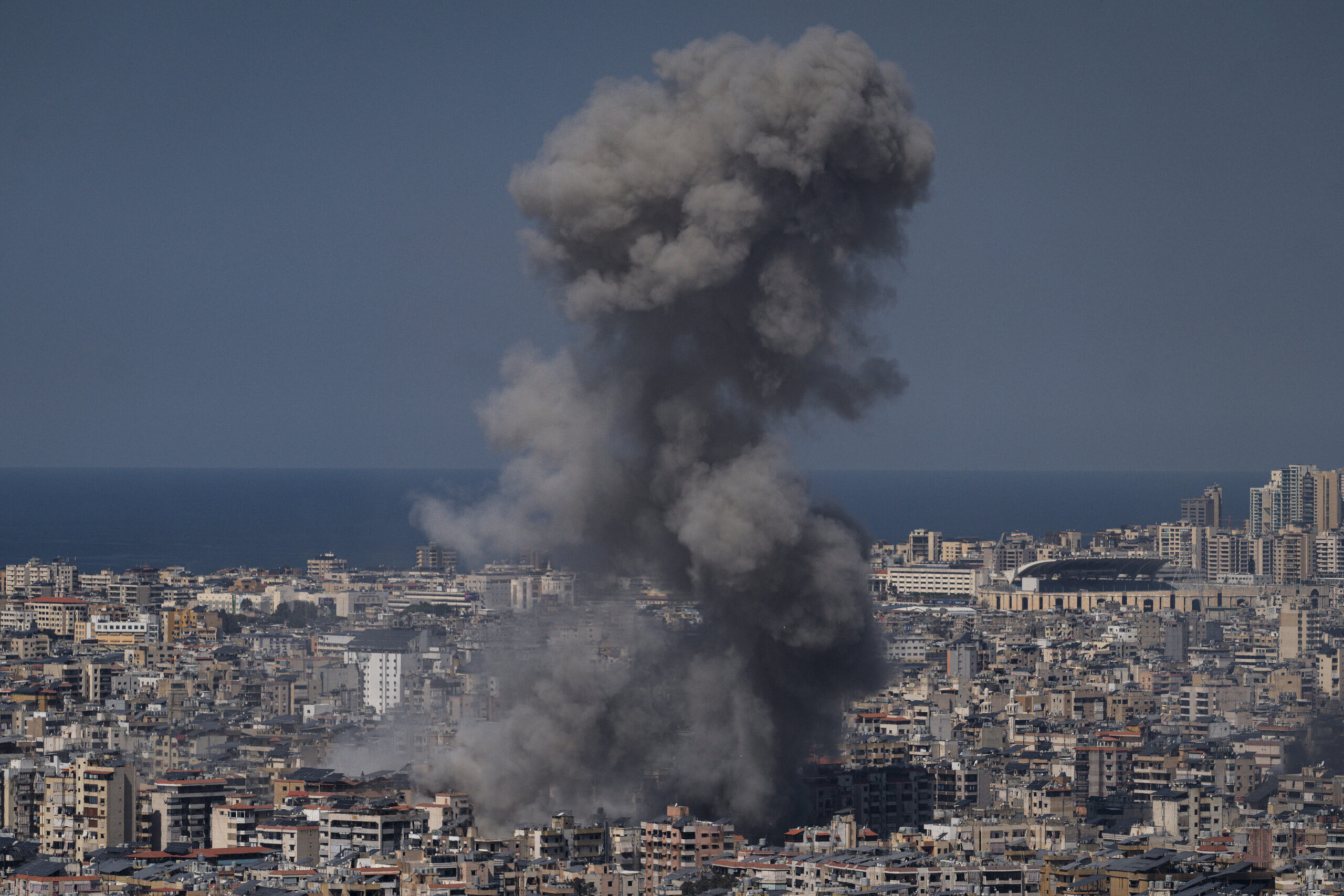
Rep. Rashida Tlaib (D-MI) has successfully forced a vote in the House on a War Powers Resolution for Lebanon. Since the beginning of Israel’s war on Lebanon, over 3,400 people have been killed; 1.2 million people have been displaced from their homes in Israel’s ongoing ethnic cleansing campaign in the country’s south. The Israeli Defense Minister Israel Katz explicitly stated that the IDF intended to “accelerate the destruction of Lebanese homes in the border villages … in accordance with the Beit Hanoun and Rafah model in Gaza.”
In the conventional sense, war powers are typically invoked when U.S. armed forces are actively involved in hostilities, such as combat missions or refueling jet planes during operations within a conflict. It is for that reason that there are lawmakers who are hesitant to say that the United States is actively involved in Lebanon. But, while the American public may not see American troops in southern Lebanon, that does not mean the U.S. is not involved.
Some suspect that the United States is actively engaged in intelligence-sharing with the Israel Defense Forces in ways that enable gross human rights abuses and violate the 1973 War Powers Resolution. Sen. Peter Welch of Vermont, which was signed by 11 other Democratic Senators, wrote a letter to U.S. Central Command (CENTCOM) by asking:
Have any personnel under your command shared intelligence with the Israeli government that could be used to support the creation, enforcement, or targeting of evacuation zones in Lebanon and/or Iran? Has anyone under your command analyzed whether such sharing would violate the terms of any intelligence sharing agreements with regards to the use of any U.S.-provided intelligence in operations that might violate international law, U.S. law, and the laws of armed conflict?
While there has yet to be public clarity from CENTCOM, Drop Site News documented a major escalation in Israeli military operations in Lebanon, including what Israeli officials reportedly described as one of the largest coordinated strike campaigns in recent months. Per Drop Site, Israeli officials claimed the operation was “greenlit” by Washington for a “surgical and targeted strike.”
Furthermore, an April 2026 report from Middle East Eye highlighted how a British MQ-9B Protector surveillance drone reportedly operated over Lebanon before, during, and after a deadly Israeli strike near the Lebanese village of Baalbek. The MQ-9B Protector is manufactured by the U.S. defense contractor General Atomics and relies on American satellite communications, command-and-control systems, and interoperable intelligence systems designed for integration with U.S. and NATO operations.
Considering that both the United States and United Kingdom are members of the Five Eyes intelligence alliance, this report raises serious questions regarding whether British intelligence assets were conducting intelligence operations in conjunction with U.S. intelligence to support Israeli military operations.
These examples underscore the precise relevance of the War Powers Resolution in the context of Lebanon. Sections 8(a) and 8(c) make clear that Congress’s constitutional and statutory oversight obligations are not limited solely to instances of direct U.S. combat operations. Rather, the resolution is also implicated when U.S. forces are introduced into situations involving the “imminent involvement in hostilities,” or when such forces are assigned to “command, coordinate, participate in the movement of, or accompany” foreign military forces engaged in active hostilities.
Thus, at a minimum, lawmakers should immediately demand full transparency regarding any intelligence-sharing, surveillance coordination, targeting assistance, or operational support connected to Israeli military operations in Lebanon. Congress should also determine whether such activities trigger the reporting requirements contained in Section 4(a)(1) of the War Powers Resolution.
The Trump administration ran on the promise of removing America from endless wars. It has instead inserted the United States deeper into conflicts across the globe, despite growing economic strain at home. Covert U.S. support for Israel’s campaign in southern Lebanon would highlight the lawlessness, strategic incoherence, and lack of accountability that have increasingly defined modern American foreign policy. If Congress fails to assert its constitutional authority now, it will further normalize a dangerous precedent in which administrations can involve the United States in foreign conflicts through intelligence sharing, operational coordination, and proxy support while avoiding both congressional authorization and public scrutiny.
The War Powers Resolution was specifically designed to prevent this exact erosion of democratic oversight. Congress must therefore decide whether it still intends to exercise its constitutional war-making authority—or whether that authority will continue to be quietly delegated to the executive branch through undeclared and increasingly opaque foreign entanglements.
The post Is the U.S. Involved in Israel’s War on Lebanon? appeared first on The American Conservative.