




A 33-year-old filmmaker survived a 100-foot cliff fall on Tom, Dick, and Harry Mountain in Oregon thanks to a doctor on the scene and a National Guard chopper rescue.
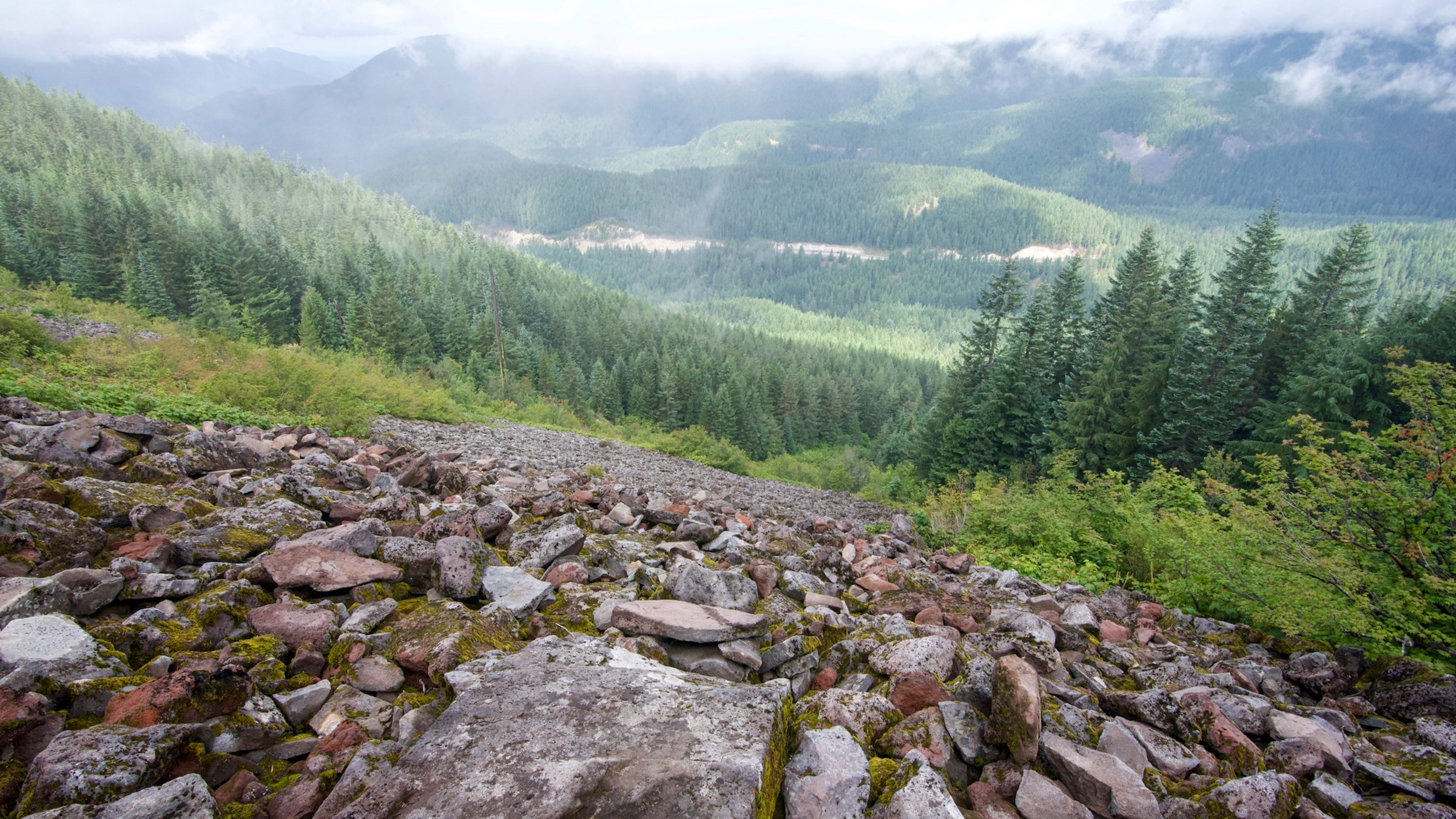
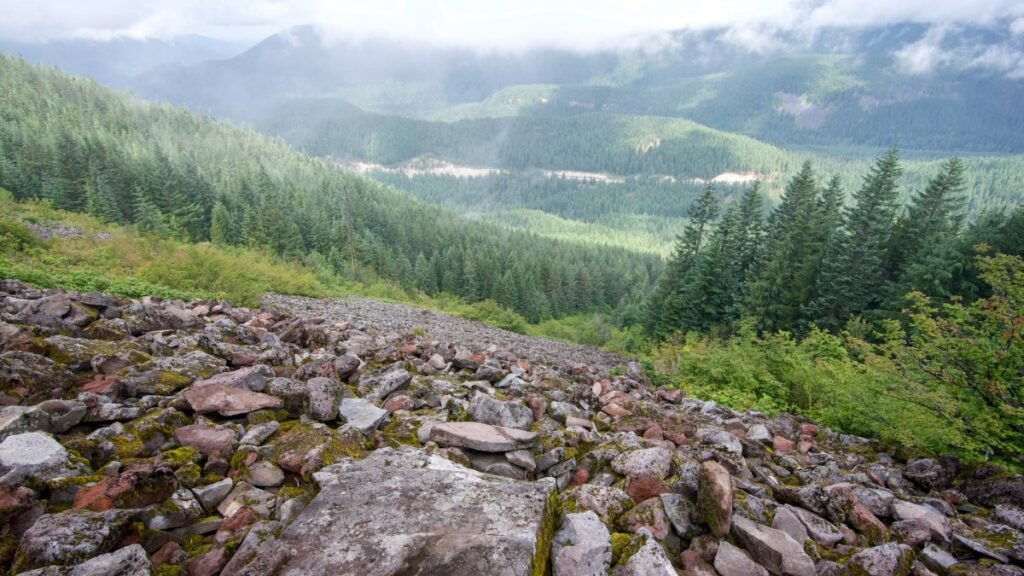
Tom, Dick, and Harry Mountain is a roughly two-mile-long volcanic ridge southwest of Government Camp (Photo: Ahorica)
Published September 16, 2026 05:07PM
Just before 3 P.M. on September 15, a 33-year-old man fell 100 feet off a ledge on the second peak of Tom, Dick, and Harry Mountain—a jagged, multi-summit ridge above Government Camp in Oregon’s Mount Hood National Forest.
The man tumbled while filming a movie, according to the Clackamas County Sheriff’s Office (CCSO). After his initial free fall, he slid 15 to 20 feet down the steep slope. Authorities have not released the man’s name or extent of injuries.
“It’s hard to tell exactly what caused it, but at some point he lost his footing and fell from the top of the cliff band,” Sergeant Adam Peterson, a supervisor with the CCSO search-and-rescue team who responded to the incident, told Outside. Peterson added that the man had rigged ropes to capture a shot. “They were filming with a drone, just a couple of guys, making some sort of an indie film.”
After the accident, witnesses told CCSO that the man was lying on his side with visible injuries, breathing but not moving.
A Mountain with a Funny Name—and Serious Hazard
Tom, Dick, and Harry Mountain is a roughly two-mile-long volcanic ridge located 55 miles southeast of Portland, with three peaks rising to around 5,070 feet. Internet lore holds that early guides named the range after the idiom “every Tom, Dick, and Harry,” loosely meaning a random assortment of ordinary people.
For decades, the peak was known simply as Tom Dick Mountain. In 1969, the U.S. Board on Geographic Names—a government agency not usually known for its sense of humor—added “Harry” to the mountain’s official name. Don’t confuse it with Georgia’s Big John Dick Mountain, Bloody Dick Peak in Montana, or Maine’s double-whammy: Tumbledown Dick Mountain and Tumbledown Dick Head.
The name may be a punchline, but the mountain itself is no joke. Trails in the lower Mirror Lake area are popular with casual day hikers, but the upper ridgelines are steep, exposed, and loose near the summits, according to the U.S. Forest Service.
Heroic Bystanders and Medical Doctor Step In
Roughly half an hour after the incident, two people helped the man—one of whom was a medical doctor. The duo worked to keep him from rolling further down the hillside and applied direct pressure and tourniquets to control his bleeding, according to the CCSO report.
During this time, they relayed details of his condition to rescuers, helping them prepare the appropriate response measures.
“[The doctor] was able to control bleeding and handle essentially shock symptoms on the scene,” Peterson said. “That was very helpful due to the level of trauma.”
Search-and-rescue coordinators activated a full rescue operation, with an Oregon National Guard helicopter crew and a paramedic reaching the man by 5 P.M. Within 30 minutes, responders strapped the man to a backboard, airlifted him into a helicopter, and flew him to a nearby hospital.
Rescues Are Escalating Near Mount Hood
Tom, Dick, and Harry Mountain keep rescuers busy, Peterson said. It sits directly above the popular Mirror Lake trail and next to a ski area, drawing countless hikers and an ongoing stream of minor-injury reports.
“Usually it’s a lot more of your ankle sprains, things like that, for hikers over there,” he said.
Just across the highway, though, is the south face of Mount Hood itself, where serious falls are far more common.