






Facebook
X
Reddit
WhatsApp
Email

Gulf Arab States Under Pressure As Iranian Attacks Grind On

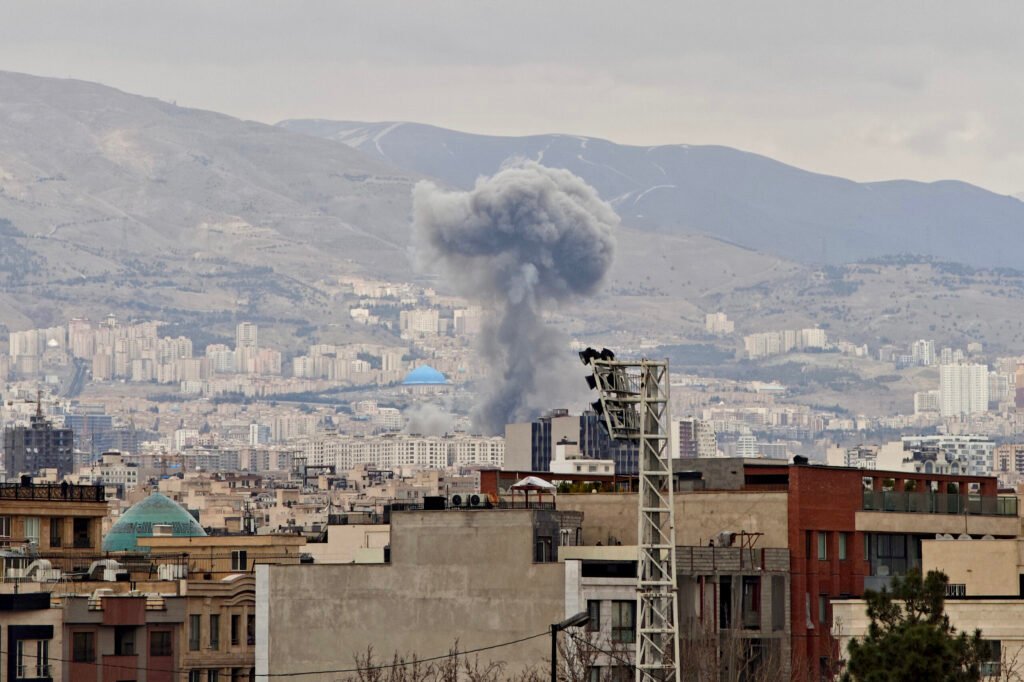
Iran appears to be increasingly focusing its retaliatory attacks against energy production infrastructure in Gulf Arab States. The U.S.-Israeli operation against Iran is also continuing at a significant tempo, including a major new wave of Israeli strikes going after leadership targets in Tehran.

Readers can catch up on previous developments in the ongoing conflict in our previous rolling coverage here.

Increased targeting of Gulf Arab States’ oil and natural gas production is part of a clear Iranian strategy to put pressure on those countries to, in turn, create complications for the United States. As the economic pressure builds, the idea is that these countries will seek to end the conflict, and/or that relations with the U.S. will sour. The prospect of major, long-term disruptions in energy exports from the region has global ramifications, as well, which could bring immense external pressure to end the conflict. There is also the aspect of drawing Arab countries into the conflict, which would complicate it politically and militarily. In addition, some energy targets are not as well defended as U.S. bases in the region, for instance, and scoring hits with the now finite weapons Iran has on hand becomes easier.

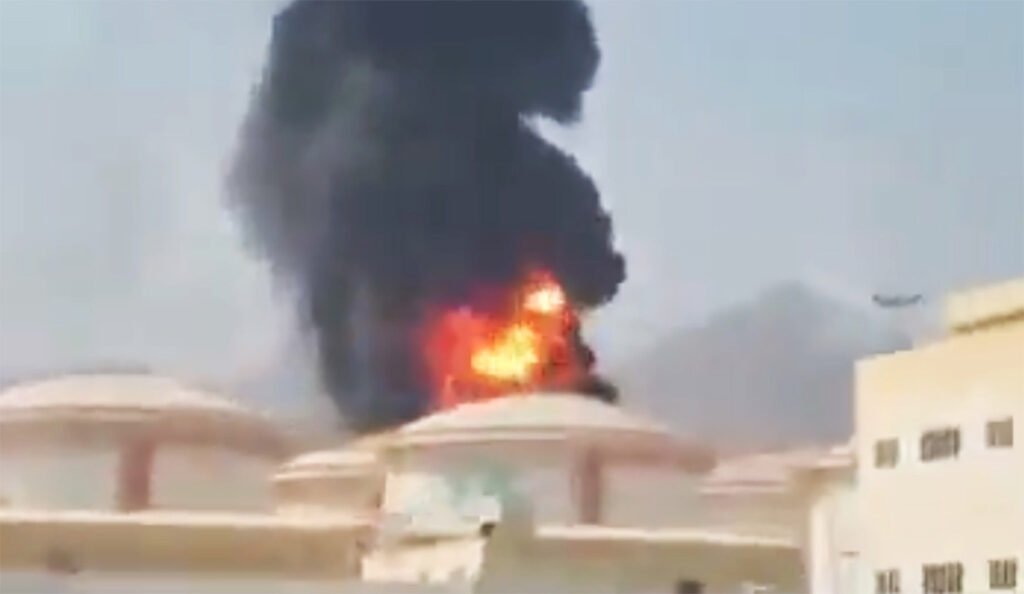
Iranian attack drones struck oil storage infrastructure in Fujairah, UAE, this morning, causing a large fire.

Notably, Fujairah is the only major oil export terminal in the UAE that avoids the now-closed Strait of Hormuz. pic.twitter.com/DdAbVOyRoc

— OSINTtechnical (@Osinttechnical) March 3, 2026

So, it’s not surprising that Iran has morphed its tactics in this manner. How this will all play out is unknown. But if the war continues on for a prolonged period, and interceptors run low while Iran’s stocks of drones and missiles don’t dry up, this entire issue could become greatly magnified.

So far, Qatar and the United Arab Emirates, as well as the United States, have pushed back on reports that interceptor stocks are dwindling and the U.S. is resisting replenishing them due to its own stockpile concerns. It isn’t clear if this is a case of strategic counter-messaging or if indeed stockpiles remain in the green, although from everything we understand about the stockpile issue overall, the former seems far more likely.

Statement from the International Media Office of the State of Qatar in response to an article published by Bloomberghttps://t.co/FS55s7QOhi pic.twitter.com/ZFfev06Zja

— Qatar’s International Media Office (@IMO_Qatar) March 2, 2026

Statement by the UAE Ministry of Foreign Affairs in Response to Inaccurate Reporting by Bloomberghttps://t.co/5bUvMxKnDU pic.twitter.com/3hlJu9Mmdw

— MoFA وزارة الخارجية (@mofauae) March 3, 2026

pic.twitter.com/JWw8Vuh0N5

— Rapid Response 47 (@RapidResponse47) March 3, 2026

Gulf states are in a race against time: will their air-defense interceptors, with their impressive success rates so far, have to be rationed before Iranian drones and missiles run out? The calculation also depends on how fast the U.S. and Israel keep destroying Iranian launchers.…

— Yaroslav Trofimov (@yarotrof) March 3, 2026

Energy-related targets impacted are relatively wide-ranging and the scope of attacks appears to be becoming larger with time.

A large fire broke out today in the Oil Industry Zone in Fujairah in the United Arab Emirates (UAE), reportedly caused by falling debris from the interception of an Iranian drone. The port of Fujairah sits on the Gulf of Oman, on the other side of the highly strategic Strait of Hormuz.

UAE intercepted a drone over Fujairah today, a hub just outside the Strait of Hormuz. The IRGC is trying to cause a real energy crisis by shutting all routes. Debris caused a fire in the Oil Industry Zone, which was ultimately put out.pic.twitter.com/5GlbGuyzOm

— Fatima Alasrar (@YemeniFatima) March 3, 2026

The Fujairah Media Office has announced that authorities in the emirate responded this morning to a fire at the Fujairah Oil Industry Zone, which was caused by falling debris.#EmiratesNews #DubaiOneTv #UAE #Dubai #News pic.twitter.com/t7kxAEjKLM

— Emirates News (@Emirates_News) March 3, 2026

According to state-run Oman News Agency, two Iranian drones were shot down today above the Dhofar governorate in southern Oman, while a third came down close to the port of Salalah. No casualties or damage were reported.

Moment Iranian drone strike hit the Port of Salalah in Oman. pic.twitter.com/OGQs7CYqr3

— Clash Report (@clashreport) March 3, 2026

The port of Duqm in Oman was also targeted by several drones, according to the country’s state news agency. One of these is said to have struck a fuel tank.

Iranian attack drones struck Oman again today, hitting a fuel storage tank at the Port of Duqm. pic.twitter.com/HFSKL9Hn6l

— OSINTtechnical (@Osinttechnical) March 3, 2026

Several ships attempting to cross the Strait of Hormuz have also come under attack, as you can read about here. Yesterday, the U.S. Central Command denied Iranian claims that the Strait was closed. Online ship tracking data shows a major slowdown in traffic overall, but there is still some movement through this highly strategic waterway. Imagery is also emerging showing a backlog of ships waiting to pass through.

Minimal vessel traffic seen in Strait of Hormuz amid reported closure

The latest #MarineTraffic playback shows visibly reduced transit density, alongside holding patterns, slower speeds, and vessels remaining outside the strait as operators reassess risk. pic.twitter.com/pfqk5rcbg8

— MarineTraffic (@MarineTraffic) March 3, 2026

Tanker Pola pulled a Leeeroy Jennnkins yesterday and ran the Strait with her AIS off.

Expect others to follow suit. https://t.co/3HcYxHJJ9o pic.twitter.com/7k34IVq5cw

— Sal Mercogliano (WGOW Shipping) 🚢⚓🐪🚒🏴‍☠️ (@mercoglianos) March 3, 2026

Hormuz Strait: Oil tankers and cargo ships are backed up in a miles-long queue.

Since the strait handles about 20% of global oil trade, the disruption is driving oil and gas prices higher. pic.twitter.com/z00N3ihN2E

— Clash Report (@clashreport) March 3, 2026

Oil production at Iraq’s largest oil field, in Shafaq, has reportedly been halted, as has the flow of oil through a pipeline that links its northern Kurdish autonomous region with Turkey. There are reports that Iraqi oil exports, overall, have slowed dramatically due to the ongoing conflict.

BREAKING: Production suspended at Iraq’s largest oil field – Shafaq

— Faytuks Network (@FaytuksNetwork) March 3, 2026

Iraq has halted crude oil exports from its Kurdistan region through the key pipeline to the Turkish port of Ceyhan.

Around 200,000 barrels per day of exports were shut in after producers reduced output as a precaution amid escalating Middle East conflict.

Production has… pic.twitter.com/3Sm4zNyXA6

— Clash Report (@clashreport) March 3, 2026

IMPORTANT: Basrah crude exports are running on thin ice.@Kpler data shows ~8.7Mb of effective headroom — just ~3 days of cover if tanker constraints persist. No inbound crude tankers into the Gulf on March 2 raises the risk of ballast shortages and potential Iraqi production…

— Amena Bakr (@Amena__Bakr) March 3, 2026

This all follows Iranian attacks yesterday that caused a halt to some operations at the Ras Tanura refinery in Saudi Arabia and a shutdown in liquid natural gas production by state-owned QatarEnergy in that country.

QatarEnergy to stop downstream production

Further to the decision by QatarEnergy to stop production of liquefied natural gas (LNG) and associated products, QatarEnergy is stopping the production of some downstream products in the State of Qatar, including urea, polymers,…

— QatarEnergy (@qatarenergy) March 3, 2026

Further rolling coverage can be found below, with the newest updates at the top.

UPDATE: 11:23 AM EST-

U.S. and Israeli strikes on Iran continue. The Israel Defense Forces say a wave of 100 jets dropped 250 munitions on leadership targets in Tehran earlier this morning. A building in the city of Qom, where Iran’s Assembly of Experts was reportedly meeting as part of the process of choosing a new Supreme Leader, was also struck.

Overnight, the Israeli Air Force struck Iran’s “leadership complex” in Tehran, the military says.

The IDF says around 100 fighter jets dropped over 250 bombs on the complex.

The buildings targeted at the complex included Iran’s presidential bureau, the headquarters of Iran’s… pic.twitter.com/CQYMx0gww0

— Emanuel (Mannie) Fabian (@manniefabian) March 3, 2026

The Israeli Air Force has attacked the “Assembly of Experts” meeting in Qom, Iran as they were gathering to choose the new Supreme Leader. The council is comprised of 88 religious leaders from around Iran who choose the Ayatollah. pic.twitter.com/kZ68nJE9tb

— OSINTdefender (@sentdefender) March 3, 2026

An airstrike targeting a building housing the Assembly of Experts, who had gathered to appoint the next leader of the Islamic Republic Qom, Iran.

Initial reports claim at least 80-90 senior clerics were at the gathering, however the figure is not currently verified. pic.twitter.com/4Cy8BrLXXj

— Aurora Intel (@AuroraIntel) March 3, 2026

The Israelis just struck the meeting of the Iranian Supreme Council where officials were gathering to choose a new Supreme Leader, a senior Israeli official told Fox News.

“Israel struck while they were counting the votes for the appointment of the supreme leader.”

— Trey Yingst (@TreyYingst) March 3, 2026

Iranian President Masoud Pezeshkian has issued a statement regarding the delegation of authorities to regional officials to enable “quick decision making” amid ongoing strikes targeting the country’s leadership.

Message from the President of Iran delegating powers to the country’s Governors for “quick decision making.” https://t.co/gvyDIhvBdH

— Jennifer Griffin (@JenGriffinFNC) March 3, 2026

The video below is said to show a Centurion Counter-Rocket, Artillery, Mortar (C-RAM) system in Iraq firing on an incoming Iranian drone. The Centurion is a ground-based version of the Phalanx Close-In Weapon System (CIWS) used on various U.S. and foreign warships, and is armed with a six-barrel 20mm Vulcan Gatling-type cannon.

Footage of an American C-RAM shooting down an incoming Iranian attack drone over northern Iraq this morning. pic.twitter.com/mKzK4RLsxG

— OSINTtechnical (@Osinttechnical) March 3, 2026

French fighters are now flying over the United Arab Emirates to help bolster that country’s defenses. France is also reportedly sending anti-air and anti-drone capabilities to help protect Cyprus in the Eastern Mediterranean.

France deploys fighter jets over UAE to protect its military bases – France 24 https://t.co/lbouacADTi

— Jennifer Griffin (@JenGriffinFNC) March 3, 2026

France will send anti-missile and anti-drone systems to Cyprus, as the U.S.-Israel-Iran war heightens tensions in the Middle East, two senior Cypriot government officials have told POLITICO.https://t.co/OCVkZDVS02

— POLITICOEurope (@POLITICOEurope) March 3, 2026

Iranian media reports say the country’s Islamic Revolutionary Guard Corps has targeted dissident groups in northern Iraq. Axios has also reported that President Donald Trump spoke with Iraqi Kurdish leaders this past week about “what might come next.” There have been reports raising the possibility of armed Iranian Kurdish groups in Iraq launching a ground incursion even before the current conflict began.

IRAN’S REVOLUTIONARY GUARDS SAYS IT TARGETED DISSIDENT GROUPS PLANNING TO ATTACK IRAN FROM IRAQI KURDISTAN REGION – IRANIAN MEDIA

— Phil Stewart (@phildstewart) March 3, 2026

Zoom in: Trump spoke to leaders from the two main Kurdish factions in Iraq – Masoud Barzani and Bafel Talabani – a day after the war started, two of the sources said. A source with knowledge of the calls said they were “sensitive” and declined to give details on their content https://t.co/1UN9dPkm5l

— Barak Ravid (@BarakRavid) March 3, 2026

U.S. President Donald Trump has now said that it is “too late” to negotiate with Iran’s new leadership, according to Fox News. U.S. Special Envoy Steve Witkoff, who took part in negotiations in the lead-up to the current conflict, claims that Iranian officials say “have enough enriched uranium for 11 nuclear bombs.”

LATEST UPDATES: Trump says he told Iran’s new leadership it is ‘too late’ to talk pic.twitter.com/IzVsWESuBe

— Fox News (@FoxNews) March 3, 2026

Witkoff says the Iranian negotiators walked into the room and said, “We have enough enriched uranium for 11 nuclear bombs.”

That was their starting position. pic.twitter.com/eDOVm1NFtB

— Eylon Levy (@EylonALevy) March 3, 2026

Contact the author: thomas@thewarzone.com

The post Gulf Arab States Under Pressure As Iranian Attacks Grind On appeared first on The War Zone.
sharing is caring!

Over the weekend, the United States and Israel launched joint

Foreign Affairs Iran and the ‘Phil Leotardo Doctrine’ Decapitating and

Humanoid robotics companies have already shown their machines can run

Hook is the acting boss of The Opps in Samoa

Loading