
The FIA will enforce its sporting regulations more strictly in Formula E’s Gen4 era to clamp down on teams colluding to “manipulate” races.
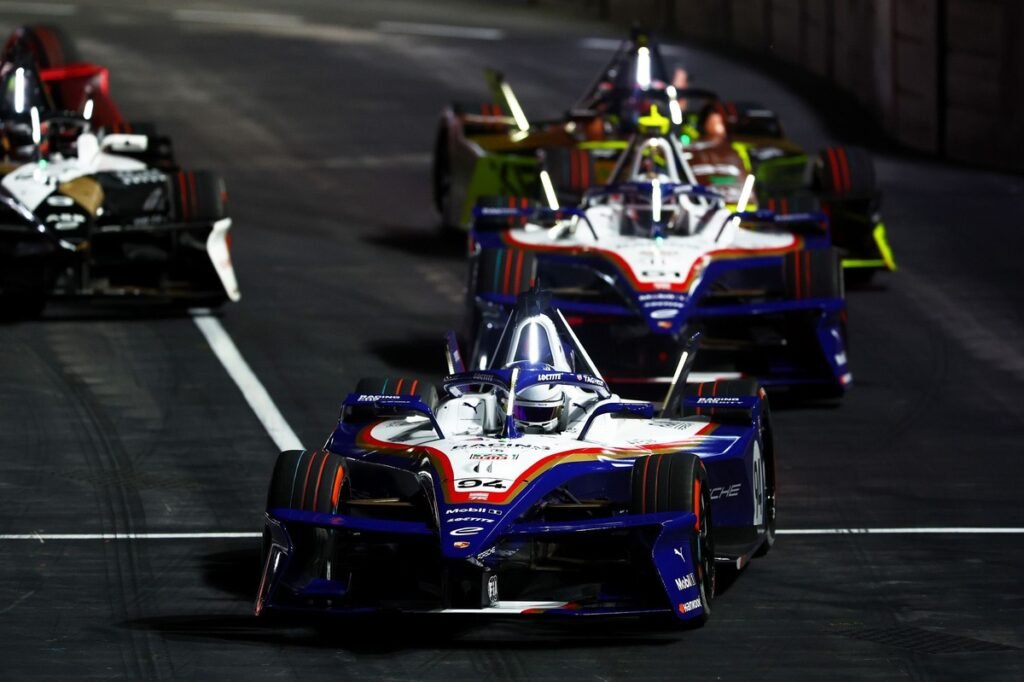
Manufacturers in Formula E hold significant influence over their customer teams, with some agreements extending far beyond the supply of powertrains. This was particularly evident in last weekend’s London finale, when Cupra Kiro driver Dan Ticktum admitted to slowing down in qualifying to help factory Porsche driver Pascal Wehrlein reach the final duel.
While the London races put manufacturer and team orders in the spotlight, the FIA had already been planning a clampdown on such tactics since the summer break.
The General Provisions for the 2026-27 season, published in June, include a new clause directly aimed at teams colluding to orchestrate races.
“Pursuant to Appendix M (Manipulation of Competition) to the FIA International Sporting Code, any concerted instruction or agreement between competitors entered under the same manufacturer that interferes with race action or is intended to influence the result of a race is prohibited,” it stated.
“Any competitor, manufacturer and/or driver involved may be subject to disciplinary measures and/or sporting penalties in accordance with the applicable FIA regulations.”
For the avoidance of doubt, team orders will still be allowed in Formula E next season, meaning a team can instruct its drivers to assist each other to a certain extent.
However, any overt coordination involving two or more teams – whether representing the same manufacturer or not – will be prohibited.

Maximilian Guenther, DS Penske
Photo by: DPPI
“Next year, what we are implementing in Formula E is separation between teams,” FIA’s Formula E chief Pablo Martino told Motorsport.com. “It’s not that we are forbidding team orders because if, inside a team, two drivers want to play on behalf of the team and want to have a strategy that is oriented to a better result for the team, it’s a team decision and it’s something that we don’t interfere with at all.
“As long as it’s fair on track and that doesn’t represent someone crashing into another or having something that is not according to the regulations, we have no problem with that.
“However, what we are enforcing for next year are instructions between team A and team B, or one team or another team, will be forbidden.
“So, what we want to avoid with that is that teams or group instructions or manufacturer instructions with multiple teams in the championship, either works teams or works teams together with independent teams.
“According to exchange or different commercial agreements they have between them, they can manipulate the competition in their favour.”
According to Martino, the FIA will more strictly enforce Appendix M of the International Sporting Code, which states that: “an arrangement, act or intentional omission aimed at improperly altering the result or running of a competition in order to remove all or part of the unpredictable nature of said competition, aiming to obtain an undue advantage for oneself or others.”
He said the FIA was not introducing an entirely new regulation, but would instead take a stricter approach to enforcing the existing provision.
“What we are doing is not something new. We are taking an article of the [International Sporting] Code that says that manipulating a competition is something that is forbidden, and we are going a little bit more strict on enforcing and determining what can be considered as a manipulation of a competition,” he explained.
“So, we are not doing something new because today you cannot manipulate the result of a competition without a consequence and we are working towards implementing that more strictly in Gen4.”
Given the very nature of motorsport, it’s not always straightforward for the regulators to check whether any attempt was made to alter the outcome of the race.
Asked how the FIA plans on policing its clampdown on manufacturer orders, Martino said: “We have plenty of ways to police. One is obviously radio communications where we have a direct transcription and direct control on what is going on between drivers and also between teams through radio communications.
“Afterwards, what happens on track is one of the first [pieces of] evidence of what can be considered as manipulation.”