



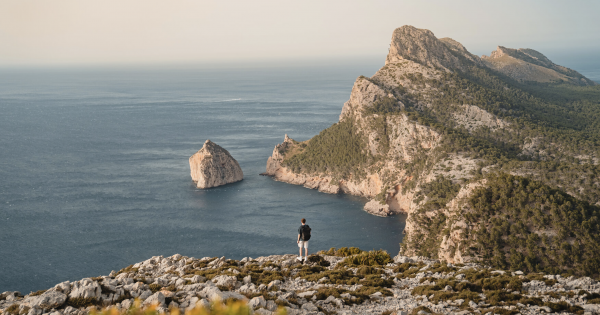
European travellers are showing a growing preference for holidays that allow them to slow down, spend longer in one place and focus on a smaller number of memorable experiences, while also embracing solo travel as part of the shift towards more intentional travel. Building on the second part of the DERTOUR Group Travel Trend Report, which explored why Europeans travel, with a focus on wellbeing and sport, the final part looks at how they want to travel. Slow travel resonates with a broad audience, with 53.2% of the people included in the survey expressing an interest in this style of travel.
The findings point to a broader shift in travel behaviour: Europeans are not simply looking to see more, but to experience destinations more deeply. Among respondents who favour a slower approach to travel, 63.6% say they enjoy taking a more relaxed approach to travel, 58.3% prefer a handful of memorable experiences over many less impressive ones, and 55.4% want to spend more time connecting with local culture, nature and people. Almost half of respondents (48.9%) also see holidays as an opportunity to disconnect from social media and digital distractions.
“Travel has always been about discovery, but today we see travellers placing even greater value on experiences that feel more meaningful. Whether through slow travel, digital detox breaks or solo adventures, Europeans are embracing new ways of travelling that reflect their individual needs, interests and aspirations,” says Christoph Debus, CEO DERTOUR Group.
The report is based on a survey among 8,000 respondents across 13 European countries, conducted in early February 2026, and is complemented by booking data from 16 European source markets as well as expertise from the travel brands behind millions of European holidays each year.
Slow travel: More time, less stress
ADVERTISEMENT
Among the 4,256 respondents who expressed an interest in slow travel, the strongest motivation is the desire to fully enjoy a destination: 58.5% say they prefer a slower style of travel because it allows them to experience places without feeling rushed. Closely behind, 52.0% associate slower travel with personal wellbeing and stress reduction, while 22.9% say it helps them connect more deeply with local people and cultures. The same percentage also value slow travel as a way to save money by avoiding fast-paced travel patterns.
This desire for a calmer holiday is visible across Europe, although markets express it in different ways. Austria (67.3%), Norway (66.5%) and Sweden (65.6%) record some of the highest scores for travellers wanting more time to enjoy destinations. In the Czech Republic, slow travel is particularly strongly linked to wellbeing: nearly seven in ten Czech travellers, 69.8%, say they choose slower travel because it helps them feel less stressed.
“Travellers nowadays want to travel differently,” explains Debus. “Many people still want to discover new destinations, but they increasingly want the time to experience them properly rather than trying to see everything at once.”
Slowcations: Blue Cruises, Slow Glamour, “Go with the flow” roundtrips
The findings are already influencing product development across the DERTOUR Group portfolio. From Meiers Weltreisen, DERTOUR Germany’s long-haul travel specialist and its flexible “Go with the Flow” concept combining the reassurance of a professionally organised roundtrip with the freedom to explore at one’s own pace and I.D. Riva Tours’ Blue Cruises along the Croatian coast to ananea’s “Slow Glamour” hotel concept, DERTOUR Group brands are increasingly responding to travellers’ desire for slower and more intentional travel experiences.
The rise of the JOMO traveller
The report also highlights the rise of a new travel mindset: the JOMO (Joy of Missing Out) traveller, someone who finds joy not in doing everything, but in missing out on the unnecessary. This traveller is less interested in ticking off as many sights as possible and more focused on fewer, better, more memorable experiences.
Digital detox breaks
The desire to switch off digitally is an important part of this mindset. Almost half of respondents, 48.9%, see holidays as an opportunity to disconnect from social media and digital distractions. This trend is strongest among Millennials: more than half of travellers aged 25–44 see holidays as a chance to disconnect, compared with 44.4% of 18–24-year-olds. Married travellers are also slightly more likely to seek a break from digital distractions than singles, at 52.1% versus 45.8%.
“For many people, travel offers something that everyday life struggles to provide, namely uninterrupted time,” adds Debus. “Stepping away from screens, schedules and routines has become part of the appeal of a holiday.”
Solo travel on the rise: Not just for singles
Beyond reconnecting with nature and local cultures, more travellers are seeking opportunities to reconnect with themselves. As a result, solo travel is becoming part of mainstream European travel behaviour, offering travellers the freedom to focus on their own interests and priorities. While family holidays remain the most likely type of trip in the next 12 months, at 65.6%, almost 30% of respondents say they are likely to take a solo trip. Among singles, 37.6% say they are likely to travel alone, but the appeal extends beyond relationship status: around one in four travellers in a stable relationship and married travellers or those in a civil partnership also say they are likely to take a solo trip in the next 12 months.
Skipping the rush
As travellers increasingly look for greater freedom and flexibility, several markets report particularly high levels of interest in solo travel. Germany (36.1%) leads the ranking of Europe’s most solo-travel-friendly markets, ahead of Sweden (35.0%), France (32.2%), the UK (29.8%) and Poland (28.9%).
DERTOUR Group booking data adds further depth to this picture. Across European source markets, solo travellers stay an average of 10.4 days, compared with 8.9 days for travellers overall. They also show a stronger preference for travelling outside the traditional summer peak: 65% of solo-traveller holidays take place outside June to August, compared with 56% among travellers overall.
“Travelling alone is becoming a more established part of the European travel landscape,” Debus continues. “What makes the trend especially interesting is that it spans generations, lifestyles and travel preferences. For many people, travelling alone is about flexibility and the freedom to travel on their own terms.”
Making room for solo travellers
As solo travel becomes more established, travellers are also becoming clearer about what they expect from the industry. Among the 3,387 respondents who are likely to take a solo trip in the next 12 months, the strongest demand is for room offers designed for single occupancy, at 38.4%. Other important factors include opportunities to travel with like-minded companions, at 27.9%, personalised offers and curated experiences, at 26.9%, and access to a dedicated emergency contact, at 25.3%.
The findings suggest that solo travellers are not necessarily seeking isolation. Rather, they want travel products that recognise solo travel as a distinct travel style and are designed accordingly. This includes freedom and flexibility but also support when needed and optional opportunities to connect with others. While independence is a defining feature of solo travel, support still matters. Around one in four prospective solo travellers (25.3%) would like a dedicated emergency contact, while 21.9% value additional safety measures during their trip.
Specialist brands within DERTOUR Group are already responding to this demand. Jules Verne, DERTOUR UK’s specialist brand for escorted small-group journeys and immersive cultural travel experiences, reports that 51% of all its small-group tour bookings for 2027 are from solo travellers, up from 48% for 2026 tours. The brand has also launched a dedicated Solo Travel Guide that brings together practical advice, expert insight and first-hand traveller experiences to help demystify solo travel and build confidence. “Many people still assume solo travel is primarily about independence, but for today’s travellers it’s often just as much about curiosity, confidence and personal enrichment,” explains Debbie O’Neill, Managing Director, Jules Verne. “While interest in solo travel continues to grow, we know that many people still have questions before taking that first step.
Methodology
The European Travel Trend Survey combines DERTOUR Group booking analytics from 16 European markets with an online survey among 8,000 respondents conducted by Appinio between 2-6 February 2026. The survey includes respondents aged 18 to 65, selected to be nationally representative of the age and gender distribution of each respective country. The survey includes 13 source markets: Germany, Austria, Switzerland, Sweden, Norway, Finland, Denmark, the Czech Republic, Slovakia, Romania, Poland, France, and the United Kingdom. The survey covers 1,000 respondents in Germany, France and the UK and 500 in the rest of the markets, ensuring a broad European sample.